Traction Therapy
Persistent neck pain, lower back pain, stiffness, or radiating symptoms should be properly assessed. Get personalised physiotherapy guidance to understand the possible cause and explore suitable treatment options.
Take the First Step Towards Better Movement
Our experienced physiotherapists are here to help you improve mobility, regain strength, and move with greater comfort and confidence.
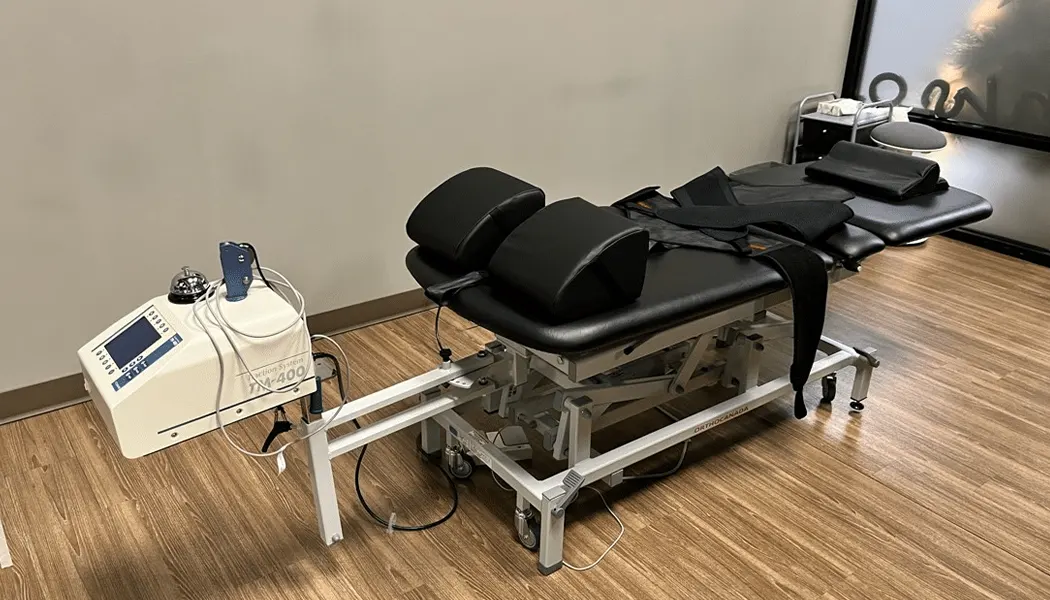
Traction Therapy is a physiotherapy technique that uses a controlled pulling force to gently separate or stretch specific areas of the body, commonly the neck or lower back. It may be used as part of a personalised treatment programme to help manage suitable musculoskeletal symptoms.
What Is It?
Traction Therapy: Traction Therapy is a physiotherapy treatment technique that involves applying a gentle, controlled pulling or stretching force to a specific part of the body, most commonly the neck or lower back. The treatment may help manage selected musculoskeletal conditions by creating a controlled stretching effect and supporting comfortable movement.
During the therapy, the affected area is positioned carefully, and a controlled force is applied manually or with specialised traction equipment. The amount of force, angle, duration, and type of traction are adjusted according to the individual’s symptoms, physical condition, comfort, and treatment requirements.
Spinal Traction: Spinal traction is commonly used for the cervical spine, which is the neck region, and the lumbar spine, which is the lower back region. Depending on the condition, it may be included as part of a physiotherapy programme for selected neck or back symptoms.
Personalised Treatment: Traction Therapy is not suitable for every type of neck or back problem. A proper physiotherapy assessment is important to understand the possible cause of symptoms and determine whether traction is an appropriate treatment option.
Part of a Rehabilitation Plan: When clinically suitable, Traction Therapy may be combined with other physiotherapy treatments such as manual therapy, mobility exercises, stretching, strengthening, posture correction, and movement rehabilitation to support long-term recovery.
Conditions We Treat
Neck Pain: Traction Therapy may be considered for suitable individuals experiencing selected types of neck pain, stiffness, or movement-related discomfort after proper assessment.
Lower Back Pain: Selected lower back conditions involving pain, stiffness, or reduced movement may be assessed for traction as part of an individualised physiotherapy programme.
Cervical Radiculopathy: Some individuals experiencing neck-related symptoms that extend towards the shoulder or arm may be assessed for suitable physiotherapy treatment, including traction where clinically appropriate.
Lumbar Radiculopathy: Lower back symptoms that extend towards the buttock or leg may require assessment, and traction may be considered in selected cases as part of a broader rehabilitation plan.
Disc-Related Symptoms: Certain symptoms associated with spinal disc problems may be assessed for traction depending on the diagnosis, severity, and individual clinical suitability.
Sciatica-Like Symptoms: Pain, tingling, numbness, or discomfort travelling from the lower back towards the leg may require professional assessment. Traction may be considered for selected individuals depending on the underlying cause.
Spinal Stiffness: Reduced mobility and stiffness in the neck or lower back may be managed using appropriate physiotherapy techniques, which may include traction in suitable cases.
Postural Neck and Back Discomfort: Prolonged sitting, poor posture, repetitive work, and sustained positions may contribute to neck or back discomfort and movement restrictions.
Muscle Spasm and Tightness: Neck and back pain associated with muscle tension or spasm may be assessed for appropriate physiotherapy treatment.
Movement-Related Spinal Pain: Pain that increases during bending, turning, sitting, standing, or other movements may be assessed to identify the most suitable treatment approach.
Symptoms
Persistent Neck Pain: Ongoing neck discomfort that affects work, sleep, driving, or everyday movement may require professional assessment.
Lower Back Pain: Pain or aching in the lower back that limits bending, standing, sitting, or walking may be associated with different musculoskeletal conditions.
Pain Radiating to the Arm: Neck-related pain that travels towards the shoulder, arm, or hand may require proper assessment to identify the possible cause.
Pain Radiating to the Leg: Lower back pain extending towards the buttock, thigh, or leg may require professional evaluation.
Tingling or Numbness: Altered sensations in the arm, hand, leg, or foot may be associated with different conditions and should be properly assessed.
Muscle Weakness: New or increasing weakness in an arm or leg should be professionally evaluated before beginning treatment.
Spinal Stiffness: Difficulty turning the neck, bending the back, or moving comfortably may occur with different musculoskeletal problems.
Pain During Sitting or Standing: Prolonged sitting, standing, driving, or maintaining one position may increase symptoms for some individuals.
Reduced Range of Motion: Pain and stiffness may make it difficult to move the neck or lower back through its normal comfortable range.
Pain Affecting Daily Activities: Difficulty working, sleeping, walking, lifting, exercising, or performing routine activities due to neck or back pain may require physiotherapy assessment.
Our Process
Initial Assessment: The therapist begins by understanding your symptoms, medical history, posture, movement limitations, pain pattern, and physical condition to determine whether Traction Therapy is suitable.
Physical Examination: The affected neck or lower back area is assessed for movement, flexibility, muscle strength, posture, neurological symptoms, and functional limitations.
Treatment Planning: Based on the assessment, the therapist determines whether traction may be appropriate and creates a personalised physiotherapy treatment plan.
Positioning: You are positioned comfortably according to the area being treated and the type of traction selected for your condition.
Setting the Treatment Parameters: The therapist selects the appropriate amount of force, treatment duration, angle, and traction mode based on your symptoms, comfort, and clinical suitability.
Controlled Traction: A gentle and controlled pulling force is applied to the selected area using manual techniques or suitable traction equipment.
Monitoring Your Response: Your comfort and response to treatment are monitored during the session, and the treatment may be adjusted where required.
Post-Treatment Assessment: The therapist may reassess your symptoms and movement after the session to understand your response to treatment.
Exercise and Rehabilitation: Traction may be followed by suitable mobility, stretching, strengthening, posture, and stabilisation exercises to support long-term recovery.
Progress Review: Your symptoms and functional improvement are reviewed regularly, and the treatment plan may be modified according to your progress.
Benefits
May Help Manage Selected Neck and Back Symptoms: Traction Therapy may be used as part of a physiotherapy programme to help manage suitable movement-related neck and lower back symptoms.
Controlled Treatment Approach: The force and duration of traction can be adjusted according to the individual’s symptoms, physical condition, comfort, and clinical suitability.
May Support Comfortable Movement: For suitable individuals, physiotherapy treatment may help support improved mobility and more comfortable movement.
May Help Address Spinal Stiffness: When clinically appropriate, traction may be included alongside other physiotherapy techniques to address stiffness and movement restrictions.
Can Be Combined With Rehabilitation: Traction Therapy can be integrated with exercises, manual therapy, posture correction, mobility training, and strengthening.
Personalised Treatment: Treatment parameters and the overall rehabilitation programme are selected according to your individual assessment and recovery needs.
Supports Functional Recovery: A comprehensive physiotherapy programme may help improve the ability to perform everyday activities such as sitting, standing, walking, bending, and working.
Non-Surgical Physiotherapy Option: Traction Therapy is a non-surgical treatment technique that may be considered for selected musculoskeletal conditions after appropriate assessment.
Why Choose Pure Physio?
Detailed Physiotherapy Assessment: We begin by understanding your symptoms, medical history, pain pattern, posture, movement, and functional limitations before recommending treatment.
Personalised Treatment Planning: Every treatment plan is designed according to your condition, symptoms, physical needs, and recovery goals.
Focus on Clinical Suitability: Traction Therapy is considered only after proper assessment to determine whether it is appropriate for your individual condition.
Controlled Treatment Approach: Treatment parameters such as force, duration, position, and traction type are selected according to your comfort and clinical needs.
Integrated Physiotherapy Care: Where appropriate, Traction Therapy can be combined with manual therapy, mobility exercises, strengthening, posture correction, and rehabilitation.
Focus on the Possible Cause: We assess possible contributing factors such as posture, muscle weakness, reduced mobility, repetitive strain, and movement patterns.
Progress-Based Care: Your symptoms, movement, and response to treatment are reviewed regularly to help guide your rehabilitation plan.
Long-Term Recovery Support: Our approach focuses on supporting improved mobility, strength, movement control, and confidence during everyday activities.
Start Your Recovery Journey Today
Don’t let pain, stiffness, or reduced mobility affect your daily life. Get personalised physiotherapy care designed around your condition and recovery goals.