Overhead Track Harness Therapy
Supported Walking and Balance Training for Safer, Stronger Movement
Take the First Step Towards Better Movement
Our experienced physiotherapists are here to help you improve mobility, regain strength, and move with greater comfort and confidence.
At Pure Physio, this therapy may be used as part of a personalised rehabilitation programme for patients with weakness, reduced mobility, balance problems, or difficulty walking.
What Is It?
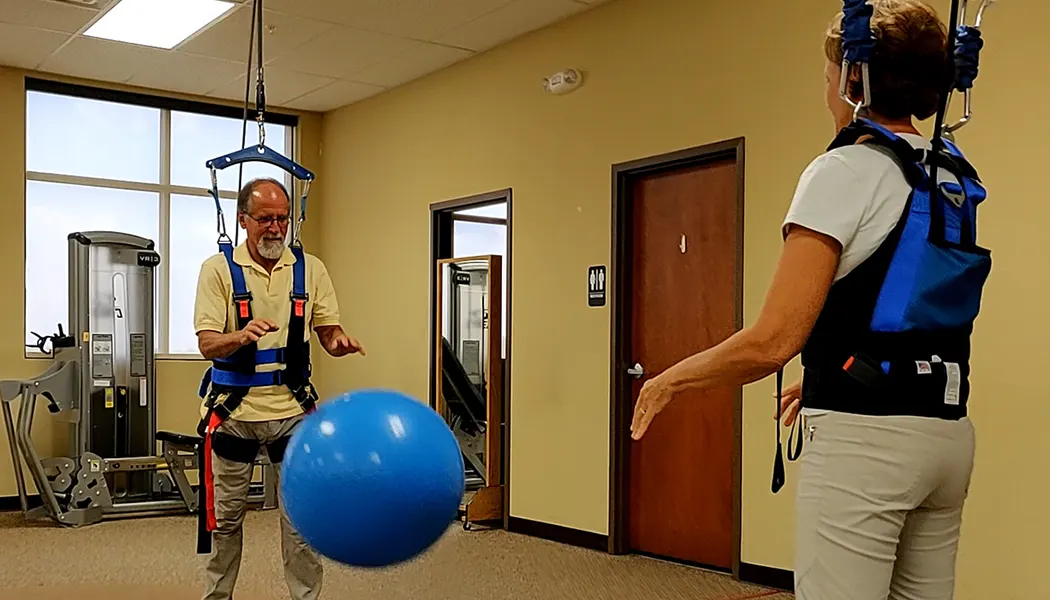
Body-Weight Support Therapy: Overhead Track Harness Therapy uses a secure harness attached to an overhead support system to partially support the patient’s body weight during movement and rehabilitation exercises.
Safe Movement Training: The overhead track allows patients to practise walking, standing, turning, stepping, and other functional activities while reducing the risk of falling. The amount of support can be adjusted according to the patient’s physical ability and rehabilitation needs.
Confidence-Building Rehabilitation: Patients who feel unsteady or afraid of falling may find it easier to participate in movement training with the additional support of a harness. This allows physiotherapists to focus on improving movement quality and functional ability.
Part of a Personalised Rehabilitation Plan: At Pure Physio, Overhead Track Harness Therapy may be combined with gait training, balance exercises, strengthening, mobility work, and functional rehabilitation based on the patient’s individual condition and goals.
Conditions We Treat
Neurological Rehabilitation: Overhead Track Harness Therapy may be used as part of rehabilitation for suitable patients with neurological conditions that affect balance, strength, coordination, or walking ability.
Stroke Rehabilitation: Patients recovering from a stroke may experience weakness, reduced balance, and difficulty walking. Body-weight-supported therapy may help them practise safe and controlled movement as part of a structured rehabilitation programme.
Walking Difficulties: Patients with difficulty walking due to weakness, reduced balance, injury, or certain neurological conditions may benefit from supported gait training where clinically appropriate.
Balance Problems: Individuals experiencing unsteadiness or difficulty maintaining balance may use the overhead harness system to practise controlled standing, stepping, and movement with additional support.
Post-Surgery Rehabilitation: After certain surgeries, patients may experience weakness and reduced confidence during movement. Overhead Track Harness Therapy may support early and progressive mobility training where appropriate.
Spinal Cord Rehabilitation: Suitable patients with movement limitations following spinal cord-related conditions may benefit from supported standing and gait rehabilitation as part of a comprehensive treatment programme.
Muscle Weakness: Patients experiencing significant weakness that makes unsupported walking or standing difficult may use body-weight support to begin or progress their rehabilitation safely.
Orthopaedic Rehabilitation: Following certain injuries or orthopaedic conditions, the harness system may help patients practise controlled movement and gradually increase their activity under professional supervision.
Symptoms
Difficulty Walking: Needing support while walking, dragging a foot, taking uneven steps, or finding it difficult to walk safely may indicate the need for a professional physiotherapy assessment.
Poor Balance: Frequent unsteadiness, difficulty standing without support, or feeling unstable while turning or walking may affect confidence and increase the risk of falls.
Fear of Falling: A lack of confidence during walking or movement due to a fear of falling can limit independence and reduce participation in rehabilitation activities.
Muscle Weakness: Weakness in the legs, core, or other muscles may make standing, walking, climbing stairs, and performing daily activities more difficult.
Reduced Endurance: Feeling tired quickly while standing or walking may limit the ability to participate in normal daily activities and rehabilitation exercises.
Difficulty Standing: Needing assistance to stand, maintain an upright position, or transfer weight safely may indicate reduced strength, balance, or movement control.
Reduced Functional Mobility: Difficulty moving safely between sitting, standing, walking, turning, and other daily movements may require a structured rehabilitation programme.
Our Process
Initial Assessment: The physiotherapist begins by assessing your strength, balance, walking ability, mobility, coordination, medical history, and overall rehabilitation needs to determine whether Overhead Track Harness Therapy is suitable.
Personalised Rehabilitation Planning: Based on the assessment, a treatment plan is developed according to your physical ability, movement limitations, safety requirements, and recovery goals.
Secure Harness Fitting: A suitable harness is carefully fitted around the patient and connected to the overhead track system. The physiotherapist ensures proper positioning and comfort before beginning movement training.
Controlled Body-Weight Support: The system provides an appropriate level of support based on the patient’s needs, allowing them to practise movement while reducing the risk of falls.
Movement and Gait Training: Patients may practise standing, walking, stepping, turning, balance exercises, transfers, and other functional movements under physiotherapist supervision.
Progressive Rehabilitation: As strength, balance, and confidence improve, the rehabilitation programme may be progressed by adjusting support levels and introducing more challenging functional activities.
Benefits
Provides Added Safety: The overhead harness system provides support during movement training and may help reduce the risk of falls during supervised rehabilitation.
Supports Walking Practice: Patients can practise stepping and walking in a controlled environment, even when they have reduced strength, balance, or confidence.
May Improve Confidence: Additional physical support may help patients feel more secure while practising movements they may otherwise find difficult or frightening.
Supports Better Balance: Repeated and controlled movement practice may help patients work towards improved balance and body control as part of their rehabilitation programme.
Allows Earlier Movement Training: For suitable patients, body-weight support may make it possible to begin standing and walking exercises when unsupported movement is still difficult.
Encourages Functional Recovery: The therapy focuses on practising movements used in everyday life, such as standing, walking, turning, and weight shifting.
Personalised Support Levels: The amount of body-weight support and difficulty of exercises can be adjusted according to the patient’s ability and progress.
Complements Physiotherapy: Overhead Track Harness Therapy can be combined with strengthening, balance training, gait rehabilitation, mobility exercises, and other physiotherapy techniques.
Why Choose Pure Physio?
Personalised Rehabilitation: At Pure Physio, every rehabilitation programme is designed according to the patient’s condition, physical ability, movement limitations, and individual recovery goals.
Advanced Rehabilitation Equipment: Our Overhead Track Harness system provides a controlled and supportive environment for practising walking, balance, and functional movement.
Focus on Safe Progression: Rehabilitation is progressed according to the patient’s individual ability and response, with professional supervision throughout movement training.
Comprehensive Physiotherapy Care: Harness Therapy may be combined with gait training, strengthening, balance exercises, mobility work, and functional rehabilitation for a complete recovery approach.
Confidence-Focused Training: We help patients gradually work towards improved confidence during standing, walking, and everyday movement in a supportive environment.
One-to-One Professional Guidance: Our physiotherapists provide guidance, monitor movement, and adjust the rehabilitation programme according to each patient’s progress.
Focus on Independence: Our goal is to help patients improve strength, balance, mobility, and functional ability so they can work towards greater independence in their daily activities.
Start Your Recovery Journey Today
Don’t let pain, stiffness, or reduced mobility affect your daily life. Get personalised physiotherapy care designed around your condition and recovery goals.