
Sciatica
Get a personalised assessment at Pure Physio and take the next step towards better movement and comfort.
Contents
Take the First Step Towards Better Movement
Our experienced physiotherapists are here to help you improve mobility, regain strength, and move with greater comfort and confidence.
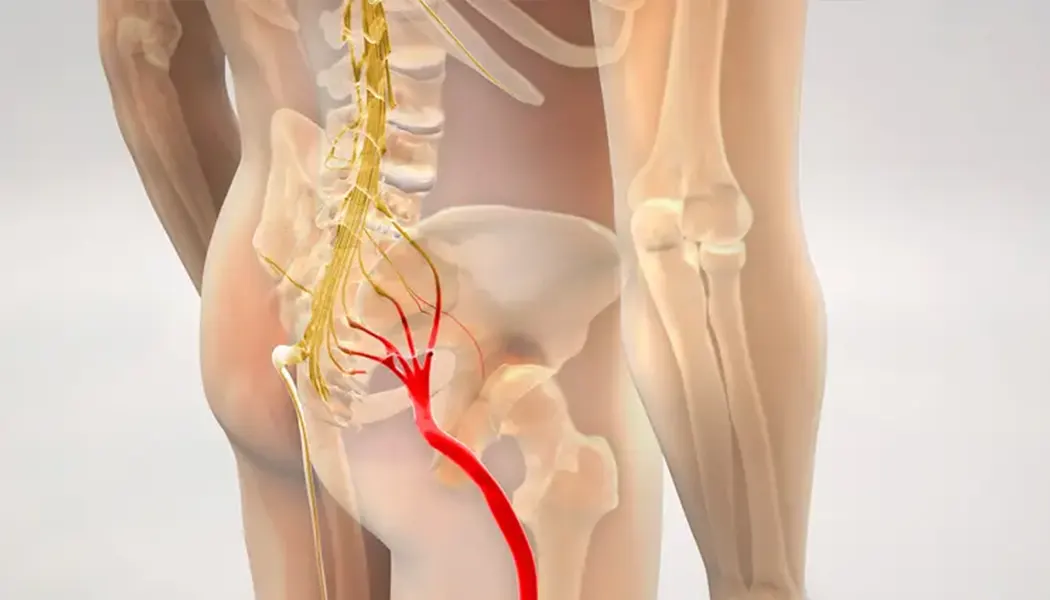
What is Sciatica?
Sciatica is not a diagnosis by itself but a term used to describe symptoms related to irritation or compression of the nerves that form the sciatic nerve.
The sciatic nerve is the largest nerve in the body. It is formed by several nerve roots that originate in the lower part of the spine. These nerves travel through the buttock and down into the leg, supplying sensation and helping control muscles in parts of the lower limb.
When a nerve root in the lower back becomes irritated or compressed, pain may travel along the pathway of the nerve. This is commonly described as sciatic pain.
Sciatica usually affects one side of the body and can vary significantly from person to person. Some individuals experience mild intermittent discomfort, while others may have severe pain that affects sitting, standing, walking, sleeping, and daily activities.
A common cause of sciatica is a herniated or bulging lumbar disc. However, other spinal conditions can also irritate the nerve roots and produce similar symptoms. These may include spinal stenosis, degenerative changes, spondylolisthesis, or other conditions affecting the lower back.
Because leg pain can have different causes, a proper assessment is important to identify the likely source of symptoms and determine the most appropriate treatment approach.
What Are The Symptoms Of Sciatica?
Pain Travelling into the Leg: Pain may begin in the lower back or buttock and travel into the thigh, calf, or foot.
Sharp or Shooting Pain: Many people describe the pain as sharp, electric, shooting, or stabbing.
Burning Sensation: The affected leg may experience a burning or hot sensation.
Tingling or Pins and Needles: Nerve irritation can cause tingling, prickling, or unusual sensations in the leg or foot.
Numbness: Some areas of the leg or foot may feel less sensitive or numb.
Pain in the Buttock: Discomfort may be felt deep in the buttock before or along with symptoms travelling down the leg.
Pain During Sitting: Prolonged sitting may aggravate symptoms in some people.
Pain During Bending or Lifting: Bending forward, lifting, or certain spinal movements may increase symptoms depending on the underlying cause.
Pain When Coughing or Sneezing: Increased pressure around an irritated nerve may cause symptoms to worsen during coughing or sneezing in some cases.
Muscle Weakness: More significant nerve involvement can cause weakness in certain muscles of the leg or foot.
Difficulty Walking: Pain, numbness, or weakness may alter the walking pattern and make normal mobility more difficult.
What Are The Causes Of Sciatica?
Herniated or Bulging Disc: A lumbar disc can irritate or compress a nearby nerve root, causing pain and symptoms that travel into the leg.
Degenerative Disc Changes: Age-related changes in the spinal discs can affect the space around nearby nerves.
Spinal Stenosis: Narrowing of spaces within the spine can place pressure on nerve structures.
Spondylolisthesis: One vertebra slipping forward relative to another can affect spinal alignment and potentially irritate nearby nerves.
Bone Spurs: Bony overgrowth associated with degenerative spinal changes may contribute to narrowing around a nerve.
Spinal Injury: Trauma affecting the lower back may cause inflammation or structural changes that irritate a nerve.
Muscle or Soft Tissue-Related Nerve Irritation: In some cases, structures around the pelvis or buttock may contribute to irritation of the sciatic nerve.
Repetitive Spinal Loading: Repeated bending, lifting, twisting, or other physically demanding activities may contribute to certain conditions affecting the lower back.
Prolonged Sitting: Extended sitting may aggravate symptoms in some individuals, particularly when combined with other contributing factors.
Age-Related Spinal Changes: Degenerative changes in the spine become more common with age and may contribute to nerve irritation in some people.
Diagnosis Of Sciatica
Medical History: A healthcare professional will ask about where your pain travels, when it started, what movements affect it, whether you have numbness or weakness, and your previous history of back problems.
Physical Examination: Your posture, spinal movement, walking pattern, muscle strength, reflexes, and sensation may be assessed.
Neurological Examination: A healthcare professional may assess specific muscles, reflexes, and areas of sensation to identify possible nerve root involvement.
Nerve Tension Tests: Clinical tests, such as leg-raising movements, may be used to assess whether certain positions reproduce nerve-related symptoms.
Movement Assessment: Bending, straightening, walking, sitting, and other relevant movements may be assessed to understand how symptoms respond.
MRI Scan: An MRI may be considered when detailed information about spinal discs, nerves, and other soft tissues is required.
CT Scan: A CT scan may be considered in selected cases to provide information about spinal structures.
X-Ray: X-rays do not show nerves or disc herniation directly but may help assess spinal alignment, fractures, or degenerative bony changes.
Further Medical Investigation: Additional tests may be recommended when another medical condition is suspected or when symptoms do not follow a typical pattern.
Treatment Of Sciatica
Activity Modification: Temporarily modifying movements or activities that significantly aggravate symptoms may help manage pain while maintaining appropriate activity.
Physiotherapy: A personalised physiotherapy programme may help suitable patients manage symptoms, improve movement, strengthen supporting muscles, and gradually return to normal activities.
Appropriate Exercise: Carefully selected exercises may help improve spinal movement, nerve mobility, muscle strength, and overall physical function.
Pain Management: A qualified healthcare professional may recommend appropriate medication to manage pain depending on the individual’s condition.
Manual Therapy: Where clinically appropriate, hands-on techniques may be used as part of a broader rehabilitation programme.
Heat or Cold Therapy: Depending on individual symptoms and clinical needs, heat or cold therapy may provide temporary symptom relief.
Education and Movement Guidance: Guidance regarding sitting, standing, lifting, posture, sleep positions, and activity modification may help patients manage their symptoms.
Interventional Pain Management: In selected cases with persistent or severe symptoms, a qualified specialist may consider treatments such as epidural steroid injections or other appropriate procedures.
Surgical Treatment: Surgery is not required for most people with sciatica but may be considered in selected cases involving significant nerve compression, persistent disabling symptoms, progressive weakness, or certain emergency conditions.
What Is The Physiotherapy Treatment Of Sciatica
Detailed Physiotherapy Assessment: At Pure Physio, treatment begins with understanding your pain pattern, where symptoms travel, movement limitations, neurological symptoms, activity demands, and individual recovery goals.
Individualised Pain Management: Your treatment plan is based on your specific symptoms and how your body responds to different movements and activities.
Spinal Mobility Exercises: Carefully selected exercises may help improve available movement in the lower back and surrounding areas.
Directional Movement Exercises: Specific spinal movements may be used where appropriate based on the individual’s symptom response and physical assessment.
Neural Mobility Exercises: Where clinically appropriate, carefully selected nerve mobility exercises may help improve the tolerance of nerve structures to movement.
Core and Trunk Strengthening: Progressive exercises may help improve the strength and control of muscles supporting the spine.
Hip and Leg Strengthening: Appropriate strengthening may address relevant weakness and improve overall lower-limb function.
Posture and Movement Education: You may receive practical guidance regarding sitting, standing, bending, lifting, and other everyday movements based on your symptoms.
Manual Therapy: Where appropriate, hands-on techniques may be used to address joint stiffness, soft tissue tension, and movement restrictions.
Walking and Functional Rehabilitation: Treatment may progress towards important daily activities such as walking, climbing stairs, bending, lifting, working, and exercising.
Gradual Return to Activity: Your physical activities are gradually progressed according to symptom improvement, strength, movement, and individual capacity.
Home Exercise Programme: You may receive a personalised programme to continue appropriate mobility, strengthening, and self-management exercises between physiotherapy sessions.
Why Choose Pure Physio?
Detailed Individual Assessment: We assess your symptoms, spinal movement, leg function, strength, sensation, and relevant neurological signs to understand your individual needs.
Personalised Treatment Plans: Every case of sciatica is different. Your rehabilitation programme is tailored according to your symptoms, underlying condition, physical capacity, and recovery goals.
Focus on Movement and Function: Our approach focuses on helping suitable patients improve mobility, strength, confidence, and participation in everyday activities.
Comprehensive Rehabilitation: Treatment may combine appropriate mobility exercises, strengthening, neural mobility, movement education, manual therapy, and functional rehabilitation.
Progressive Exercise-Based Care: Your exercise programme is carefully progressed according to your symptoms, physical capacity, and functional improvement.
Integrated Care Support: Where additional medical investigation or specialist treatment is required, we support an appropriate multidisciplinary approach to care.
Long-Term Self-Management: We provide guidance and practical strategies to help you manage symptoms, stay active within your tolerance, and support long-term spinal health.
Start Your Recovery Journey Today
Don’t let pain, stiffness, or reduced mobility affect your daily life. Get personalised physiotherapy care designed around your condition and recovery goals.