Disc Bulge
Get a personalised assessment at Pure Physio and start your journey towards better spinal function and confidence.
Contents
Take the First Step Towards Better Movement
Our experienced physiotherapists are here to help you improve mobility, regain strength, and move with greater comfort and confidence.
What is Disc Bulge?
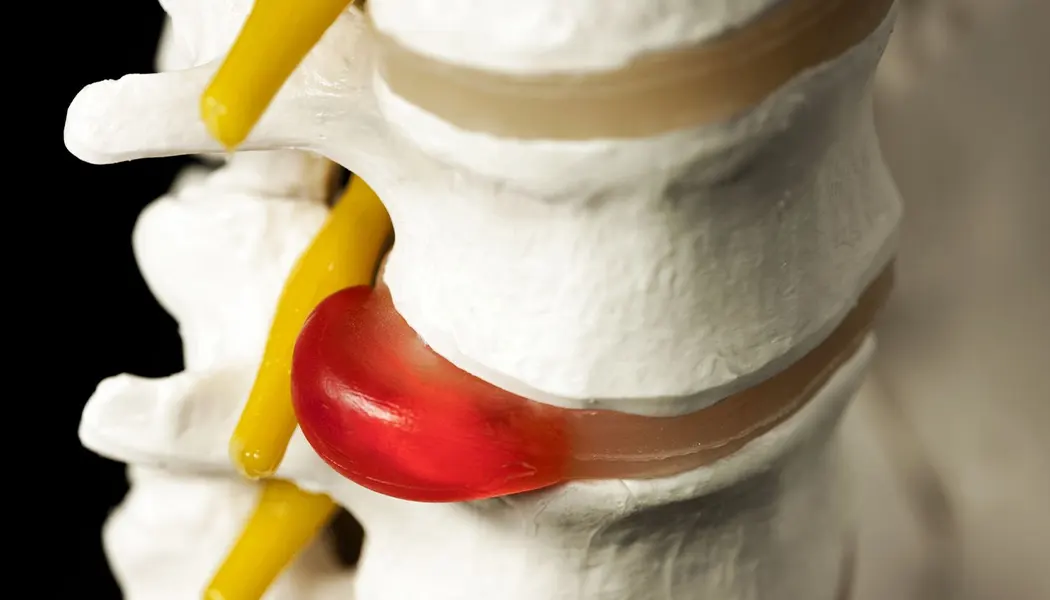
The spine is made up of individual bones called vertebrae. Between most vertebrae are flexible structures called intervertebral discs.
Each disc has two main components:
Outer Annulus Fibrosus: A strong outer ring of fibrous tissue.
Inner Nucleus Pulposus: A softer, gel-like inner portion.
Spinal discs help absorb forces, distribute load, and allow controlled movement between the vertebrae.
A disc bulge generally refers to a broader extension of the disc beyond the normal edges of the vertebral body. This is different from a more localised disc protrusion or herniation, although these terms are sometimes used interchangeably in everyday language.
A disc bulge may develop gradually due to changes in the disc over time or may be associated with repeated loading and other factors. However, the presence of a disc bulge on an MRI does not always mean it is the cause of pain. Disc bulges can also be found in people who have no symptoms.
When a bulging disc contributes to symptoms, it may cause local pain or irritate nearby nerve structures. Depending on the location, this can lead to:
Lower Back Pain: When the disc bulge affects the lumbar spine.
Neck Pain: When it affects the cervical spine.
Arm Symptoms: If a cervical nerve root is irritated.
Leg Symptoms: If a lumbar nerve root is irritated.
A proper clinical assessment is important because symptoms, physical examination findings, and imaging results need to be considered together.
What Are The Symptoms Of Disc Bulge?
Some people with a disc bulge experience no symptoms. When symptoms occur, they can vary depending on the location and whether nearby nerves are affected.
Local Back or Neck Pain: Pain may be felt around the affected area of the spine.
Pain Travelling into the Arm or Leg: Nerve irritation may cause pain that travels from the spine into an arm or leg.
Sharp or Shooting Pain: Some people experience sharp, electric, or shooting pain along the path of an affected nerve.
Tingling or Pins and Needles: Nerve-related symptoms may cause tingling or unusual sensations in the arm, hand, leg, or foot.
Numbness: Certain areas may feel less sensitive or numb.
Muscle Weakness: More significant nerve involvement can affect the strength of specific muscles.
Stiffness: The neck or lower back may feel stiff or restricted during movement.
Pain During Sitting: Prolonged sitting may aggravate symptoms for some people.
Pain During Bending: Forward bending may increase symptoms in some cases, depending on the individual’s condition.
Pain During Lifting or Twisting: Heavy lifting, repetitive bending, or twisting may aggravate symptoms when the area is sensitive.
Pain When Coughing or Sneezing: In some cases, coughing or sneezing may temporarily increase nerve-related symptoms.
Difficulty with Daily Activities: Sitting, standing, walking, lifting, driving, sleeping, working, or exercising may become difficult.
What Are The Causes Of Disc Bulge?
A disc bulge can be influenced by several factors, including:
Age-Related Disc Changes: Spinal discs naturally change over time and may gradually lose some hydration and flexibility.
Repeated Spinal Loading: Repetitive bending, lifting, twisting, or physically demanding activities may contribute to cumulative stress on the spine.
Sudden Increase in Physical Demand: Rapidly increasing the amount or intensity of certain activities may exceed the body’s current capacity.
Previous Back or Neck Injury: Trauma may contribute to disc injury in some cases.
Genetic Factors: Some people may have an inherited tendency toward earlier disc degeneration.
Smoking: Smoking is associated with changes that may negatively affect disc health.
Prolonged Sedentary Behaviour: Long periods of inactivity may contribute to reduced physical conditioning and lower tolerance to certain movements, although sitting alone does not necessarily cause a disc bulge.
Reduced Muscle Strength and Conditioning: Lower overall physical capacity may affect how the body tolerates repeated physical demands.
Occupational Demands: Jobs involving frequent lifting, repetitive movements, vibration, or sustained positions may increase spinal loading.
It is important to remember that a disc bulge can occur without symptoms, and a specific imaging finding should always be interpreted alongside a person’s symptoms and clinical examination.
Diagnosis Of Disc Bulge
Medical History: A healthcare professional will ask about the location of your pain, when symptoms began, movements that aggravate or relieve symptoms, previous injuries, and the presence of tingling, numbness, or weakness.
Physical Examination: Spinal movement, posture, muscle strength, sensation, reflexes, and functional activities may be assessed.
Neurological Examination: When nerve involvement is suspected, a healthcare professional may assess specific muscles, reflexes, sensation, and nerve-related symptoms.
Movement Assessment: Activities such as bending, straightening, sitting, standing, walking, lifting, and other relevant movements may be assessed.
Nerve Tension Tests: Specific tests may be used to assess whether certain positions reproduce nerve-related symptoms.
MRI Scan: MRI provides detailed information about discs, nerves, and other soft tissues and may identify disc bulging, protrusion, or other spinal changes.
CT Scan: A CT scan may be used in selected cases to assess spinal structures when additional information is required.
X-Ray: X-rays do not directly show disc bulges but may be used to assess spinal alignment, fractures, or degenerative bony changes.
Assessment of Other Causes: A healthcare professional may consider other causes of back, neck, arm, or leg symptoms because imaging findings do not always explain the source of pain.
Treatment Of Disc Bulge
Education and Reassurance: Understanding your condition and learning how to remain appropriately active can be an important part of recovery.
Activity Modification: Temporarily modifying movements or activities that significantly aggravate symptoms may help manage pain while maintaining appropriate physical activity.
Physiotherapy: A personalised rehabilitation programme may help suitable patients improve mobility, strength, movement control, and functional capacity.
Appropriate Exercise: Carefully selected exercises may help improve spinal movement, muscle strength, physical conditioning, and confidence with everyday activities.
Pain Management: A qualified healthcare professional may recommend appropriate medication or other treatments to manage pain when required.
Manual Therapy: Where clinically appropriate, hands-on techniques may be included as part of a broader rehabilitation programme.
Heat or Cold Therapy: Depending on individual symptoms, heat or cold therapy may provide temporary relief.
Lifestyle and Activity Guidance: Advice may be provided regarding safe progression of work, exercise, lifting, and other physical activities.
Interventional Pain Management: In selected cases involving persistent or severe nerve-related symptoms, a qualified specialist may consider procedures such as epidural steroid injections.
Surgical Treatment: Most disc bulges do not require surgery. Surgery may be considered in selected cases involving significant nerve compression, persistent disabling symptoms despite appropriate treatment, progressive neurological weakness, or certain emergency conditions.
What Is The Physiotherapy Treatment Of Disc Bulge
Detailed Physiotherapy Assessment: At Pure Physio, treatment begins with understanding your symptoms, spinal movement, neurological signs, activity demands, physical capacity, and individual recovery goals.
Pain and Symptom Management: Your physiotherapist may identify movements, positions, or activities that currently aggravate symptoms and help you modify them while remaining appropriately active.
Spinal Mobility Exercises: Carefully selected exercises may help improve available movement and reduce stiffness in the neck or lower back.
Individualised Directional Exercises: Specific spinal movements may be used when appropriate based on how your symptoms respond during assessment.
Core and Trunk Strengthening: Progressive exercises may help improve the strength and control of muscles supporting the spine.
Hip and Limb Strengthening: Where relevant, rehabilitation may address muscle weakness in the hips, legs, shoulders, or arms.
Neural Mobility Exercises: When clinically appropriate, carefully selected nerve mobility exercises may be used for nerve-related symptoms.
Movement Retraining: Therapy may focus on improving confidence and control during bending, lifting, sitting, standing, walking, and other important activities.
Manual Therapy: Where appropriate, hands-on techniques may be used to address relevant movement restrictions or soft tissue tension.
Functional Rehabilitation: Treatment progresses towards practical goals such as returning to work, driving, exercising, lifting, sports, and other daily activities.
Gradual Activity Progression: Physical activity is increased gradually according to symptoms, strength, movement capacity, and individual goals.
Home Exercise Programme: A personalised programme may be provided to support ongoing mobility, strengthening, conditioning, and self-management between sessions.
Why Choose Pure Physio?
Detailed Individual Assessment: We assess your symptoms, spinal movement, strength, nerve-related signs, activity demands, and functional limitations to understand your individual needs.
Personalised Treatment Plans: Every person with a disc bulge has different symptoms and goals. Your rehabilitation programme is tailored according to your clinical presentation and physical capacity.
Focus Beyond the Scan: We consider your symptoms, movement, strength, and functional ability alongside imaging findings rather than treating an MRI report alone.
Exercise-Based Rehabilitation: Our approach uses carefully selected and progressively adapted exercises to help suitable patients improve mobility, strength, and physical capacity.
Functional Recovery Focus: Rehabilitation is designed around meaningful activities such as sitting, walking, bending, lifting, working, exercising, and participating in sports.
Practical Self-Management Guidance: We provide education on activity modification, exercise progression, movement strategies, and maintaining appropriate physical activity.
Integrated Care Approach: Where further medical investigation, pain management, injections, or specialist care is required, physiotherapy can form part of a coordinated treatment plan focused on safe and appropriate recovery.
Start Your Recovery Journey Today
Don’t let pain, stiffness, or reduced mobility affect your daily life. Get personalised physiotherapy care designed around your condition and recovery goals.