
Wrist Drop
Having difficulty lifting your wrist or fingers? Get a detailed assessment and personalised rehabilitation plan to help restore movement, strength, and everyday hand function.
Contents
Take the First Step Towards Better Movement
Our experienced physiotherapists are here to help you improve mobility, regain strength, and move with greater comfort and confidence.
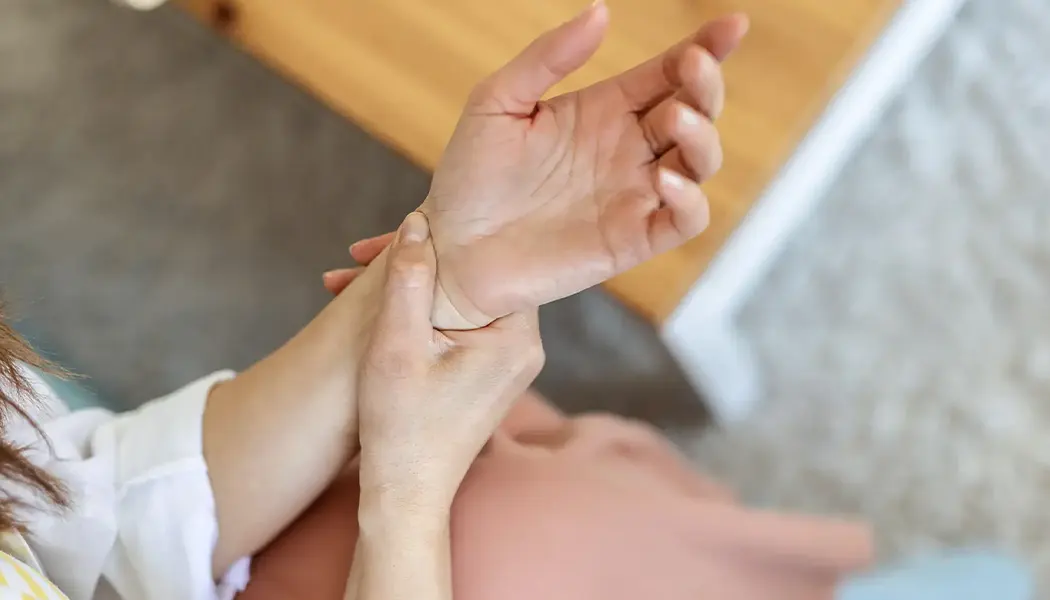
What is Wrist Drop?
Wrist Drop is a physical condition in which the wrist hangs downward because the muscles responsible for lifting or extending it are weak or paralysed.
Normally, the muscles controlled mainly by the radial nerve allow you to:
Lift the Wrist Upward
Straighten the Fingers
Extend the Thumb
Control Hand Position During Gripping
When the radial nerve or its branches are injured or compressed, these muscles may not receive normal nerve signals.
As a result, a person may have difficulty:
Lifting the Wrist
Straightening the Fingers
Extending the Thumb
Holding Objects Securely
Releasing Objects
The wrist may remain bent downward, giving the appearance known as wrist drop.
Wrist drop is usually a sign of an underlying nerve or neurological problem, rather than a condition caused by one specific disease.
The location and severity of the nerve injury determine which movements and sensations are affected.
What Are The Symptoms Of Wrist Drop?
Inability to Lift the Wrist: The wrist may remain bent downward when trying to raise it.
Weak Wrist Extension: Lifting the wrist upward may be weak or impossible.
Difficulty Straightening the Fingers: The fingers may be difficult to actively extend.
Thumb Weakness: Difficulty lifting or extending the thumb may occur.
Weak Grip: Grip strength may be reduced because wrist position affects the efficiency of the hand muscles.
Difficulty Holding Objects: Tasks such as holding a cup, carrying objects, or gripping tools may become difficult.
Difficulty Releasing Objects: Reduced finger extension can interfere with letting go of objects.
Reduced Hand Function: Writing, typing, dressing, eating, and other everyday activities may be affected.
Numbness or Tingling: Altered sensation may occur in parts of the hand, particularly depending on the location of radial nerve involvement.
Pain: Some people may experience pain in the arm, elbow, or wrist depending on the cause.
Muscle Weakness: Muscles supplied by the affected nerve may become weak.
Muscle Wasting: Long-standing nerve injury may lead to a reduction in muscle size.
Difficulty with Fine Motor Tasks: Precise activities requiring controlled hand and finger movement may be challenging.
Abnormal Hand Position: The hand may naturally hang downward due to weakness of the wrist extensor muscles.
What Are The Causes Of Wrist Drop?
Wrist drop most commonly results from radial nerve injury, compression, or dysfunction.
Radial Nerve Compression: Prolonged pressure on the upper arm may temporarily or permanently affect the radial nerve.
Sleeping in an Awkward Position: Prolonged pressure on the arm during sleep may compress the nerve.
Humerus Fracture: A fracture of the upper arm bone can injure the radial nerve.
Trauma to the Arm: Direct injuries, accidents, or deep wounds can damage the nerve.
Elbow or Forearm Injuries: Injury near the path of the radial nerve or its branches may affect wrist and finger extension.
Surgery: In rare cases, nerve injury may occur following surgery involving the arm or surrounding structures.
Dislocation or Severe Joint Injury: Trauma around the shoulder, elbow, or arm may affect the nerve.
Prolonged Pressure from External Objects: Tight casts, crutches, or prolonged pressure from another object may contribute to nerve compression.
Neurological Conditions: Certain conditions affecting the brain, spinal cord, or peripheral nerves can cause weakness resembling wrist drop.
Peripheral Neuropathy: Disorders affecting peripheral nerves may lead to weakness.
Tumours or Masses: Rarely, a mass pressing on the radial nerve may cause symptoms.
The underlying cause should always be identified because recovery and treatment depend on the location and severity of the nerve problem.
Diagnosis Of Wrist Drop
Medical History: A healthcare professional will ask when weakness started, whether there was an injury, prolonged pressure, surgery, fracture, or other neurological symptoms.
Physical Examination: Wrist, finger, and thumb movement are assessed along with muscle strength.
Neurological Examination: Sensation, reflexes, muscle function, and other nerve-related signs may be checked.
Radial Nerve Assessment: A doctor or physiotherapist may assess movements controlled by the radial nerve to identify the possible level of injury.
Sensory Testing: Areas of numbness, tingling, or altered sensation are assessed.
Muscle Strength Testing: The strength of the wrist, fingers, thumb, and other affected muscles is evaluated.
Electromyography (EMG): EMG can assess electrical activity in muscles and provide information about nerve-related muscle dysfunction.
Nerve Conduction Studies: These tests help assess how electrical signals travel through the nerve.
X-Rays: X-rays may be required when a fracture or bone injury is suspected.
Ultrasound: In selected cases, ultrasound may help assess the nerve or surrounding structures.
MRI: MRI may be recommended when a deeper structural problem, nerve compression, or neurological cause is suspected.
Specialist Assessment: A neurologist, orthopaedic specialist, or other healthcare professional may be involved depending on the suspected cause.
Treatment Of Wrist Drop
Treatment depends on the cause, location, and severity of nerve or muscle involvement.
Treatment of the Underlying Cause: Fractures, nerve compression, infections, or other contributing conditions require appropriate medical management.
Rest and Protection: Temporary modification of activities may help protect the affected arm and nerve.
Splinting: A wrist or hand splint may be used to support the wrist in a functional position and prevent prolonged stretching of weak muscles.
Physiotherapy: Rehabilitation may help maintain joint movement, prevent stiffness, improve muscle function, and support functional recovery.
Occupational Therapy: Occupational therapy may help with hand function, self-care, workplace tasks, and adaptive strategies.
Nerve Recovery Monitoring: The treating medical team may monitor nerve recovery over time.
Medication: Medication may be prescribed when pain or nerve-related symptoms require medical management.
Treatment of Nerve Compression: Persistent compression may require specific medical or surgical treatment.
Surgical Treatment: In selected cases involving severe nerve injury or lack of recovery, nerve repair, nerve grafting, nerve transfer, or tendon transfer procedures may be considered.
Rehabilitation After Surgery: Physiotherapy and hand rehabilitation may be required following surgical treatment.
Recovery varies significantly. Some compression-related nerve injuries improve over weeks or months, while more severe nerve injuries may take longer and may not recover completely.
What Is The Physiotherapy Treatment Of Wrist Drop
Detailed Assessment: At Pure Physio, rehabilitation begins by assessing wrist, finger, and thumb movement, muscle strength, sensation, grip, nerve-related symptoms, joint mobility, and ability to perform everyday activities.
Joint Mobility Exercises: Gentle exercises help maintain movement in the wrist, fingers, thumb, elbow, and shoulder.
Passive and Active-Assisted Exercises: When muscle weakness is significant, assisted exercises may help maintain movement while recovery takes place.
Wrist Extension Training: Carefully selected exercises may help activate and strengthen muscles responsible for lifting the wrist as nerve and muscle function allow.
Finger and Thumb Exercises: Rehabilitation may include exercises to improve extension, coordination, and functional use of the fingers and thumb.
Strengthening Programme: Progressive strengthening may be introduced according to nerve recovery and muscle capacity.
Grip and Hand Function Training: Exercises and functional activities may help improve gripping, holding, releasing, and coordination.
Neuromuscular Re-Education: Appropriate techniques may help improve muscle activation and movement control.
Functional Task Training: Therapy may include practising meaningful activities such as writing, typing, eating, dressing, using a phone, and handling everyday objects.
Splint Guidance: We can provide guidance regarding the appropriate use of prescribed splints and support devices.
Nerve Protection Education: Advice may be provided on avoiding prolonged pressure or positions that may further irritate an affected nerve.
Sensory Re-Education: Where appropriate, rehabilitation may address altered sensation and improve awareness of the affected hand.
Electrical Stimulation: In selected cases, and when clinically appropriate, therapeutic electrical stimulation may be considered as part of a broader rehabilitation programme.
Home Exercise Programme: A personalised programme may be provided to support regular movement and progressive strengthening between sessions.
Progress Monitoring: Strength, movement, sensation, and functional ability can be reviewed regularly to adapt rehabilitation as recovery progresses.
Why Choose Pure Physio?
Detailed Neuromuscular Assessment: We assess the pattern of weakness, movement loss, sensation, and functional limitations to support an individualised rehabilitation approach.
Personalised Recovery Plans: Your programme is adapted according to the cause of wrist drop, nerve recovery, muscle strength, and personal goals.
Focus on Hand and Wrist Function: Rehabilitation addresses the movements needed for gripping, releasing, writing, working, and everyday independence.
Safe Exercise Progression: Exercises are gradually progressed according to your muscle activation, nerve recovery, and physical capacity.
Joint and Muscle Protection: We focus on maintaining mobility and reducing the risk of stiffness or secondary movement problems during recovery.
Functional Rehabilitation: Treatment includes practical activities designed to improve the use of your hand in daily life.
Support for Splint Use: We provide guidance to help you understand and safely use prescribed support devices as part of your rehabilitation plan.
Ongoing Progress Monitoring: Your rehabilitation programme can be adjusted as nerve recovery and physical function change.
Integrated Care Approach: Where necessary, we work alongside recommendations from neurologists, orthopaedic specialists, hand surgeons, and other healthcare professionals to support coordinated rehabilitation and recovery.
Start Your Recovery Journey Today
Don’t let pain, stiffness, or reduced mobility affect your daily life. Get personalised physiotherapy care designed around your condition and recovery goals.