
Swan Neck Deformity
Struggling with finger pain, stiffness, or abnormal bending? Get personalised assessment and rehabilitation at Pure Physio to support better hand movement and everyday function.
Contents
Take the First Step Towards Better Movement
Our experienced physiotherapists are here to help you improve mobility, regain strength, and move with greater comfort and confidence.
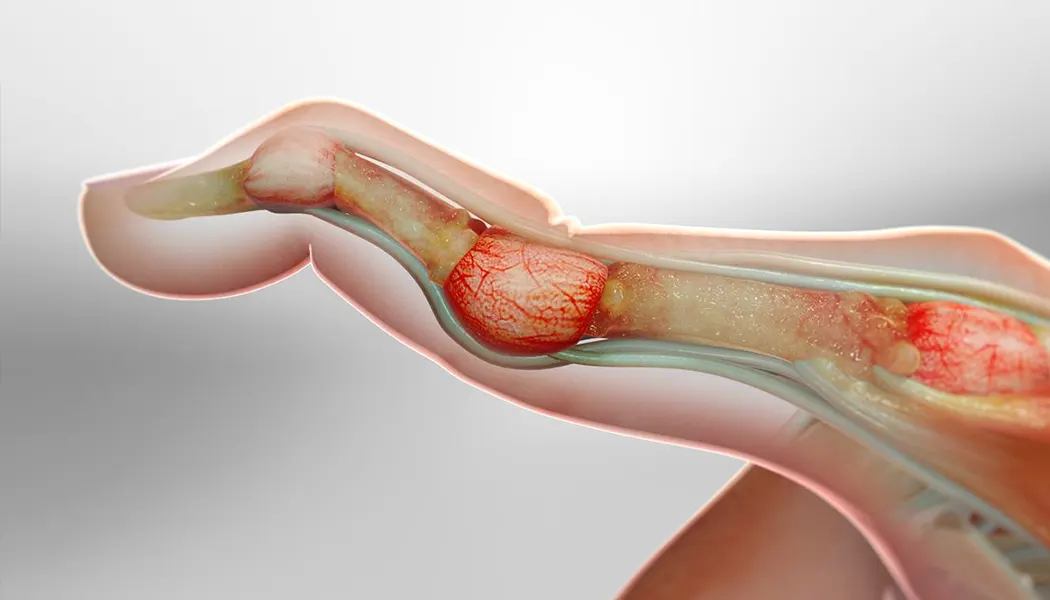
What is Swan Neck Deformity?
Swan Neck Deformity is a characteristic deformity affecting one or more fingers. It involves abnormal positioning of the two main finger joints:
Hyperextension of the Proximal Interphalangeal (PIP) Joint: The middle finger joint bends excessively backward.
Flexion of the Distal Interphalangeal (DIP) Joint: The joint closest to the fingertip bends downward.
Together, these changes create the characteristic appearance of a swan’s neck.
The normal movement of the finger depends on a complex balance between the bones, joints, tendons, ligaments, and muscles. When this balance is disrupted, the joints may gradually move into abnormal positions.
Swan Neck Deformity can develop gradually or following an injury, depending on the underlying cause. In some people, the deformity may initially remain flexible, while in long-standing cases, the joints and soft tissues may become stiff or fixed in the abnormal position.
The condition can affect hand function by making it more difficult to grip objects, pinch, make a fist, type, write, button clothing, or perform other everyday tasks. Early assessment is important to identify the underlying cause and determine appropriate treatment.
What Are The Symptoms Of Swan Neck Deformity?
Abnormal Finger Position: The middle joint of the finger bends backward while the fingertip joint bends downward.
Finger Pain: Pain may develop around the affected joints or surrounding soft tissues.
Joint Stiffness: The finger may feel stiff, particularly during bending or straightening movements.
Swelling: Inflammatory or joint-related conditions may cause swelling around the affected finger joints.
Difficulty Bending the Finger: The abnormal position may make it difficult to bend the finger normally or make a full fist.
Reduced Grip Strength: Hand weakness or reduced finger control may make gripping and holding objects more difficult.
Difficulty with Fine Motor Tasks: Activities such as writing, typing, using a phone, fastening buttons, or picking up small objects may become challenging.
Joint Instability: Some individuals may experience a feeling that the finger joint is unstable or moves abnormally.
Progressive Deformity: Depending on the underlying condition, the finger position may gradually become more pronounced over time.
Reduced Hand Function: Pain, stiffness, and altered finger alignment may affect everyday work, hobbies, and self-care activities.
What Are The Causes Of Swan Neck Deformity?
Rheumatoid Arthritis: Rheumatoid arthritis can cause long-term inflammation and damage to the joints, ligaments, and tendons of the fingers, contributing to deformity.
Finger Injury: Trauma affecting the tendons, ligaments, or joints can disrupt the normal balance of forces controlling finger movement.
Volar Plate Injury: Damage to the volar plate, a structure that helps prevent excessive backward bending of the PIP joint, can contribute to hyperextension.
Tendon Imbalance: Problems affecting the tendons responsible for bending and straightening the finger can lead to abnormal joint positioning.
Mallet Finger: In some cases, an untreated or chronic mallet finger injury affecting the tendon at the fingertip may contribute to the development of a swan neck deformity.
Joint Hypermobility: People with increased joint flexibility may be more susceptible to excessive backward movement at the finger joints.
Neurological Conditions: Certain neurological conditions affecting muscle control may contribute to abnormal positioning of the fingers.
Other Inflammatory or Connective Tissue Conditions: Conditions affecting joints, ligaments, or connective tissues may influence finger alignment and function.
Diagnosis Of Swan Neck Deformity
Medical History: A healthcare professional will ask about when the deformity developed, previous injuries, pain, stiffness, medical conditions, and how symptoms affect hand function.
Physical Examination: The affected finger is examined for joint position, swelling, tenderness, mobility, stability, and the ability to actively bend and straighten the finger.
Assessment of Finger Movement: The healthcare professional may assess whether the deformity is flexible and can be corrected manually or whether it has become fixed.
Tendon and Ligament Assessment: Relevant finger structures may be assessed to identify possible tendon imbalance or ligament injury.
Hand Function Assessment: Grip strength, pinch strength, dexterity, and the ability to perform everyday activities may be evaluated.
X-Ray: An X-ray may be used to assess joint alignment, arthritis, fractures, or other bony changes.
Ultrasound or MRI: In selected cases, imaging may be considered to provide additional information about tendons, ligaments, and other soft tissues.
Assessment of Underlying Conditions: If an inflammatory or systemic condition such as rheumatoid arthritis is suspected, further medical evaluation may be required.
Treatment Of Swan Neck Deformity
Treatment of the Underlying Cause: Managing conditions such as rheumatoid arthritis or addressing an underlying injury is an important part of treatment.
Splinting: A suitable finger splint may be recommended to support the joints and help limit excessive PIP joint hyperextension.
Physiotherapy or Hand Therapy: A personalised rehabilitation programme may help maintain mobility, improve muscle and tendon function, and support everyday hand use.
Pain Management: A healthcare professional may recommend appropriate medication or other pain management strategies depending on the underlying cause.
Exercise Therapy: Carefully selected finger and hand exercises may help maintain available movement and support strength and function.
Activity Modification: Temporary changes to activities that significantly aggravate symptoms may help protect the affected joints and soft tissues.
Joint Protection Strategies: Patients may receive guidance on reducing unnecessary strain during everyday activities.
Surgical Treatment: In more severe or fixed deformities, or when conservative treatment does not provide adequate functional improvement, surgery may be considered by a qualified hand or orthopaedic surgeon.
What Is The Physiotherapy Treatment Of Swan Neck Deformity
Detailed Hand Assessment: At Pure Physio, treatment begins by assessing the finger position, joint mobility, pain, swelling, strength, tendon function, grip, and the effect of symptoms on everyday activities.
Individualised Rehabilitation: Treatment is planned according to the underlying cause, whether the deformity is flexible or fixed, the condition of the joints, and the patient’s functional needs.
Appropriate Splinting Support: Where recommended by a qualified healthcare professional, splinting may be used to support finger alignment and limit excessive backward bending of the PIP joint.
Gentle Range of Motion Exercises: Carefully selected exercises may help maintain available finger movement and reduce the effects of prolonged stiffness.
Tendon and Muscle Exercises: Appropriate exercises may help support balanced finger movement and improve control of the muscles and tendons involved in hand function.
Hand Strengthening: When appropriate, progressive exercises may help improve grip strength, pinch strength, and overall hand function.
Joint Protection Education: Patients may receive guidance regarding suitable hand positions, activity modification, and strategies to reduce unnecessary stress on affected joints.
Functional Hand Rehabilitation: Therapy may focus on improving the ability to perform meaningful tasks such as gripping objects, writing, typing, dressing, eating, and other everyday activities.
Pain and Stiffness Management: Appropriate physiotherapy techniques may be used as part of an individualised programme to help manage symptoms.
Home Exercise Guidance: A personalised programme may be provided to help patients continue appropriate hand and finger exercises between therapy sessions.
Why Choose Pure Physio?
Detailed Functional Assessment: We assess finger movement, joint alignment, pain, strength, flexibility, and hand function to understand your individual rehabilitation needs.
Personalised Treatment Plans: Every deformity and underlying condition is different. Your rehabilitation programme is tailored according to your symptoms, physical findings, and functional goals.
Focus on Hand Function: Our approach focuses on helping suitable patients maintain or improve the ability to perform important everyday tasks.
Early Support and Rehabilitation: Appropriate early assessment may help identify contributing factors and provide timely guidance for managing symptoms and maintaining movement.
Exercise and Functional Training: Treatment may include carefully selected mobility, strengthening, tendon-control, and functional hand exercises.
Guidance on Joint Protection: We provide practical advice to help reduce unnecessary strain on affected joints during work and daily activities.
Support Throughout Your Recovery: Whether you are managing a flexible deformity, recovering from an injury, or receiving treatment for an underlying joint condition, Pure Physio provides personalised rehabilitation focused on your movement and functional goals.
Start Your Recovery Journey Today
Don’t let pain, stiffness, or reduced mobility affect your daily life. Get personalised physiotherapy care designed around your condition and recovery goals.