Sacralization
Get a personalised assessment at Pure Physio to improve movement, strength, and spinal function.
Contents
Take the First Step Towards Better Movement
Our experienced physiotherapists are here to help you improve mobility, regain strength, and move with greater comfort and confidence.
What is Sacralization?
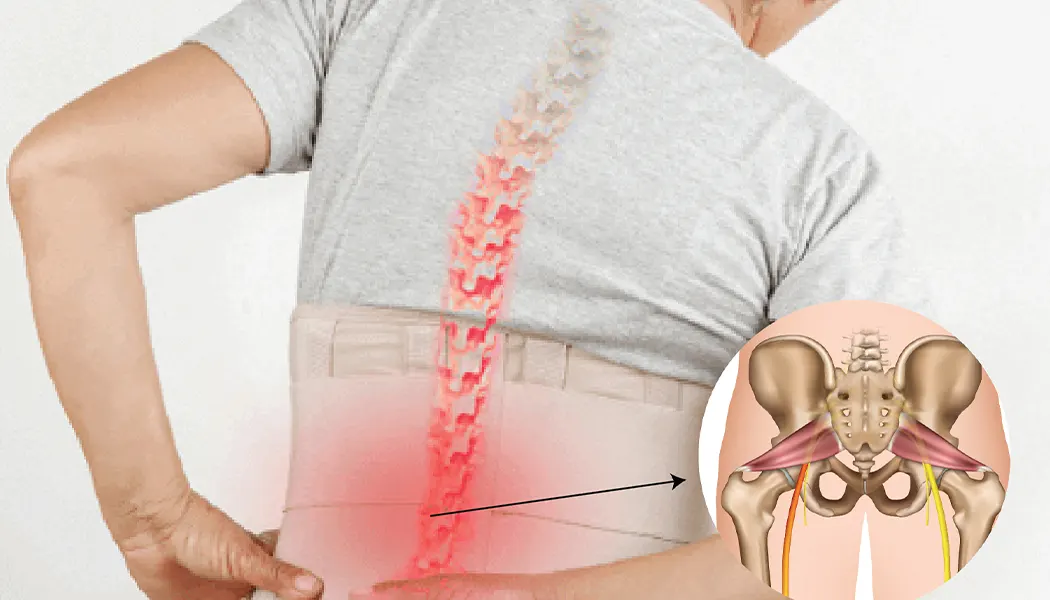
The lower part of the spine is made up of five lumbar vertebrae, followed by the sacrum, a triangular bone at the base of the spine.
Normally, the fifth lumbar vertebra (L5) remains separate from the sacrum and contributes to movement at the L5-S1 spinal segment. In sacralization, L5 has anatomical features that make it partly or completely connected to the sacrum.
This connection may occur in different ways. The vertebra may have an enlarged transverse process that forms a partial joint, a bony connection, or a more complete fusion with the sacrum. The anatomy may affect one side or both sides of the spine.
Sacralization is part of a group of anatomical variations called lumbosacral transitional vertebrae (LSTV). The degree of transition can vary significantly between individuals.
Many people with sacralization experience no pain or functional problems. The finding may be discovered incidentally when imaging is performed for another reason.
However, in some people, the altered anatomy may change how forces and movement are distributed through the lower back. This can potentially place increased stress on nearby spinal segments, joints, or soft tissues. When a transitional vertebra is considered to be contributing to lower back symptoms, it may be associated with Bertolotti Syndrome.
A proper assessment is important because not every case of sacralization is the cause of a person’s back pain.
What Are The Symptoms Of Sacralization?
Many people have no symptoms. When symptoms are present, they may include:
Lower Back Pain: Pain or discomfort may be felt in the lower part of the back.
Lower Back Stiffness: The back may feel stiff or restricted during certain movements.
Pain on One Side of the Lower Back: Symptoms may be more noticeable on one side, particularly when the transitional anatomy is asymmetrical.
Buttock Pain: Discomfort may spread into the buttock region.
Hip or Pelvic Discomfort: Altered movement and loading around the lower spine and pelvis may contribute to discomfort in nearby areas.
Pain During Prolonged Sitting or Standing: Remaining in one position for extended periods may aggravate symptoms in some individuals.
Pain During Bending or Twisting: Certain spinal movements may increase discomfort.
Reduced Spinal Mobility: Some people may feel limited when bending forward, backward, or rotating.
Muscle Tightness: Muscles around the lower back, hips, and pelvis may become tense or overworked.
Symptoms During Physical Activity: Running, lifting, repeated bending, sports, or other activities may aggravate symptoms depending on the individual.
Leg Pain or Nerve-Related Symptoms: If nearby nerve structures are affected by another associated spinal condition, some individuals may experience pain, tingling, numbness, or weakness travelling into the leg.
What Are The Causes Of Sacralization?
Congenital Spinal Development: Sacralization develops before birth as part of the formation of the spine.
Lumbosacral Transitional Anatomy: The lowest lumbar vertebra develops characteristics that are partly similar to the sacrum.
Partial or Complete Fusion: The L5 vertebra may form a partial connection, a pseudo-joint, or a more complete fusion with the sacrum.
Unilateral or Bilateral Changes: The anatomical variation may occur on one side or both sides.
The exact reason why lumbosacral transitional vertebrae develop is not fully understood. Sacralization is not caused by poor posture, exercise, lifting, or an injury later in life.
However, symptoms may develop when altered spinal mechanics contribute to stress on nearby joints, discs, or soft tissues. It is also possible for a person with sacralization to develop back pain from an unrelated cause, which is why professional assessment is important.
Diagnosis Of Sacralization
Medical History: A healthcare professional will ask about lower back pain, stiffness, buttock or leg symptoms, activity-related aggravation, previous injuries, and functional limitations.
Physical Examination: The lower back, hips, pelvis, posture, spinal movement, muscle strength, and relevant neurological function may be assessed.
Movement Assessment: Bending, extending, rotating, walking, sitting, standing, and other functional activities may be assessed to understand how symptoms respond to movement.
Neurological Examination: When leg symptoms are present, muscle strength, sensation, reflexes, and nerve-related signs may be evaluated.
X-Ray: X-rays are commonly used to identify a lumbosacral transitional vertebra and assess the relationship between the lumbar spine and sacrum.
CT Scan: A CT scan may provide more detailed information about the bony anatomy and the extent of partial or complete fusion.
MRI Scan: An MRI may be considered to assess spinal discs, nerves, joints, and other soft tissues, particularly when symptoms suggest another associated spinal condition.
Diagnostic Injection: In selected cases, a qualified specialist may use an injection around a suspected pain-generating joint or pseudo-articulation to help determine whether it is contributing to symptoms.
Assessment for Other Causes: Because sacralization may be an incidental finding, healthcare professionals may assess for other possible causes of lower back or leg pain.
Treatment Of Sacralization
Education and Reassurance: If sacralization is found incidentally and is not causing symptoms, treatment may not be required.
Activity Modification: Temporarily modifying activities that significantly aggravate symptoms may help manage pain while maintaining appropriate physical activity.
Physiotherapy: A personalised physiotherapy programme may help suitable patients improve mobility, strength, movement control, and functional capacity.
Exercise Rehabilitation: Carefully selected exercises may target the muscles supporting the lower back, abdomen, hips, and pelvis.
Core and Trunk Strengthening: Progressive exercises may help improve strength and control of the muscles supporting the spine.
Hip Mobility and Strengthening: Addressing relevant hip movement restrictions or muscle weakness may help improve overall movement and load distribution.
Manual Therapy: Where clinically appropriate, hands-on techniques may be used as part of a broader rehabilitation programme to address relevant joint or soft tissue movement restrictions.
Pain Management: A qualified healthcare professional may recommend appropriate medication or other treatments to manage persistent pain.
Heat Therapy: Heat may provide temporary relief from muscular stiffness or discomfort for some individuals.
Interventional Pain Management: In selected cases, a qualified pain management specialist may consider injections or other procedures when a specific structure is identified as contributing to persistent symptoms.
Surgical Treatment: Surgery is rarely required and may be considered only in selected cases when symptoms are persistent, conservative treatment has not provided adequate improvement, and a specialist identifies an appropriate surgical target.
What Is The Physiotherapy Treatment Of Sacralization
Detailed Physiotherapy Assessment: At Pure Physio, treatment begins with understanding your symptoms, spinal movement, posture, hip mobility, muscle strength, activity demands, and functional goals.
Spinal Mobility Exercises: Carefully selected exercises may help improve available movement in the lower back and surrounding regions without unnecessarily aggravating symptoms.
Core Strengthening: Progressive exercises may improve the strength and control of the abdominal and trunk muscles that support the spine during movement.
Hip Strengthening: Exercises may target relevant muscles around the hips and pelvis to improve stability and movement control.
Hip Mobility Training: Where appropriate, mobility exercises may address restrictions that influence lower-back movement and physical function.
Movement Retraining: Your physiotherapist may assess bending, lifting, twisting, sitting, standing, and other everyday movements to identify strategies that improve comfort and efficiency.
Posture and Activity Education: You may receive practical guidance regarding prolonged sitting, standing, work activities, exercise, and other factors that influence your symptoms.
Manual Therapy: Where appropriate, hands-on techniques may be included to address relevant joint stiffness or soft tissue tension.
Functional Rehabilitation: Treatment progresses towards meaningful activities such as walking, climbing stairs, exercising, lifting, working, or participating in sports.
Gradual Return to Activity: Activities are progressively increased according to your symptoms, strength, movement capacity, and individual goals.
Home Exercise Programme: A personalised programme may be provided to help maintain mobility, build strength, and support long-term spinal function between sessions.
Why Choose Pure Physio?
Detailed Individual Assessment: We assess your symptoms, spinal and hip movement, strength, posture, activity demands, and functional limitations to understand whether rehabilitation can help address your specific needs.
Personalised Treatment Plans: Every person with sacralization has different anatomy, symptoms, and physical goals. Your programme is tailored accordingly.
Focus on Functional Movement: Our approach focuses on helping suitable patients improve comfort and confidence during everyday activities, work, exercise, and other important movements.
Comprehensive Exercise Rehabilitation: Treatment may include appropriate spinal mobility, core strengthening, hip exercises, movement retraining, and progressive functional rehabilitation.
Education for Long-Term Management: We provide practical guidance to help you understand your condition, manage physical activity, and maintain appropriate exercise habits.
Integrated Care Approach: If your symptoms require additional medical investigation or interventional treatment, physiotherapy can form part of a coordinated care plan with relevant healthcare professionals.
Long-Term Focus: Our goal is to help suitable patients build movement capacity, strength, and confidence for ongoing spinal health and an active lifestyle.
Start Your Recovery Journey Today
Don’t let pain, stiffness, or reduced mobility affect your daily life. Get personalised physiotherapy care designed around your condition and recovery goals.