Raynaud’s Disease
Get the right medical assessment and personalised guidance for managing your symptoms.
Contents
Take the First Step Towards Better Movement
Our experienced physiotherapists are here to help you improve mobility, regain strength, and move with greater comfort and confidence.
What is Raynaud’s Disease?
Raynaud’s Disease is a condition that causes temporary episodes of reduced blood flow to certain parts of the body due to excessive narrowing of small blood vessels.
It most commonly affects the:
Fingers
Toes
It can sometimes also affect the:
Nose
Ears
Lips
Nipples
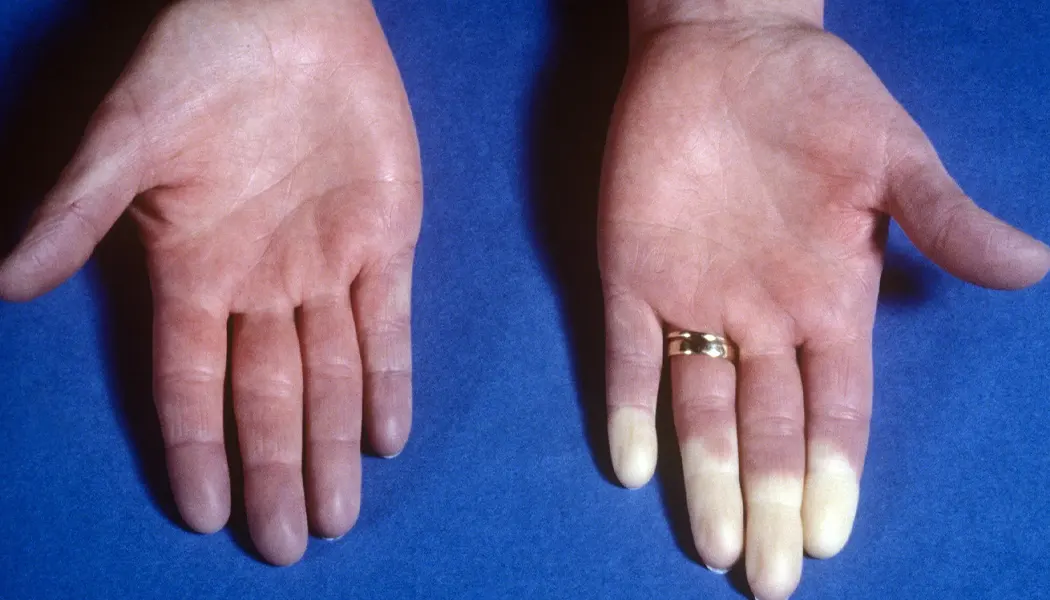
During a Raynaud’s episode, exposure to cold or emotional stress can trigger a temporary vasospasm, meaning the small blood vessels narrow suddenly. This reduces blood flow to the affected area.
A typical episode may involve changes in skin colour:
White: Reduced blood flow may cause the skin to become pale or white.
Blue: As oxygen levels in the affected tissues decrease, the area may develop a bluish colour.
Red: As blood flow returns, the skin may become red and may feel warm, throbbing, or tingling.
However, the pattern can vary, and not everyone experiences all three colour changes.
There are two main forms:
Primary Raynaud’s Disease
Primary Raynaud’s occurs on its own and is not caused by another underlying medical condition. It is generally the more common and less severe form.
Secondary Raynaud’s Phenomenon
Secondary Raynaud’s occurs because of another underlying condition or contributing factor. It may be associated with certain autoimmune or connective tissue diseases, vascular conditions, medications, repetitive vibration exposure, or other causes.
Secondary Raynaud’s can sometimes be more severe and may cause complications such as skin ulcers or tissue damage.
What Are The Symptoms Of Raynaud’s Disease?
Colour Changes in the Fingers or Toes: The affected area may turn white, pale, blue, purple, or red during or after an episode.
Cold Fingers or Toes: The fingers and toes may feel unusually cold.
Numbness: Reduced blood flow may cause temporary loss or reduction of sensation.
Tingling: Pins and needles may occur as blood flow returns.
Burning Sensation: Some people experience burning discomfort during recovery from an episode.
Throbbing Pain: The fingers or toes may throb as circulation returns.
Sensitivity to Cold: Even mild cold temperatures may trigger symptoms.
Symptoms Triggered by Stress: Emotional stress can trigger or worsen episodes in some individuals.
Changes in Other Areas: In some cases, symptoms may affect the nose, ears, lips, or other areas.
Episodes That Come and Go: Symptoms usually occur in attacks and may improve once the trigger is removed and circulation returns.
Possible Signs of More Severe Disease
Persistent Pain: Pain that continues rather than resolving after an episode.
Skin Sores or Ulcers: Breakdown of the skin, particularly on the fingertips or toes.
Slow-Healing Wounds: Reduced blood flow may interfere with normal healing.
Tissue Colour That Does Not Return to Normal: Persistent colour changes require medical assessment.
Signs of Tissue Damage: Severe secondary Raynaud’s can, in rare cases, lead to significant tissue injury.
What Are The Causes Of Raynaud’s Disease?
Primary Raynaud’s Disease
The exact cause of primary Raynaud’s is not fully understood. It involves an exaggerated narrowing response of small blood vessels.
Cold Exposure: Cold temperatures are one of the most common triggers.
Emotional Stress: Stress or strong emotional reactions may trigger episodes.
Increased Blood Vessel Sensitivity: Small blood vessels may react excessively to certain triggers.
Genetic Factors: A family history may increase the likelihood of developing the condition.
Secondary Raynaud’s Phenomenon
Secondary Raynaud’s may be associated with:
Autoimmune and Connective Tissue Diseases: Conditions such as systemic sclerosis, lupus, and other connective tissue diseases can affect blood vessels.
Vascular Conditions: Diseases affecting blood flow may contribute to Raynaud’s symptoms.
Medications: Certain medicines may affect blood vessel function and trigger or worsen symptoms.
Repetitive Vibration Exposure: Long-term use of vibrating tools may contribute to vascular and nerve changes.
Smoking: Tobacco use can constrict blood vessels and worsen circulation.
Previous Injury: In some cases, injury or trauma may contribute to symptoms.
Cold Exposure: Repeated exposure to cold environments may trigger symptoms.
Other Medical Conditions: Additional health conditions may affect circulation and contribute to secondary Raynaud’s.
The cause should be assessed, especially when symptoms begin later in life, are severe, affect only one side, or are associated with ulcers or other concerning features.
Diagnosis Of Raynaud’s Disease
Medical History: A healthcare professional will ask about colour changes, triggers, duration of episodes, pain, numbness, family history, medications, work exposure, and other symptoms.
Physical Examination: The hands, fingers, feet, and other affected areas may be examined for colour changes, skin ulcers, tissue damage, or signs of an underlying condition.
Trigger and Symptom Pattern: The pattern of symptoms in response to cold or stress can provide important diagnostic information.
Blood Tests: Blood tests may be recommended to investigate autoimmune, inflammatory, or other underlying conditions.
Nailfold Capillaroscopy: A specialist may examine tiny blood vessels near the base of the fingernails to look for changes associated with certain connective tissue diseases.
Circulation Assessment: Tests may be performed to assess blood flow and vascular function when required.
Imaging or Vascular Tests: Additional tests may be recommended if another vascular condition is suspected.
Medication Review: A healthcare professional may review current medications to identify possible contributors to symptoms.
Diagnosis involves determining whether symptoms are consistent with primary Raynaud’s disease or whether further investigation is required for secondary Raynaud’s phenomenon.
Treatment Of Raynaud’s Disease
Treatment depends on the severity of symptoms and whether the condition is primary or secondary.
Keeping Warm: Protecting the hands, feet, and body from cold temperatures can help reduce episodes.
Layered Clothing: Wearing warm layers can help maintain overall body temperature.
Gloves and Warm Footwear: Appropriate gloves, socks, and footwear may help protect the fingers and toes from cold exposure.
Avoiding Sudden Temperature Changes: Gradual transitions between hot and cold environments may help reduce attacks.
Stress Management: Relaxation techniques and stress-management strategies may help some people reduce stress-related episodes.
Avoiding Smoking: Smoking can constrict blood vessels and may worsen symptoms.
Regular Physical Activity: Appropriate physical activity can support overall cardiovascular health and circulation.
Medication: For more frequent or severe symptoms, a doctor may prescribe medicines that help relax blood vessels.
Treatment of Underlying Conditions: Secondary Raynaud’s requires management of the associated medical condition and contributing factors.
Wound Care: Any ulcers or skin damage require appropriate medical attention.
Specialist Care: Severe or complicated cases may require assessment by a vascular specialist, rheumatologist, or other appropriate healthcare professional.
What Is The Physiotherapy Treatment Of Raynaud’s Disease
Physiotherapy does not directly cure Raynaud’s disease or replace medical treatment for significant circulation problems. However, it may support overall physical function and activity in selected individuals.
Detailed Functional Assessment: At Pure Physio, we assess how symptoms affect mobility, hand function, daily activities, exercise, work, and overall physical function.
General Exercise Guidance: Appropriate physical activity may support general cardiovascular fitness and overall health.
Gentle Movement Exercises: Movement of the hands, fingers, wrists, ankles, and feet may help maintain mobility and function.
Hand and Foot Mobility: Exercises may be recommended to maintain comfortable movement and reduce stiffness where relevant.
Functional Exercise: Rehabilitation may focus on maintaining strength, endurance, and confidence with daily activities.
Relaxation and Breathing Strategies: Where stress is a significant trigger, appropriate relaxation and breathing techniques may complement broader stress-management strategies.
Activity and Lifestyle Guidance: Advice may be provided regarding safe exercise, warm-up routines, and managing activities in cold environments.
Postural and Musculoskeletal Care: Physiotherapy can address separate musculoskeletal problems that may affect movement and physical activity.
Home Exercise Guidance: A personalised exercise programme may be provided where appropriate to support general mobility and physical function.
Any physiotherapy programme should be adapted to the individual’s symptoms, circulation concerns, underlying conditions, and medical advice.
Why Choose Pure Physio?
Safety-Focused Approach: We recognise that circulation symptoms may require medical investigation, particularly when they are severe, new, worsening, or associated with ulcers or tissue changes.
Detailed Functional Assessment: We assess how symptoms affect movement, hand function, exercise, work, and everyday activities.
Personalised Support: Guidance is adapted according to your symptoms, physical capacity, lifestyle, and individual goals.
Focus on Overall Physical Function: Where physiotherapy is appropriate, we support mobility, strength, endurance, and participation in meaningful activities.
Exercise and Activity Guidance: We provide appropriate guidance to help you stay active while considering your symptoms and individual medical needs.
Practical Self-Management Advice: We can help with strategies related to comfortable movement, activity pacing, warming up, and managing physical demands.
Integrated Care Approach: Where medical assessment or specialist care is required, physiotherapy can form part of a broader care plan alongside your doctor, vascular specialist, rheumatologist, or other relevant healthcare professional.
Support for Long-Term Function: Our goal is to help suitable patients maintain physical activity, independence, and confidence while ensuring that underlying circulation or medical concerns receive appropriate care.
Start Your Recovery Journey Today
Don’t let pain, stiffness, or reduced mobility affect your daily life. Get personalised physiotherapy care designed around your condition and recovery goals.