
Patellar Fracture
Restore knee movement, rebuild strength, and return to confident walking with personalised physiotherapy rehabilitation after a Patellar Fracture.
Contents
Take the First Step Towards Better Movement
Our experienced physiotherapists are here to help you improve mobility, regain strength, and move with greater comfort and confidence.
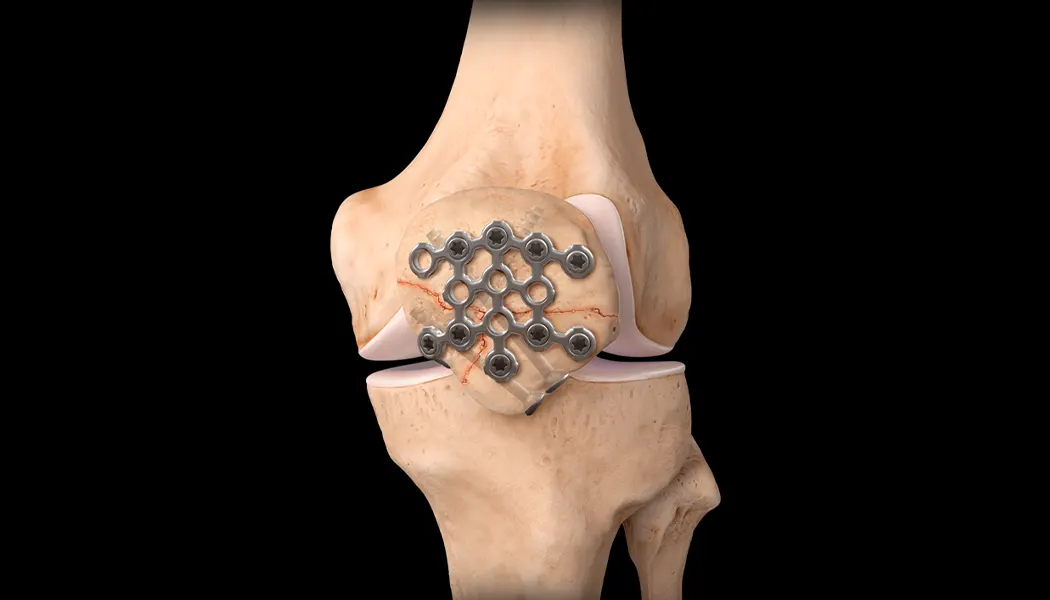
What is Patellar Fracture?
A Patellar Fracture occurs when the patella (kneecap) breaks. The patella is a small bone located at the front of the knee and forms an important part of the knee’s extensor mechanism.
The patella helps the quadriceps muscles at the front of the thigh transmit force through the patellar tendon, allowing the knee to straighten.
A fracture can affect the bone in different ways, including:
Stable or Non-Displaced Fracture: The broken pieces remain in their normal or near-normal position.
Displaced Fracture: The broken bone fragments move away from their normal alignment.
Transverse Fracture: The patella breaks across its width.
Comminuted Fracture: The bone breaks into multiple pieces.
Open Fracture: The fracture is associated with a wound that communicates with the fracture site and requires urgent medical care.
The type of fracture affects whether treatment can be managed with immobilisation or whether surgery may be needed to restore the knee’s structure and ability to straighten.
What Are The Symptoms Of Patellar Fracture?
Common Symptoms
Severe Knee Pain: Pain is usually felt at the front of the knee.
Swelling: The knee may swell quickly after the injury.
Tenderness: The kneecap and surrounding area may be painful when touched.
Difficulty Straightening the Knee: It may be difficult or impossible to actively straighten the knee.
Pain with Movement: Bending or moving the knee can significantly increase pain.
Difficulty Walking: Standing or walking may be painful or difficult.
Other Possible Symptoms
Bruising: Discolouration may develop around the knee.
Visible Deformity: In some displaced fractures, the shape of the kneecap may appear abnormal.
Inability to Bear Weight: Some people may be unable to comfortably put weight through the affected leg.
Knee Stiffness: Reduced movement may develop after injury or immobilisation.
Muscle Weakness: The quadriceps muscles can weaken after reduced activity or immobilisation.
Difficulty Climbing Stairs: Knee weakness and reduced movement may affect stair use.
Reduced Balance: Weakness and changes in walking can affect stability.
Difficulty with Everyday Activities: Getting up from a chair, walking, squatting, and using stairs may become difficult.
A suspected fracture following a significant fall, direct impact, or injury should be assessed promptly by a healthcare professional.
What Are The Causes Of Patellar Fracture?
Direct Impact: Falling directly onto the knee can cause the kneecap to fracture.
Road Traffic Accidents: A forceful impact to the front of the knee may cause a fracture.
Sports Injuries: A significant fall, collision, or direct blow during sport can fracture the patella.
Sudden Forceful Muscle Contraction: In some injuries, a strong contraction of the quadriceps muscle can contribute to a fracture.
High-Energy Trauma: Major accidents can cause severe or complex patellar fractures.
Reduced Bone Strength: Conditions that weaken bones may increase the risk of fracture after relatively minor trauma.
Previous Knee Trauma: Previous injuries may affect the structures around the knee.
Diagnosis Of Patellar Fracture
Medical History: A healthcare professional will ask how the injury occurred and about your symptoms.
Physical Examination: The knee is assessed for pain, swelling, bruising, tenderness, deformity, circulation, and nerve function.
Knee Movement Assessment: The ability to bend and actively straighten the knee may be evaluated carefully.
Extensor Mechanism Assessment: Healthcare professionals assess whether the quadriceps and patellar tendon mechanism can effectively straighten the knee.
X-Rays: X-rays are commonly used to identify the fracture, its location, and whether the bone fragments are displaced.
CT Scan: A CT scan may provide more detailed images of complex or comminuted fractures when required.
MRI Scan: MRI is not usually the first imaging test for a patellar fracture but may be used in selected cases to assess associated soft-tissue injuries.
Follow-Up Imaging: Repeat imaging may be used to monitor fracture healing when required.
Treatment Of Patellar Fracture
Treatment depends on the fracture pattern, whether the fragments are displaced, the ability to straighten the knee, associated injuries, and individual health factors.
Urgent Medical Assessment: A suspected patellar fracture should be assessed promptly.
Pain Management: Appropriate medication may be used to manage pain.
Immobilisation: A brace, splint, or cast may be used to protect the knee and support healing in appropriate fractures.
Weight-Bearing Guidance: The amount of weight you can place through the leg depends on the fracture and treatment plan and should follow medical advice.
Surgical Treatment: Surgery may be required for displaced, unstable, open, or complex fractures, or when the knee’s extensor mechanism is disrupted.
Internal Fixation: Surgical wires, screws, plates, or other devices may be used to hold the bone fragments in the correct position.
Early Controlled Movement: Knee movement may be introduced gradually when medically appropriate to help reduce stiffness.
Physiotherapy Rehabilitation: Rehabilitation helps restore knee movement, rebuild strength, improve walking ability, and support a safe return to everyday activities.
The timing of movement, strengthening, and weight-bearing should always follow the recommendations of the orthopaedic surgeon and treating healthcare team.
What Is The Physiotherapy Treatment Of Patellar Fracture
Detailed Assessment: At Pure Physio, we assess pain, swelling, knee movement, quadriceps strength, walking ability, balance, and your ability to perform everyday activities.
Individualised Rehabilitation Programme: Your treatment is tailored according to the fracture type, treatment received, surgical procedure if applicable, healing stage, medical restrictions, and personal recovery goals.
Pain and Swelling Management: Appropriate strategies may be used to help manage discomfort and swelling during rehabilitation.
Early Safe Mobility: When medically appropriate, rehabilitation helps you gradually return to safe movement.
Knee Range of Motion Exercises: Carefully selected exercises help restore knee bending and straightening according to your medical restrictions.
Quadriceps Activation: Early exercises may help maintain and restore activation of the quadriceps muscles when appropriate.
Quadriceps Strengthening: Progressive exercises rebuild strength in the muscles at the front of the thigh.
Hip and Gluteal Strengthening: Exercises help maintain and improve lower-limb strength and control.
Ankle Mobility Exercises: Movement exercises help maintain circulation and lower-limb mobility during periods of reduced activity.
Weight-Bearing Progression: Standing and walking activities are progressed according to fracture healing and your surgeon’s recommendations.
Walking Rehabilitation: Therapy focuses on restoring a safe, comfortable, and efficient walking pattern.
Walking Aid Training: Guidance is provided for the correct use of crutches, a walker, or other prescribed mobility aids.
Balance Training: Progressive exercises help improve stability and confidence during standing and walking.
Functional Strength Training: Rehabilitation progresses toward activities such as sit-to-stand, step-ups, controlled squatting, and other movements relevant to your goals.
Stair Climbing Rehabilitation: Exercises help prepare you for safe and confident use of stairs.
Functional Rehabilitation: Therapy targets practical activities such as getting out of bed, sitting, standing, walking, dressing, and returning to daily routines.
Return to Exercise: Gym, recreational, and sporting activities are gradually progressed according to fracture healing, strength, movement, and medical clearance.
Post-Operative Rehabilitation: If surgery is performed, your physiotherapy programme follows the surgeon’s recommendations and appropriate healing timelines.
Home Exercise Programme: A personalised programme supports continued recovery and strengthening between appointments.
Progress Monitoring: Your treatment is regularly reviewed and progressed according to pain, swelling, fracture healing, knee movement, strength, walking ability, and functional improvement.
Why Choose Pure Physio?
Comprehensive Knee Assessment: We assess knee movement, pain, swelling, quadriceps strength, walking ability, balance, and functional limitations.
Personalised Rehabilitation Plans: Your programme is tailored according to your fracture, treatment, surgery if applicable, healing stage, medical restrictions, and recovery goals.
Safe Recovery Progression: Rehabilitation is progressed according to fracture healing and guidance from your treating medical team.
Restore Knee Movement: Carefully selected exercises help reduce stiffness and restore comfortable knee bending and straightening.
Rebuild Quadriceps Strength: Progressive strengthening helps restore the muscle strength needed to support the knee.
Improve Walking Ability: Structured rehabilitation helps restore safe, efficient, and confident walking.
Balance and Stability Training: Exercises help improve lower-limb control and confidence during everyday movement.
Walking Aid Guidance: We provide practical training for the safe and effective use of prescribed mobility aids.
Functional Recovery Focus: Therapy targets meaningful activities such as standing, walking, getting up from a chair, climbing stairs, and returning to daily routines.
Safe Return to Activity: Exercise and physical activity are gradually progressed according to healing, strength, movement, and medical advice.
Post-Surgical Rehabilitation: Structured physiotherapy supports recovery following surgical fixation when required.
Home Exercise Guidance: You receive a personalised programme to support continued progress outside your appointments.
Regular Progress Monitoring: Your rehabilitation is reviewed and adapted according to changes in pain, swelling, movement, strength, walking ability, and function.
Integrated Care Approach: We work alongside orthopaedic surgeons, doctors, and other healthcare professionals when required.
Focused on Long-Term Knee Function: Our goal is to restore comfortable knee movement, rebuild strength, improve walking confidence, and help you safely return to the activities that matter most.
Start Your Recovery Journey Today
Don’t let pain, stiffness, or reduced mobility affect your daily life. Get personalised physiotherapy care designed around your condition and recovery goals.