Osgood-Schlatter Disease
Help your child move with less knee pain and return confidently to sports with personalised physiotherapy and activity guidance.
Contents
Take the First Step Towards Better Movement
Our experienced physiotherapists are here to help you improve mobility, regain strength, and move with greater comfort and confidence.
What is Osgood-Schlatter Disease?
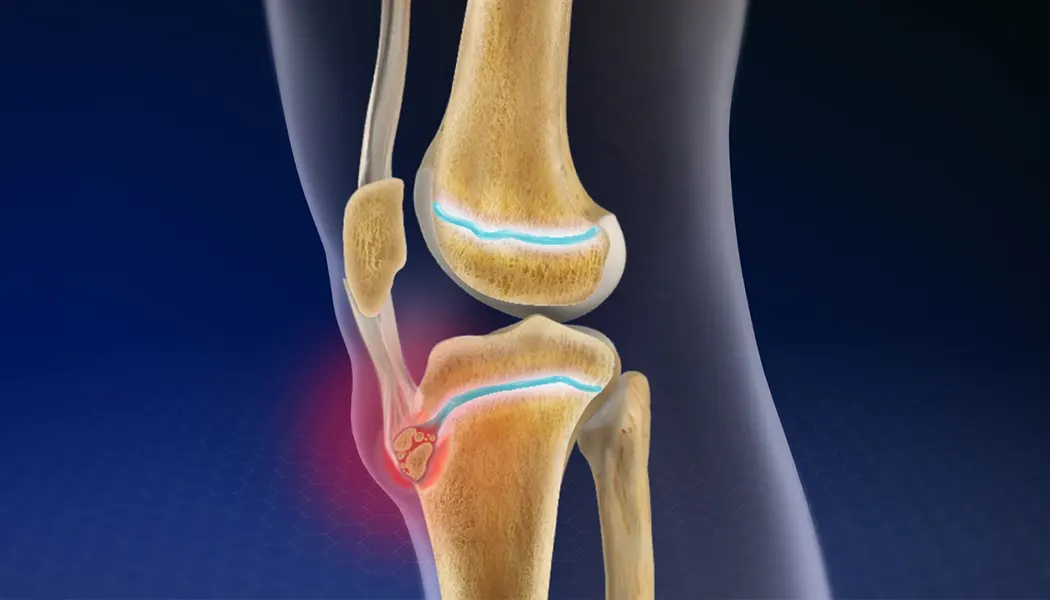
Osgood-Schlatter Disease is a common cause of knee pain in growing children and adolescents, particularly those who participate in running and jumping sports. It affects the area just below the kneecap, where the patellar tendon attaches to the tibial tuberosity at the top of the shinbone. Repeated pulling of the patellar tendon during growth can irritate this area, causing pain, tenderness, and swelling. Symptoms often become worse with activities such as running, jumping, squatting, kneeling, and climbing stairs. At Pure Physio, treatment focuses on managing symptoms, maintaining movement, improving strength and flexibility, and helping young individuals continue or gradually return to their activities safely.
Osgood-Schlatter Disease is an overuse-related condition affecting the growth area at the front of the upper shinbone.
It occurs at the tibial tuberosity, which is the bony prominence located just below the kneecap.
The patellar tendon connects the kneecap, also called the patella, to the tibial tuberosity.
When the quadriceps muscles contract, they pull through:
Quadriceps Muscle
↓
Patella
↓
Patellar Tendon
↓
Tibial Tuberosity
During periods of rapid growth, this attachment area can be more sensitive to repeated pulling forces.
Activities involving repeated:
Running
Jumping
Kicking
Squatting
Rapid Changes of Direction
can repeatedly load the area.
This may cause:
Pain
Tenderness
Swelling
Prominence of the Tibial Tuberosity
Osgood-Schlatter disease is most common during periods of growth and physical activity.
It can affect one or both knees.
Although the name includes the word “disease,” it is not an infection or contagious illness. It is generally considered a traction-related overuse condition associated with growth and repeated stress on the developing tibial tuberosity.
What Are The Symptoms Of Osgood-Schlatter Disease?
Pain Below the Kneecap: Pain is usually felt at the bony area just below the kneecap.
Tenderness: The tibial tuberosity may be painful when touched.
Swelling: Mild swelling may occur around the affected area.
Visible Bony Prominence: The bump below the kneecap may become more noticeable.
Pain During Running: Running may aggravate symptoms.
Pain During Jumping: Take-off and landing activities can increase pain.
Pain During Squatting: Deep bending of the knee may be uncomfortable.
Pain When Climbing Stairs: Repeated bending and straightening of the knee may aggravate symptoms.
Pain During Kicking: Kicking activities may place stress on the painful area.
Pain During Kneeling: Direct pressure over the tibial tuberosity may cause discomfort.
Pain During Sports: Symptoms are commonly aggravated by high-impact and repetitive sporting activities.
Muscle Tightness: Tightness in the quadriceps, hamstrings, or calf muscles may be present.
Reduced Sports Performance: Pain may affect running speed, jumping, and participation.
Pain That Improves with Rest: Symptoms may reduce when the aggravating activity is decreased.
One or Both Knees Affected: The condition may occur on either side or in both knees.
What Are The Causes Of Osgood-Schlatter Disease?
Osgood-Schlatter disease develops due to repeated traction and loading at the tibial tuberosity during growth.
Rapid Growth: During growth spurts, bones may grow quickly while muscles and tendons adapt to changing body dimensions.
Repeated Pulling of the Patellar Tendon: Repeated contraction of the quadriceps creates traction at the tibial tuberosity.
Running and Jumping Sports: Sports with frequent running and jumping can repeatedly load the area.
High Training Volume: Frequent training without adequate recovery may increase stress on the developing knee.
Sudden Increase in Activity: Rapidly increasing sports participation, training intensity, or exercise volume may contribute.
Repeated Kicking: Activities involving frequent kicking can increase force through the knee’s extensor mechanism.
Tight Quadriceps: Reduced flexibility may increase tension around the knee.
Tight Hamstrings: Hamstring tightness may contribute to altered lower-limb movement and knee loading.
Reduced Muscle Strength or Control: Differences in lower-limb strength and movement control may influence how forces are managed during activity.
Repeated High-Impact Activity: Frequent jumping and landing may repeatedly stress the affected growth area.
Osgood-Schlatter disease is particularly common in physically active adolescents during periods of rapid growth.
Diagnosis Of Osgood-Schlatter Disease
Medical History: A healthcare professional will ask about the child’s age, growth, sporting activities, onset of pain, training routine, and activities that worsen symptoms.
Physical Examination: The knee is examined for tenderness, swelling, movement, muscle flexibility, and functional limitations.
Tibial Tuberosity Assessment: The bony area below the kneecap is checked for tenderness and prominence.
Knee Movement Assessment: Bending and straightening of the knee are evaluated.
Muscle Strength Assessment: The strength of the quadriceps, hamstrings, hips, and surrounding muscles may be assessed.
Flexibility Assessment: Tightness in the quadriceps, hamstrings, and calf muscles may be evaluated.
Functional Assessment: Squatting, jumping, running, landing, and sport-specific movements may be assessed when appropriate.
X-Rays: X-rays are not always required but may be used when another condition or bone injury needs to be ruled out.
Ultrasound or MRI: Further imaging is occasionally used when the diagnosis is unclear or symptoms are unusual.
Diagnosis is often based on the person’s age, symptoms, activity history, and physical examination.
Treatment Of Osgood-Schlatter Disease
Treatment is usually focused on managing symptoms and adjusting activity while maintaining appropriate physical activity.
Activity Modification: Activities that cause significant pain may need to be temporarily reduced or modified.
Load Management: Training volume and intensity can be adjusted according to symptoms and recovery.
Relative Rest: A temporary reduction in aggravating high-impact activities may help, while complete inactivity is not always necessary.
Physiotherapy: A structured programme can help improve strength, flexibility, movement control, and activity tolerance.
Ice Therapy: Cold therapy may provide temporary relief after activity for some individuals.
Pain Management: A doctor may recommend appropriate medication when required.
Stretching: Suitable flexibility exercises may help address muscle tightness.
Strengthening: Progressive strengthening can improve the ability of the lower limb to manage activity demands.
Knee Support or Padding: In selected cases, a knee strap or protective padding may be used for comfort during activities, based on professional advice.
Gradual Return to Sport: Sports participation is adjusted and progressed according to symptoms and functional ability.
Education: Young athletes and parents can receive guidance about training loads, recovery, and symptom management.
Symptoms often improve as growth progresses, although a bony prominence may remain below the kneecap in some individuals.
What Is The Physiotherapy Treatment Of Osgood-Schlatter Disease
Detailed Assessment: At Pure Physio, we assess knee pain, tenderness, movement, muscle strength, flexibility, sporting demands, training load, and functional activities.
Activity and Load Management: We help adjust running, jumping, training, and sports participation according to symptoms and individual tolerance.
Quadriceps Strengthening: Controlled exercises may help improve the strength and capacity of the muscles at the front of the thigh.
Hip and Gluteal Strengthening: Exercises may help improve lower-limb control during running, squatting, jumping, and landing.
Hamstring Strengthening: Appropriate exercises can support balanced lower-limb function.
Calf Strengthening: Calf exercises may be included when relevant to overall lower-limb strength and movement.
Flexibility Exercises: Suitable stretching may address tightness in the quadriceps, hamstrings, and calf muscles.
Knee Mobility Exercises: Controlled movement may help maintain comfortable knee mobility.
Movement Retraining: Rehabilitation may address squatting, landing, running, and other movement patterns.
Jump and Landing Training: When symptoms allow, exercises may help improve lower-limb control during jumping and landing.
Balance and Proprioception: Training may improve coordination and stability.
Sport-Specific Rehabilitation: Exercises can be adapted to the demands of football, basketball, athletics, dance, or other activities.
Gradual Return-to-Sport Plan: Training and sports participation are progressively increased according to pain, function, and physical capacity.
Home Exercise Programme: A personalised programme may help support consistent progress between physiotherapy sessions.
Why Choose Pure Physio?
Child and Adolescent-Focused Assessment: We consider growth, physical development, activity levels, sports participation, and individual symptoms.
Personalised Rehabilitation Plans: Treatment is adapted according to the child’s symptoms, physical capacity, sporting demands, and recovery goals.
Focus on Staying Active Safely: We aim to help young individuals maintain appropriate activity while managing excessive stress on the painful area.
Strength and Movement Training: Rehabilitation focuses on improving the strength and control needed for running, jumping, landing, and sports.
Individualised Load Management: We provide practical guidance on adjusting training intensity and volume.
Sport-Specific Rehabilitation: Programmes can be adapted to the specific movements and demands of the child’s sport.
Gradual Return to Activity: Progression is based on symptoms, movement quality, strength, and functional ability.
Parent Guidance: We help parents understand activity modification, recovery, and the importance of appropriate progression.
Focus on Long-Term Movement Health: Our approach supports strength, confidence, and healthy movement during important stages of growth and development.
Integrated Care Approach: If symptoms are unusual, severe, or not improving as expected, we can recommend appropriate medical or specialist assessment as part of a coordinated care plan.
Start Your Recovery Journey Today
Don’t let pain, stiffness, or reduced mobility affect your daily life. Get personalised physiotherapy care designed around your condition and recovery goals.