
Meniscal Injury
Reduce knee pain, restore movement, and return to confident activity with personalised physiotherapy for a meniscal injury.
Contents
Take the First Step Towards Better Movement
Our experienced physiotherapists are here to help you improve mobility, regain strength, and move with greater comfort and confidence.
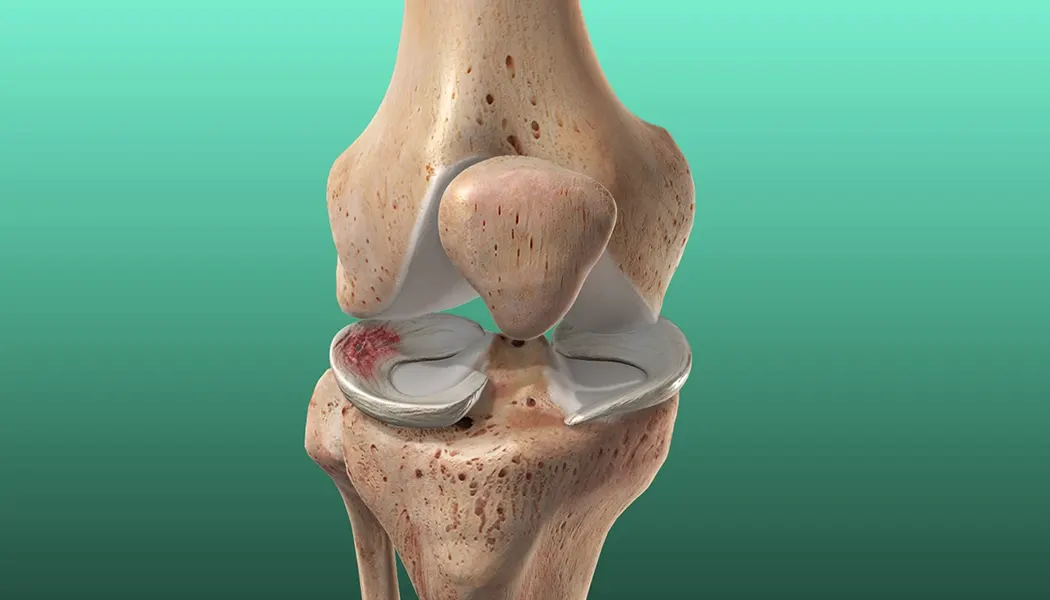
What is Meniscal Injury?
The menisci are two crescent-shaped pieces of tough cartilage located between the thigh bone (femur) and shin bone (tibia) in each knee. There are two menisci in each knee: the medial meniscus on the inner side and the lateral meniscus on the outer side.
The menisci act as important shock absorbers, helping distribute load across the knee joint, improve joint stability, and reduce stress on the articular cartilage. A meniscal injury occurs when this cartilage is damaged or torn.
Meniscal tears can occur suddenly, particularly when the knee twists while the foot is planted, or they can develop gradually due to degenerative changes over time. The severity and symptoms of a meniscal injury depend on the size, location, and type of tear. Some tears may cause minimal symptoms, while others can lead to significant pain, swelling, catching, or mechanical locking of the knee.
What Are The Symptoms Of Meniscal Injury?
Pain And Swelling
Knee Pain: Pain may occur along the inner or outer joint line of the knee.
Swelling: The knee may become swollen after the injury or following activity.
Joint Line Tenderness: The area around the meniscus may be painful when pressed.
Stiffness: The knee may feel stiff or difficult to move.
Movement Symptoms
Difficulty Bending the Knee: Deep bending may cause pain or restriction.
Difficulty Straightening the Knee: Some injuries can make full knee extension difficult.
Reduced Range of Motion: The knee may not move through its normal range.
Pain with Squatting: Squatting or kneeling may aggravate symptoms.
Pain with Twisting: Rotating or pivoting on the affected leg may cause pain.
Mechanical Symptoms
Clicking: A clicking sensation or sound may occur during movement.
Catching: The knee may feel as though something is catching inside the joint.
Locking: The knee may occasionally become stuck and unable to move normally.
Giving Way: The knee may feel unstable or suddenly give way.
Functional Symptoms
Difficulty Walking: Pain or stiffness may affect your walking pattern.
Difficulty Using Stairs: Climbing or descending stairs may become uncomfortable.
Reduced Sporting Ability: Running, jumping, pivoting, and other activities may become difficult.
Reduced Confidence: Pain or mechanical symptoms may cause hesitation during movement.
Not everyone with a meniscal tear experiences locking or clicking, and the severity of symptoms does not always directly match the size of the tear.
What Are The Causes Of Meniscal Injury?
Meniscal injuries can occur suddenly or develop gradually.
Traumatic Causes
Twisting the Knee: A sudden twist while the foot is planted is a common cause.
Pivoting: Rapid changes in direction can place force on the meniscus.
Sporting Injuries: Football, basketball, cricket, skiing, and other sports involving twisting or pivoting can increase risk.
Squatting with Rotation: Deep bending combined with rotation may stress the meniscus.
Sudden Impact: A direct force to the knee can sometimes contribute to injury.
Associated Ligament Injury: Meniscal tears can occur alongside injuries such as an ACL tear.
Degenerative Causes
Age-Related Changes: The meniscus can become less resilient over time.
Repeated Loading: Years of regular knee loading may contribute to degenerative changes.
Previous Knee Injury: Previous injuries may alter knee mechanics and increase future risk.
Osteoarthritis: Degenerative joint changes can occur alongside degenerative meniscal tears.
Repetitive Kneeling or Squatting: Repeated high-load knee positions may contribute to symptoms in some individuals.
Diagnosis Of Meniscal Injury
Medical History: A healthcare professional will ask how your symptoms began, whether there was a twisting injury, and which activities aggravate your knee.
Physical Examination: The knee is assessed for swelling, joint-line tenderness, movement, stability, and pain.
Range of Motion Assessment: Knee bending and straightening are evaluated.
Meniscal Tests: Specific clinical tests may be performed to assess for signs of meniscal involvement.
Strength Assessment: The strength of the quadriceps, hamstrings, and hip muscles may be evaluated.
Functional Assessment: Activities such as squatting, stepping, walking, and balance may be assessed.
X-Rays: X-rays do not show the meniscus directly but may help identify bone or arthritic changes.
MRI: MRI can provide detailed images of the meniscus and other soft tissues within the knee.
Arthroscopy: In selected cases, a small camera may be inserted into the knee to assess and sometimes treat joint problems.
Diagnosis is based on a combination of symptoms, physical examination, and imaging when required.
Treatment Of Meniscal Injury
Treatment depends on the type and location of the tear, symptoms, age, activity level, associated injuries, and overall knee health.
Activity Modification: Activities that significantly aggravate symptoms may be temporarily reduced.
Relative Rest: Short-term reduction of painful activities may help manage symptoms.
Ice or Cold Therapy: Cold therapy may provide temporary relief from pain and swelling for some people.
Compression: Compression may help manage swelling when appropriate.
Elevation: Elevating the leg may help reduce swelling.
Pain Management: A healthcare professional may recommend suitable medication when required.
Physiotherapy: Rehabilitation can improve knee movement, strength, stability, and function.
Progressive Exercise: Strengthening and functional exercises help the knee tolerate everyday and sporting demands.
Weight Management: Maintaining an appropriate body weight may reduce excessive knee loading.
Injections: Certain injections may be considered in selected cases under medical guidance.
Meniscal Repair: Surgery may be considered for certain tears, particularly when the tear has the potential to heal and repair is appropriate.
Partial Meniscectomy: In selected cases, damaged meniscal tissue may be trimmed while preserving as much healthy tissue as possible.
Not every meniscal tear requires surgery. The best approach depends on the individual and should be discussed with an orthopaedic specialist when appropriate.
What Is The Physiotherapy Treatment Of Meniscal Injury
Detailed Assessment: At Pure Physio, we assess your pain, swelling, knee movement, muscle strength, balance, stability, walking pattern, and functional limitations.
Individualised Rehabilitation Programme: Your treatment plan is based on your symptoms, type of injury, current physical ability, activity level, and recovery goals.
Pain-Guided Activity Modification: We help you remain appropriately active while reducing movements that unnecessarily aggravate the knee.
Swelling Management: Appropriate strategies may be used to help manage swelling and improve comfortable movement.
Range of Motion Exercises: Gentle exercises help restore comfortable knee bending and straightening.
Quadriceps Strengthening: Exercises help rebuild the strength of the thigh muscles that support the knee.
Hamstring Strengthening: Progressive exercises improve strength and control at the back of the thigh.
Hip and Gluteal Strengthening: Improving hip strength can support lower-limb alignment and knee control.
Balance Training: Exercises help improve stability and confidence on the affected leg.
Movement Control Training: Rehabilitation addresses control during activities such as squatting, stepping, and changing direction.
Walking Rehabilitation: We help restore a comfortable and efficient walking pattern.
Functional Training: Exercises progress toward activities such as stairs, squatting, kneeling, and other everyday movements.
Proprioception Training: Exercises can improve awareness and control of knee position during movement.
Low-Impact Conditioning: Suitable activities may help maintain general fitness while reducing unnecessary stress on the knee.
Return-to-Running Progression: Running is gradually reintroduced when symptoms, strength, and movement control allow.
Sport-Specific Rehabilitation: Athletes may progress to jumping, cutting, pivoting, and other sport-specific activities.
Post-Operative Rehabilitation: If surgery is required, your programme is adapted according to the specific procedure and your surgeon’s rehabilitation guidelines.
Home Exercise Programme: A personalised programme supports continued progress between physiotherapy sessions.
Progress Monitoring: Your rehabilitation is reviewed and progressed according to pain, swelling, movement, strength, and functional improvement.
Why Choose Pure Physio?
Detailed Knee Assessment: We assess your pain, swelling, movement, strength, balance, and functional limitations.
Personalised Treatment Plans: Your rehabilitation is tailored to your specific injury, symptoms, activity level, and goals.
Focus on Restoring Knee Movement: We work to improve comfortable knee bending and straightening.
Strength and Stability Development: Rehabilitation helps strengthen the muscles that support and control the knee.
Balance and Movement Control: Exercises improve stability and confidence during everyday movement.
Functional Rehabilitation: Therapy focuses on practical activities such as walking, stairs, squatting, work, exercise, and sport.
Conservative Management Support: Where appropriate, we provide structured rehabilitation to support non-surgical recovery.
Post-Surgical Rehabilitation: If surgery is required, we support your recovery according to the procedure and surgical guidelines.
Safe Return to Activity: We gradually prepare you for higher-demand activities based on your strength, symptoms, and functional ability.
Sport-Specific Progression: Rehabilitation can prepare active individuals for running, jumping, pivoting, and returning to sport.
Home Exercise Guidance: You receive a personalised programme to support consistent recovery between sessions.
Regular Progress Monitoring: Your treatment plan is reviewed and adapted as your knee function improves.
Integrated Care Approach: We support your rehabilitation alongside orthopaedic specialists and other healthcare professionals when required.
Focused on Long-Term Knee Health: Our goal is to help reduce symptoms, restore strength and movement, improve confidence, and support a safe return to the activities that matter to you.
Start Your Recovery Journey Today
Don’t let pain, stiffness, or reduced mobility affect your daily life. Get personalised physiotherapy care designed around your condition and recovery goals.