Hill-Sachs Lesion
Regain shoulder strength, stability, and confidence with personalised rehabilitation after a shoulder dislocation or Hill-Sachs lesion.
Contents
Take the First Step Towards Better Movement
Our experienced physiotherapists are here to help you improve mobility, regain strength, and move with greater comfort and confidence.
What is Hill-Sachs Lesion?
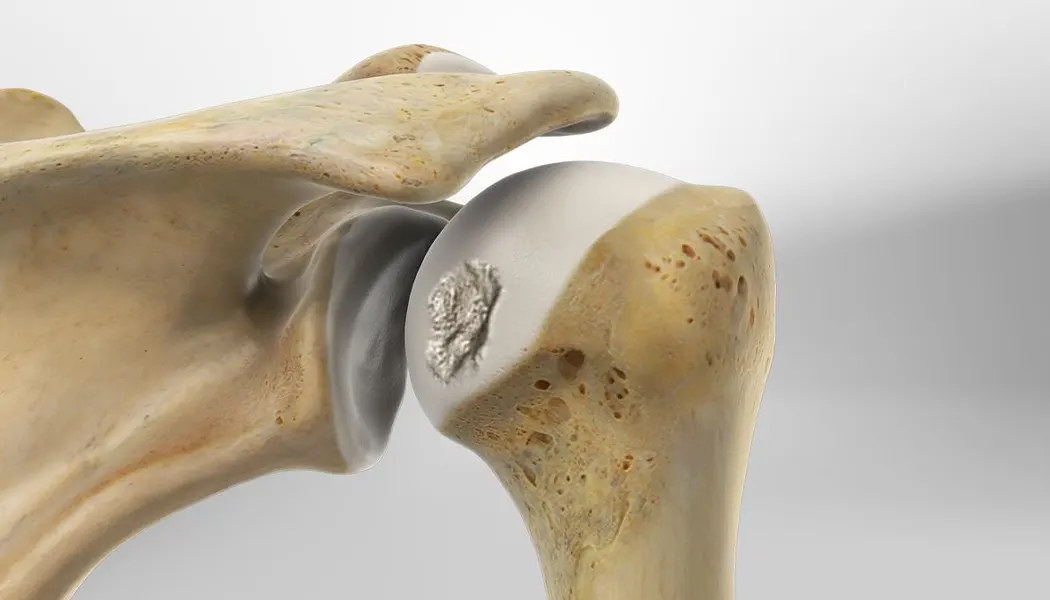
A Hill-Sachs Lesion is a compression injury or indentation on the back and outer part of the head of the humerus, the upper arm bone. It most commonly occurs when the shoulder dislocates toward the front, known as an anterior shoulder dislocation. During dislocation, the humeral head can forcefully impact against the edge of the shoulder socket, causing a dent-like defect in the bone. A Hill-Sachs lesion may increase the risk of ongoing shoulder instability, particularly when the lesion is large or associated with other injuries. At Pure Physio, rehabilitation focuses on restoring safe shoulder movement, improving rotator cuff and shoulder blade strength, enhancing joint control, and supporting a confident return to everyday activities and sports.
A Hill-Sachs Lesion is a compression defect of the humeral head.
The shoulder is a ball-and-socket joint made up of:
Humeral Head: The ball-shaped upper end of the arm bone.
Glenoid: The socket-shaped part of the shoulder blade.
During an anterior shoulder dislocation, the humeral head moves forward out of the glenoid.
As this happens, the back and outer part of the humeral head can strike against the front edge of the glenoid.
This forceful contact may create a:
Depression
Indentation
Compression Defect
in the humeral head.
This injury is called a Hill-Sachs lesion.
The lesion may vary in size and depth.
A small lesion may not cause significant symptoms after the shoulder recovers, while a larger lesion may contribute to repeated shoulder instability.
A Hill-Sachs lesion can also occur with other injuries caused by shoulder dislocation, including:
Labral Injuries
Bankart Lesion
Capsular Injury
Rotator Cuff Injury
Glenoid Bone Loss
The clinical importance of the lesion depends on factors such as its size, location, whether it engages with the glenoid during movement, and the presence of other shoulder injuries.
What Are The Symptoms Of Hill-Sachs Lesion?
Symptoms are often related to the shoulder dislocation and associated injuries rather than the bone defect alone.
Shoulder Pain: Pain may occur after the dislocation or during shoulder movement.
Shoulder Instability: The shoulder may feel loose or unstable.
Feeling That the Shoulder May Slip Out: A sensation of the joint moving or giving way may occur.
Fear of Certain Movements: Reaching the arm backward or into certain overhead positions may cause apprehension.
Reduced Range of Motion: Pain, swelling, or protective muscle tightening may limit shoulder movement.
Shoulder Weakness: The shoulder may feel weak after injury.
Pain During Overhead Activities: Reaching or lifting above shoulder level may be uncomfortable.
Pain During Sports: Throwing, swimming, racquet sports, and contact sports may aggravate symptoms.
Repeated Shoulder Dislocations: Larger or clinically significant lesions may be associated with recurrent instability.
Clicking or Catching: Associated labral or joint injuries may cause mechanical symptoms.
Reduced Confidence in Using the Arm: People may avoid certain movements due to fear of another dislocation.
Difficulty with Daily Activities: Dressing, reaching, lifting, carrying, and sleeping may be affected.
Numbness or Tingling: A dislocation may occasionally affect nearby nerves and cause altered sensation or weakness.
A shoulder that is visibly dislocated, severely deformed, or associated with new numbness, weakness, or circulation changes requires urgent medical assessment.
What Are The Causes Of Hill-Sachs Lesion?
A Hill-Sachs lesion usually occurs due to forceful contact between the humeral head and glenoid during a shoulder dislocation.
Anterior Shoulder Dislocation: This is the most common cause.
Traumatic Injury: Falls, collisions, or forceful impacts can dislocate the shoulder.
Sports Injuries: Contact sports, football, rugby, wrestling, martial arts, and other high-impact activities may increase the risk.
Fall onto an Outstretched Arm: A fall can place the shoulder in a position that leads to dislocation.
Forceful Arm Position: Sudden force while the arm is abducted and externally rotated can contribute to anterior dislocation.
Road Traffic Accidents: High-energy trauma can cause shoulder dislocation and associated bone injury.
Previous Shoulder Dislocations: Recurrent instability increases the likelihood of repeated injury to the shoulder structures.
Seizures or Electric Shock: These can cause shoulder dislocation, although the direction and associated injury pattern may vary.
The Hill-Sachs lesion itself develops as a result of the humeral head impacting the glenoid during the dislocation event.
Diagnosis Of Hill-Sachs Lesion
Medical History: A healthcare professional will ask about the injury, whether the shoulder dislocated, previous episodes of instability, pain, and functional limitations.
Physical Examination: Shoulder movement, strength, stability, tenderness, and associated injuries are assessed.
Instability Assessment: Specific clinical tests may be performed to assess whether the shoulder feels unstable or shows signs of recurrent dislocation.
Neurological Assessment: Sensation and muscle function may be checked to identify possible nerve involvement.
X-Rays: X-rays can identify shoulder dislocation and may show a Hill-Sachs lesion.
CT Scan: CT provides detailed images of bone and may help assess the size and location of the lesion and any glenoid bone loss.
MRI: MRI may assess associated injuries involving the labrum, ligaments, capsule, rotator cuff, and other soft tissues.
MR Arthrogram: In selected cases, contrast MRI may provide additional information about labral and capsular injuries.
Accurate assessment of both the Hill-Sachs lesion and associated shoulder injuries is important when determining the risk of recurrent instability.
Treatment Of Hill-Sachs Lesion
Treatment depends on the size and significance of the lesion, shoulder stability, associated injuries, activity level, and history of recurrent dislocation.
Reduction of Shoulder Dislocation: If the shoulder is currently dislocated, it requires prompt medical reduction by an appropriately trained healthcare professional.
Initial Protection: Following reduction, the shoulder may require temporary protection according to medical advice.
Pain Management: A doctor may recommend appropriate medication for pain.
Physiotherapy: Rehabilitation is commonly used to restore movement, strength, stability, and shoulder control.
Range of Motion Exercises: Controlled movement is gradually restored according to the stage of recovery.
Rotator Cuff Strengthening: Exercises help improve the strength and control of muscles that stabilise the shoulder.
Scapular Strengthening: Strengthening the muscles controlling the shoulder blade can support efficient shoulder movement.
Proprioception Training: Exercises may improve joint position awareness and dynamic shoulder control.
Activity Modification: High-risk movements or activities may need to be temporarily modified during recovery.
Gradual Return to Sport: Sports participation is progressed based on stability, strength, movement, and functional testing.
Surgical Treatment: Surgery may be considered for significant bone loss, a large or engaging Hill-Sachs lesion, recurrent instability, or associated injuries.
Stabilisation Procedures: Different surgical techniques may be used to address shoulder instability and associated bone defects.
The treating orthopaedic specialist will determine whether conservative rehabilitation or surgical management is most appropriate.
What Is The Physiotherapy Treatment Of Hill-Sachs Lesion
Detailed Shoulder Assessment: At Pure Physio, rehabilitation begins by assessing pain, shoulder movement, strength, stability, previous dislocations, activity demands, and functional goals.
Protection and Early Guidance: During the initial stage, we provide guidance on safe movement and activities according to medical recommendations.
Gradual Range of Motion Exercises: Controlled exercises help restore shoulder movement while respecting healing tissues and stability.
Rotator Cuff Strengthening: Progressive exercises improve the strength and endurance of muscles that support shoulder stability.
Scapular Stabilisation Exercises: Rehabilitation focuses on improving shoulder blade strength, control, and coordination.
Isometric Exercises: Early muscle activation exercises may be introduced when appropriate.
Progressive Resistance Training: Strengthening is gradually progressed as movement and stability improve.
Neuromuscular Re-Education: Exercises may help improve muscle coordination and dynamic control of the shoulder.
Proprioception Training: Rehabilitation may include exercises to improve awareness of shoulder position and control during movement.
Closed-Chain Exercises: Weight-bearing exercises through the arm may be introduced at an appropriate stage to improve stability and control.
Functional Movement Training: Therapy focuses on reaching, lifting, pushing, pulling, and other activities needed for everyday life.
Sport-Specific Rehabilitation: Athletes may progress through throwing, contact, overhead, or sport-specific exercises based on their individual demands.
Return-to-Sport Testing: Functional assessment may help guide a safe return to higher-level activity.
Post-Surgical Rehabilitation: If surgery is performed, the programme follows the surgeon’s protocol and is progressed according to healing and clinical recovery.
Home Exercise Programme: A personalised programme supports continued strength and shoulder control between physiotherapy sessions.
Why Choose Pure Physio?
Detailed Shoulder and Instability Assessment: We assess your movement, strength, stability, injury history, and functional limitations.
Personalised Rehabilitation Plans: Your treatment programme is adapted according to the severity of injury, associated conditions, treatment approach, activity demands, and recovery goals.
Focus on Shoulder Stability: Rehabilitation targets the muscle strength and control needed to support a stable and confident shoulder.
Rotator Cuff and Scapular Rehabilitation: We focus on the coordinated function of key muscle groups involved in shoulder movement and stability.
Safe Exercise Progression: Exercises are gradually advanced according to healing, symptoms, stability, and medical guidance.
Proprioception and Movement Control: Rehabilitation helps improve shoulder awareness and control during everyday and sporting movements.
Functional Recovery Focus: Treatment is designed around the movements needed for work, lifting, exercise, sports, and daily activities.
Support for Return to Sport: Athletes receive progressive rehabilitation based on the specific demands of their sport.
Post-Dislocation and Post-Surgical Rehabilitation: We can support recovery following appropriate medical treatment, reduction, or surgery.
Integrated Care Approach: Where specialist assessment, imaging, or surgical treatment is required, physiotherapy can form part of a coordinated care plan focused on restoring safe movement and long-term shoulder function.
Start Your Recovery Journey Today
Don’t let pain, stiffness, or reduced mobility affect your daily life. Get personalised physiotherapy care designed around your condition and recovery goals.