
Hammer Toe
Reduce toe discomfort, improve foot mobility, and move with greater comfort through personalised physiotherapy for Hammer Toe.
Contents
Take the First Step Towards Better Movement
Our experienced physiotherapists are here to help you improve mobility, regain strength, and move with greater comfort and confidence.
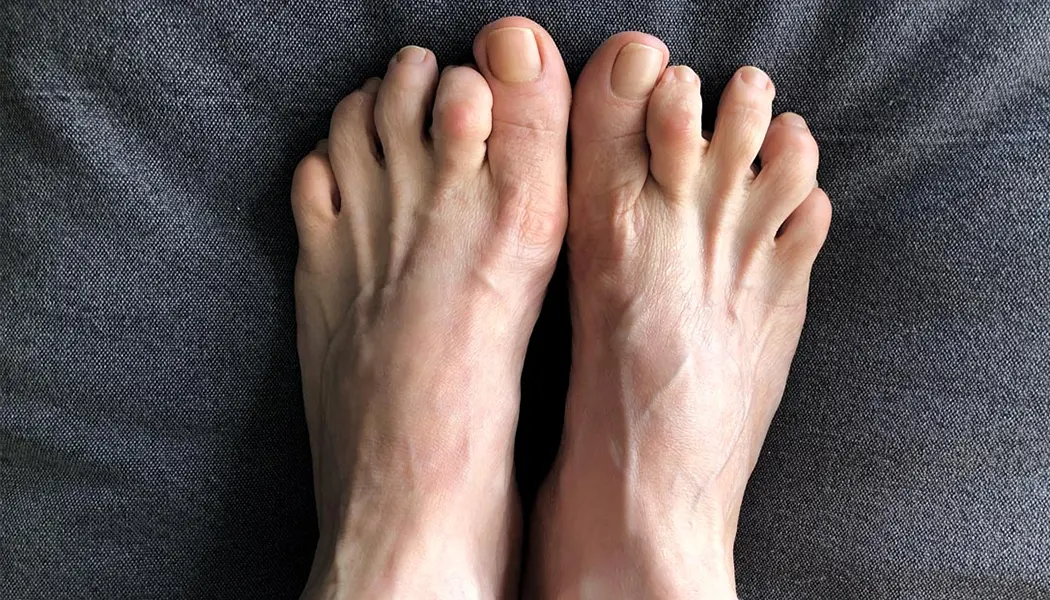
What is Hammer Toe?
A Hammer Toe is a deformity affecting one of the smaller toes.
The condition usually involves abnormal bending at the proximal interphalangeal (PIP) joint, which is the middle joint of the toe.
This creates a characteristic bent or curled appearance.
Hammer Toe may involve:
One Toe or Multiple Toes
One Foot or Both Feet
In the early stages, the toe may be:
Flexible
Manually Correctable
As the condition progresses, the toe can become:
Stiff
Less Flexible
Fixed in a Bent Position
The abnormal toe position can cause the top, tip, or underside of the toe to experience increased pressure against footwear or the ground.
This may lead to:
Pain
Skin Irritation
Corns
Calluses
Difficulty Wearing Shoes
Hammer Toe should be assessed individually because other toe deformities, such as Mallet Toe or Claw Toe, can have different joint positions and contributing factors.
What Are The Symptoms Of Hammer Toe?
Common Symptoms
Bent or Curled Toe: One of the smaller toes has an abnormal bent appearance.
Pain in the Toe: The affected joint or surrounding tissues may become painful.
Pain While Wearing Shoes: Pressure from footwear can increase discomfort.
Corns or Calluses: Thickened skin may develop where the toe repeatedly rubs against the shoe or ground.
Difficulty Moving the Toe: The toe may become stiff or difficult to straighten.
Redness or Irritation: Repeated friction can irritate the skin.
Other Possible Symptoms
Swelling: The affected toe joint may become swollen.
Pain During Walking: Pressure on the toe may cause discomfort during weight-bearing.
Pain at the Tip of the Toe: A bent toe can increase pressure on the toe tip.
Pain on the Top of the Toe: The raised joint may rub against the upper part of the shoe.
Difficulty Finding Comfortable Footwear: Tight or shallow shoes may press against the bent toe.
Balance Changes: In some cases, significant toe deformity can affect foot stability.
Changes in Walking Pattern: You may alter the way you walk to avoid pressure on the painful area.
Progressive Stiffness: The toe may gradually become less flexible over time.
What Are The Causes Of Hammer Toe?
Hammer Toe can develop due to an imbalance between the muscles and tendons controlling the toe.
Muscle Imbalance: Uneven pulling forces can gradually change the position of the toe joints.
Tendon Tightness: Tight or shortened tendons can contribute to a bent toe position.
Tight or Narrow Footwear: Shoes that compress the toes may aggravate symptoms and contribute to abnormal positioning in susceptible individuals.
Foot Structure: Certain foot shapes or anatomical differences may increase the likelihood of toe deformities.
Longer Toes: A toe that is longer relative to the surrounding toes may experience increased pressure.
High Foot Arch: Certain high-arched foot structures may be associated with altered muscle and tendon forces.
Flat Foot Mechanics: Changes in foot movement and loading may contribute in some individuals.
Previous Foot Injury: Trauma can affect joint alignment or muscle and tendon function.
Arthritis: Joint changes can contribute to stiffness and deformity.
Neurological Conditions: Some nerve or muscle conditions can affect muscle balance and foot position.
Diabetes: Diabetes-related nerve or muscle changes can contribute to foot deformities in some individuals.
Genetics: A tendency towards certain foot shapes can run in families.
Diagnosis Of Hammer Toe
Medical History: A healthcare professional will ask about when the toe changed shape, pain levels, footwear, previous injuries, medical history, and functional difficulties.
Physical Examination: The toe is assessed for joint position, flexibility, stiffness, swelling, tenderness, and skin changes.
Flexible or Fixed Deformity Assessment: The ability to manually straighten the toe may help assess whether the deformity remains flexible or has become more fixed.
Foot Posture Assessment: Overall foot shape, arch position, and alignment are evaluated.
Walking Assessment: Your walking pattern and foot loading may be assessed.
Range of Motion Assessment: Movement of the toes, foot, and ankle is evaluated.
Strength Testing: The muscles of the toes, foot, ankle, and lower limb may be assessed.
Footwear Assessment: Shoe fit, width, depth, toe-box space, and areas of pressure may be considered.
Neurological Assessment: Sensation and muscle function may be assessed when a neurological cause is suspected.
X-Rays: X-rays may be used to assess joint alignment, arthritis, or other bone changes.
Treatment Of Hammer Toe
Treatment depends on whether the toe deformity is flexible or fixed and how significantly it affects comfort and function.
Footwear Modification: Shoes with adequate width and depth can help reduce pressure on the affected toe.
Avoiding Tight or Shallow Shoes: Reducing pressure on the top and front of the toe may improve comfort.
Toe Pads or Protective Devices: Pads or other protective supports may help reduce friction and pressure in selected cases.
Toe Spacers: These may help improve comfort and toe positioning in appropriate individuals.
Orthoses or Insoles: Insoles may be recommended to improve comfort or address contributing foot mechanics.
Activity Modification: Temporarily adjusting activities that significantly aggravate symptoms may help manage discomfort.
Pain Management: Appropriate medication may be recommended by a healthcare professional when required.
Physiotherapy: A structured programme can help maintain or improve available movement, strengthen supporting muscles, and improve foot function.
Toe Exercises: Specific exercises may help maintain flexibility and active control, particularly when the deformity is still flexible.
Stretching: Carefully selected stretches may help address tight muscles and tendons.
Treatment of Underlying Conditions: Arthritis, neurological conditions, or other contributing factors may require additional medical management.
Specialist Referral: Significant pain, skin breakdown, progressive deformity, or functional difficulty may require assessment by a podiatrist or orthopaedic specialist.
Surgery: Surgical correction may be considered when a fixed deformity causes significant symptoms that do not improve with conservative treatment.
What Is The Physiotherapy Treatment Of Hammer Toe
Detailed Assessment: At Pure Physio, we assess toe alignment, joint flexibility, pain, foot posture, muscle strength, walking pattern, footwear, activity demands, and functional limitations.
Individualised Rehabilitation Programme: Your treatment is tailored according to your symptoms, whether the deformity is flexible or fixed, foot mechanics, lifestyle, and recovery goals.
Pain Management Strategies: Appropriate treatment and exercise selection may help manage discomfort and reduce unnecessary irritation.
Toe Mobility Exercises: Carefully selected movements help maintain or improve available flexibility in the affected toe.
Toe Stretching Exercises: Controlled stretches may help address tightness in the muscles and tendons affecting toe position.
Manual Mobility Techniques: When appropriate, hands-on techniques may be used to support comfortable joint movement.
Intrinsic Foot Muscle Training: Exercises help strengthen the small muscles within the foot.
Toe Strengthening Exercises: Targeted exercises improve active control and strength of the toes.
Foot Strengthening: Progressive exercises improve overall foot support and control.
Arch Control Exercises: When appropriate, exercises may help improve active control of the foot during standing and walking.
Ankle Strengthening: Exercises support lower-limb strength and stability.
Calf Strengthening: Progressive exercises help support walking and push-off function.
Calf Mobility Exercises: Mobility work may help address restricted ankle movement when present.
Balance and Proprioception Training: Exercises improve foot and ankle awareness, stability, and confidence.
Walking Retraining: We assess and guide movement patterns to support comfortable and efficient walking.
Movement Retraining: Therapy may address lower-limb control during standing, walking, squatting, and other functional activities.
Footwear Guidance: Practical advice can help you consider shoe width, depth, toe-box space, comfort, and activity requirements.
Toe Support Guidance: When appropriate, we provide guidance regarding recommended toe pads, spacers, or other supports.
Orthotic Support Guidance: When insoles or orthoses are recommended, we provide guidance on using them as part of your broader management plan.
Activity and Load Management: We help you adjust and progressively return to standing, walking, exercise, and other activities according to your symptoms.
Post-Surgical Rehabilitation: If surgical correction is required, physiotherapy can support recovery of movement, strength, walking ability, and functional confidence according to your surgeon’s instructions.
Home Exercise Programme: A personalised programme supports continued mobility, strengthening, and foot care between appointments.
Progress Monitoring: Your rehabilitation is regularly reviewed and adjusted according to pain, toe movement, strength, walking ability, footwear tolerance, and functional progress.
Why Choose Pure Physio?
Comprehensive Foot and Toe Assessment: We assess toe alignment, flexibility, pain, foot posture, movement, strength, walking patterns, footwear, and functional limitations.
Personalised Rehabilitation Plans: Your programme is tailored according to your symptoms, foot mechanics, activity demands, lifestyle, and personal goals.
Focus on Comfortable Foot Function: Rehabilitation aims to improve available movement, strength, foot control, and comfort during daily activities.
Maintain Toe and Foot Mobility: Carefully selected exercises help support comfortable movement and flexibility.
Build Foot and Lower-Limb Strength: Progressive rehabilitation targets the toes, foot, ankle, calf, hips, and other muscles supporting movement.
Improve Foot Control: Targeted exercises help improve active support and movement control during standing and walking.
Walking and Movement Retraining: We help improve movement patterns to support more comfortable and efficient daily activity.
Footwear Guidance: Practical advice helps you make informed decisions about shoe fit, width, depth, toe-box space, comfort, and support.
Toe Support Guidance: When recommended, we provide guidance on protective pads, spacers, or other supportive options.
Activity Management Support: We help you progressively return to standing, walking, exercise, and other activities according to symptoms and functional ability.
Functional Recovery Focus: Therapy targets meaningful activities such as standing, walking, exercising, and participating in everyday life.
Post-Surgical Rehabilitation Support: Structured physiotherapy can support recovery following surgical correction when required.
Safe Exercise Progression: Your programme is adjusted according to symptoms, strength, mobility, and functional progress.
Home Exercise Guidance: You receive a personalised programme to support consistent progress outside your appointments.
Regular Progress Monitoring: Your rehabilitation is reviewed and adapted according to changes in pain, movement, strength, walking ability, and function.
Integrated Care Approach: We work alongside doctors, podiatrists, orthopaedic specialists, and other healthcare professionals when required.
Focused on Long-Term Foot Function: Our goal is to reduce discomfort, improve available mobility and strength, support better foot control, and help you stay active and confident in your daily life.
Start Your Recovery Journey Today
Don’t let pain, stiffness, or reduced mobility affect your daily life. Get personalised physiotherapy care designed around your condition and recovery goals.