Golfer’s Elbow
Reduce elbow pain, rebuild tendon strength, and return to daily activities and sport with confidence through personalised physiotherapy for Golfer’s Elbow.
Contents
Take the First Step Towards Better Movement
Our experienced physiotherapists are here to help you improve mobility, regain strength, and move with greater comfort and confidence.
What is Golfer’s Elbow?
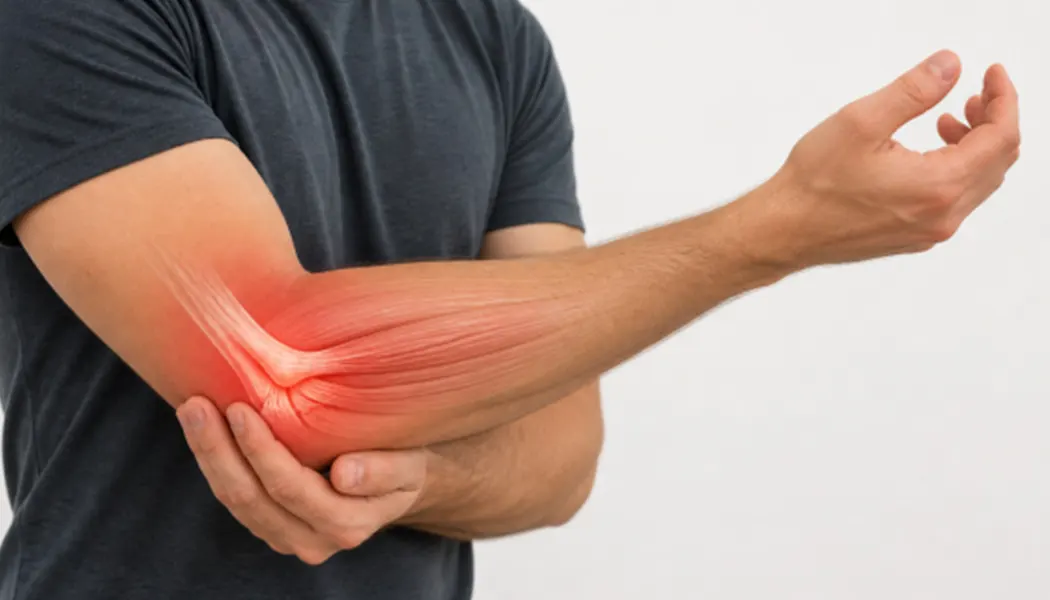
Golfer’s Elbow is a tendon-related condition affecting the muscles and tendons attached to the medial epicondyle, the bony prominence on the inside of the elbow.
The affected tendons are connected to forearm muscles that help with:
Wrist Flexion
Finger Flexion
Forearm Pronation
Gripping Activities
When these tissues are exposed to more load than they can currently tolerate, pain and reduced function can develop.
Golfer’s Elbow is commonly associated with:
Repetitive Gripping
Forceful Wrist Movements
Lifting
Throwing
Racket Sports
Manual Work
The condition is often described as a form of tendinopathy, meaning the tendon may have changes in its ability to tolerate and respond to load.
Symptoms can develop gradually or may begin after a sudden increase in activity.
What Are The Symptoms Of Golfer’s Elbow?
Common Symptoms
Pain on the Inside of the Elbow: Discomfort is usually felt around the bony area on the inner side of the elbow.
Tenderness: The area may be painful when touched or pressed.
Pain During Gripping: Holding objects tightly may increase symptoms.
Pain During Wrist Movements: Bending the wrist or forceful hand movements can cause discomfort.
Pain During Lifting: Carrying or lifting objects may aggravate symptoms.
Reduced Grip Strength: The hand may feel weaker because of pain or reduced tendon capacity.
Other Possible Symptoms
Pain into the Forearm: Symptoms may spread from the elbow into the inner forearm.
Pain During Sport: Activities such as golf, tennis, throwing, or weight training may increase discomfort.
Pain During Manual Work: Repetitive tool use, lifting, or gripping may aggravate symptoms.
Pain When Opening Jars: Twisting and gripping movements can be painful.
Pain Using a Computer Mouse: Repeated hand and wrist activity may contribute to discomfort in some people.
Morning Stiffness: The elbow or forearm may feel stiff after rest.
Pain with Repetitive Movements: Symptoms may increase with repeated wrist and hand activity.
Difficulty Performing Daily Tasks: Activities such as carrying bags, cooking, cleaning, or shaking hands may become uncomfortable.
What Are The Causes Of Golfer’s Elbow?
Golfer’s Elbow usually develops when the tendon is exposed to repetitive or excessive loading.
Repetitive Gripping: Frequent or forceful gripping can overload the forearm tendons.
Repeated Wrist Flexion: Repeated bending of the wrist can increase tendon demand.
Repetitive Forearm Rotation: Frequent pronation movements may contribute to overload.
Sudden Increase in Activity: Rapidly increasing exercise, training, or work demands can exceed tendon capacity.
Golf: Repetitive swinging and gripping can place stress on the inner elbow.
Throwing Sports: Repeated throwing can place significant load on the medial side of the elbow.
Racket Sports: Repeated gripping and stroke movements may contribute.
Weight Training: Certain exercises may overload the forearm and elbow if load progression or technique is not appropriate.
Manual Occupations: Repetitive use of tools, lifting, carrying, or forceful hand movements can contribute.
Poor Load Management: Insufficient recovery between demanding activities can increase the risk of persistent symptoms.
Muscle Weakness: Reduced forearm or upper-limb strength may affect the ability to tolerate repeated loading.
Diagnosis Of Golfer’s Elbow
Medical History: A healthcare professional will ask about your symptoms, work, sport, exercise routine, hand use, and activities that aggravate or relieve pain.
Physical Examination: The elbow and forearm are assessed for tenderness, movement, strength, and symptom reproduction.
Palpation: Pressure around the medial epicondyle and tendon attachment may reproduce familiar pain.
Resisted Strength Testing: Wrist and finger movements against resistance may help assess the involved muscles and tendons.
Grip Strength Testing: Hand and forearm strength may be evaluated.
Range of Motion Assessment: Movement of the elbow, wrist, and forearm is assessed.
Functional Assessment: Activities involving gripping, lifting, reaching, and work or sport-specific movements may be evaluated.
Neck and Shoulder Assessment: The neck and upper limb may also be assessed because symptoms can sometimes be influenced by other regions.
Nerve Assessment: Sensation and nerve-related symptoms may be assessed when appropriate.
Ultrasound: Ultrasound may be used in selected cases to assess the tendon.
MRI Scan: MRI may be considered when the diagnosis is uncertain or a significant tendon injury is suspected.
X-Rays: X-rays may be used when bone or joint problems are suspected.
Treatment Of Golfer’s Elbow
Treatment is based on your symptoms, tendon capacity, work demands, sporting activities, and functional goals.
Activity Modification: Temporarily adjusting activities that significantly aggravate symptoms can help manage tendon overload.
Load Management: Gradually managing and progressing tendon loading is an important part of recovery.
Physiotherapy: A structured rehabilitation programme can help improve strength, tendon capacity, movement, and function.
Progressive Strengthening: Carefully progressed exercises help improve the ability of the tendon and surrounding muscles to tolerate load.
Pain Management: Appropriate medication may be recommended by a healthcare professional when required.
Bracing or Strapping: A brace or strap may provide temporary symptom relief for selected individuals.
Workstation or Ergonomic Changes: Adjustments to repetitive work activities may help reduce unnecessary strain.
Technique Modification: Changes to sport or exercise technique may help reduce excessive loading.
Restoring Mobility: Addressing relevant restrictions in the wrist, elbow, shoulder, or upper limb may support movement.
Injection Treatment: In selected cases, a healthcare professional may consider injection treatment depending on the diagnosis and individual circumstances.
Specialist Referral: Persistent symptoms, significant weakness, nerve symptoms, or suspected tendon injury may require further medical assessment.
Surgery: Surgery is rarely required but may be considered in selected cases when significant symptoms persist despite appropriate conservative treatment.
What Is The Physiotherapy Treatment Of Golfer’s Elbow
Detailed Assessment: At Pure Physio, we assess your pain, tendon sensitivity, grip strength, wrist and elbow movement, upper-limb strength, work demands, sporting activities, and functional limitations.
Individualised Rehabilitation Programme: Your treatment is tailored according to your symptoms, tendon capacity, activity level, occupation, sport, lifestyle, and recovery goals.
Pain Management Strategies: Appropriate treatment and exercise selection may help manage discomfort and support gradual recovery.
Activity and Load Management: We help you adjust and progressively return to gripping, lifting, work, exercise, and sport according to your symptoms and capacity.
Wrist Mobility Exercises: Carefully selected exercises help maintain or improve comfortable wrist movement.
Elbow Mobility Exercises: Controlled movements help maintain functional elbow mobility.
Forearm Mobility Exercises: Exercises help support comfortable movement of the forearm during rotation.
Progressive Wrist Flexor Strengthening: Targeted exercises build strength in the muscles and tendons involved in wrist bending.
Forearm Strengthening: Progressive exercises improve the strength and endurance of the forearm.
Grip Strength Training: Carefully progressed exercises help improve the ability to grip and carry objects.
Eccentric and Heavy Slow Resistance Exercises: When appropriate, progressive tendon-loading exercises may be used to improve tendon capacity.
Shoulder Strengthening: Targeted exercises help improve strength and control throughout the upper limb.
Scapular Control Training: Exercises improve shoulder-blade control during reaching, lifting, and upper-limb activities.
Core and Whole-Body Strengthening: When relevant, exercises may address overall movement and force distribution.
Manual Therapy: Hands-on techniques may be used when appropriate to support comfortable movement and symptom management.
Movement Retraining: Therapy may address how you grip, lift, carry, or perform work and sporting movements.
Workplace and Ergonomic Guidance: Practical advice can help reduce unnecessary strain during repetitive tasks.
Sport-Specific Rehabilitation: Your programme can be progressed according to the demands of golf, throwing, racket sports, weight training, or other activities.
Gradual Return to Sport: A structured progression helps you safely return to training and sporting activities.
Home Exercise Programme: A personalised programme supports continued strengthening and recovery between appointments.
Progress Monitoring: Your rehabilitation is regularly reviewed and adjusted according to pain, strength, tendon response, grip function, and overall progress.
Why Choose Pure Physio?
Comprehensive Elbow and Upper-Limb Assessment: We assess pain, tendon sensitivity, wrist and elbow movement, grip strength, shoulder function, activity demands, and functional limitations.
Personalised Rehabilitation Plans: Your programme is tailored according to your symptoms, work, sport, lifestyle, physical demands, and personal goals.
Focus on Tendon Recovery: Rehabilitation carefully manages and progresses tendon loading according to your symptoms and functional capacity.
Rebuild Forearm and Grip Strength: Progressive exercises help improve strength and endurance for everyday and demanding activities.
Improve Wrist and Elbow Mobility: Carefully selected exercises support comfortable and functional movement.
Build Whole-Upper-Limb Strength: Rehabilitation can target the forearm, elbow, shoulder, and scapular muscles involved in movement.
Improve Movement and Lifting Control: Targeted training helps improve how the upper limb manages gripping, lifting, carrying, and repetitive activities.
Support Work and Daily Activities: Rehabilitation targets meaningful tasks such as typing, using tools, carrying bags, lifting, cooking, and household activities.
Sport-Specific Rehabilitation: Your programme can be tailored to golf, throwing, racket sports, weight training, and other physical activities.
Activity Management Support: We help you progressively return to work, exercise, and sport according to your symptoms and capacity.
Safe Exercise Progression: Your programme is adjusted according to pain, tendon response, strength, movement, and functional progress.
Home Exercise Guidance: You receive a personalised programme to support consistent progress outside your appointments.
Regular Progress Monitoring: Your rehabilitation is reviewed and adapted according to changes in pain, strength, grip function, tendon response, and overall ability.
Integrated Care Approach: We work alongside doctors, orthopaedic specialists, sports medicine professionals, and other healthcare providers when required.
Focused on Long-Term Upper-Limb Function: Our goal is to reduce discomfort, improve tendon capacity and strength, restore confident movement, and help you return to the activities that matter most.
Start Your Recovery Journey Today
Don’t let pain, stiffness, or reduced mobility affect your daily life. Get personalised physiotherapy care designed around your condition and recovery goals.