
Foot Drop
Get personalised rehabilitation to improve movement, strength, balance, and confidence with every step.
Contents
Take the First Step Towards Better Movement
Our experienced physiotherapists are here to help you improve mobility, regain strength, and move with greater comfort and confidence.
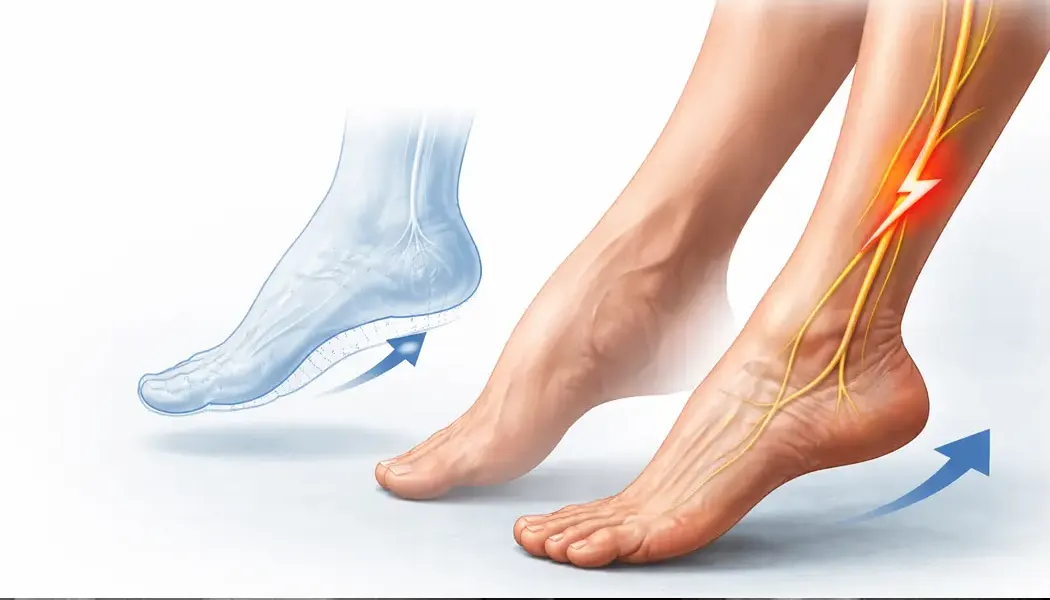
What is Foot Drop?
Foot Drop, also known as drop foot, is a condition in which a person has difficulty lifting the front part of the foot and toes upward. This can cause the toes to drag on the ground while walking, leading to a high-stepping or altered walking pattern and an increased risk of tripping or falling. Foot drop is usually a symptom of an underlying problem affecting the nerves, muscles, brain, or spinal cord. Common causes include peroneal nerve injury, nerve compression, lumbar disc problems, stroke, spinal cord conditions, and certain neurological or muscular disorders. At Pure Physio, rehabilitation focuses on identifying how foot drop affects movement and walking, improving available muscle strength and control, maintaining joint mobility, enhancing balance, and supporting safer everyday mobility.
Foot Drop is a condition in which there is weakness or difficulty performing dorsiflexion.
Dorsiflexion means lifting the front of the foot and toes upward toward the shin.
Normally, several muscles and nerves work together to lift the foot during walking. When these muscles do not receive normal nerve signals or are unable to work effectively, the front of the foot may remain pointed downward.
As a result, the toes may:
Drag on the Ground
Catch on Uneven Surfaces
Make Walking Difficult
To avoid dragging the toes, a person may lift the knee higher than usual while walking. This is sometimes called a high-stepping gait or steppage gait.
Foot drop can affect:
One Foot
Both Feet
The severity can vary from mild weakness to a complete inability to lift the foot.
Foot drop is not a disease by itself. It is a sign that can result from a problem affecting:
Peripheral Nerves
Muscles
The Brain
The Spinal Cord
The Lower Back
Identifying the underlying cause is important because treatment and expected recovery can vary significantly.
What Are The Symptoms Of Foot Drop?
Difficulty Lifting the Foot: The front of the foot may be difficult or impossible to lift upward.
Toe Dragging: The toes may drag or scrape against the ground while walking.
Frequent Tripping: Difficulty clearing the foot from the ground can increase the risk of tripping.
High-Stepping Gait: The person may lift the knee higher than usual to prevent the toes from dragging.
Slapping of the Foot: The foot may strike the ground with a slapping sound during walking.
Weakness in the Foot or Ankle: Muscles responsible for lifting the foot may feel weak.
Difficulty Walking on the Heels: Walking on the heels may be difficult due to weakness of the muscles that lift the foot.
Altered Walking Pattern: The body may compensate for foot weakness by changing the way a person walks.
Loss of Balance: Foot drop can affect stability, particularly on uneven surfaces.
Numbness or Tingling: Altered sensation may occur when a nerve is involved.
Pain: Pain may occur in the lower back, hip, leg, knee, or around the nerve pathway depending on the cause.
Muscle Wasting: Long-standing nerve or muscle problems may lead to reduced muscle size.
Difficulty with Stairs: Foot weakness can make climbing stairs or walking down steps more difficult.
Difficulty with Daily Activities: Walking outdoors, exercising, working, and performing other activities may become challenging.
What Are The Causes Of Foot Drop?
Foot drop can occur due to conditions affecting the peroneal nerve, other nerves, muscles, spinal cord, or brain.
Peroneal Nerve Injury: Injury to the common peroneal nerve is one of the common causes of foot drop.
Peroneal Nerve Compression: Prolonged pressure around the outside of the knee can compress the nerve.
Leg or Knee Injury: Trauma, fractures, dislocations, or severe injuries around the knee may damage the peroneal nerve.
Prolonged Leg Crossing: In some cases, prolonged pressure from repeatedly crossing the legs may contribute to nerve compression.
Tight Casts or Compression: External pressure from a tight cast, brace, or other source may affect the nerve.
Lumbar Disc Herniation: A herniated or slipped disc in the lower back may compress a nerve root involved in foot movement.
Sciatica: Significant irritation or compression of certain lumbar nerve roots may cause weakness affecting foot lifting.
Spinal Stenosis: Narrowing around spinal nerves may contribute to weakness in selected cases.
Stroke: Damage to areas of the brain controlling movement can cause weakness affecting the foot and leg.
Brain or Spinal Cord Injury: Neurological injury can interfere with signals controlling foot movement.
Multiple Sclerosis: This neurological condition may cause weakness and movement difficulties.
Motor Neuron Disease: Certain motor neuron disorders can cause progressive muscle weakness.
Peripheral Neuropathy: Conditions affecting multiple peripheral nerves can cause foot weakness.
Muscle Disorders: Certain muscular conditions can reduce the ability to lift the foot.
Neurological Disorders: Other conditions affecting the nervous system may contribute to foot drop.
Diagnosis Of Foot Drop
Medical History: A healthcare professional will ask when symptoms began, whether there was an injury, back pain, surgery, neurological symptoms, numbness, or changes in walking.
Physical Examination: Foot, ankle, knee, hip, and leg movement are assessed.
Muscle Strength Testing: The strength of muscles responsible for lifting and controlling the foot is evaluated.
Neurological Examination: Reflexes, sensation, muscle tone, and other neurological signs may be assessed.
Walking Assessment: A healthcare professional may observe gait to identify toe dragging, high-stepping, foot slapping, and compensatory movements.
Peroneal Nerve Assessment: The nerve around the outside of the knee may be assessed for signs of injury or compression.
Electromyography (EMG): EMG can provide information about muscle and nerve function.
Nerve Conduction Studies: These tests help assess how electrical signals travel through the nerves.
MRI: MRI may be recommended to investigate possible problems involving the brain, spinal cord, lower back, or surrounding tissues.
X-Rays: X-rays may be required when a fracture or bone injury is suspected.
Ultrasound: In selected cases, ultrasound may help assess peripheral nerves or surrounding structures.
Blood Tests: Blood tests may be required when a metabolic, inflammatory, or other medical cause is suspected.
The investigations required depend on the suspected underlying cause.
Treatment Of Foot Drop
Treatment depends on the underlying cause and severity of weakness.
Treatment of the Underlying Cause: Nerve injuries, spinal conditions, neurological disorders, or other medical causes require appropriate treatment.
Physiotherapy: Rehabilitation may help maintain joint mobility, improve available muscle strength and control, and support safer walking.
Ankle-Foot Orthosis (AFO): A brace may be prescribed to support the foot and ankle during walking.
Functional Electrical Stimulation: In selected patients, specialised electrical stimulation may be used to assist muscle activation during walking.
Exercise Therapy: Carefully selected exercises may help improve strength, movement, balance, and functional ability.
Nerve Recovery Monitoring: Healthcare professionals may monitor recovery when the foot drop is caused by a nerve injury.
Pain Management: A doctor may recommend treatment when pain is associated with the underlying condition.
Treatment of Nerve Compression: Persistent nerve compression may require specific medical or surgical management.
Spinal Treatment: Disc problems or spinal nerve compression may require appropriate conservative, interventional, or surgical treatment depending on severity.
Surgical Treatment: Surgery may be considered in selected cases involving severe nerve compression, traumatic nerve injury, or structural conditions requiring correction.
Tendon Transfer: In some cases of long-standing foot drop without adequate nerve recovery, a tendon transfer procedure may be considered to improve foot function.
Fall Prevention: Safety strategies and appropriate mobility support may help reduce the risk of falls.
What Is The Physiotherapy Treatment Of Foot Drop
Detailed Assessment: At Pure Physio, treatment begins by assessing muscle strength, ankle and foot movement, sensation, nerve-related symptoms, balance, walking pattern, and functional limitations.
Ankle Mobility Exercises: Controlled exercises may help maintain movement in the ankle and foot.
Dorsiflexion Training: Exercises focus on activating and strengthening the available muscles responsible for lifting the foot.
Progressive Strengthening: The foot, ankle, leg, hip, and core muscles may be strengthened according to individual needs.
Neuromuscular Re-Education: Appropriate techniques may help improve muscle activation, movement awareness, and control.
Gait Training: Therapy focuses on improving walking safety and reducing compensatory movements where possible.
Balance Training: Exercises may help improve stability and confidence during standing and walking.
Functional Movement Training: Rehabilitation may include practising stairs, uneven surfaces, turning, getting up from a chair, and other daily movements.
Stretching: Appropriate stretching may help maintain flexibility and reduce secondary muscle tightness.
Electrical Stimulation: In selected cases, therapeutic electrical stimulation may be considered when clinically appropriate.
AFO and Orthotic Guidance: We can provide guidance on the use of prescribed ankle-foot orthoses and other support devices.
Fall Prevention Training: Practical strategies may help reduce the risk of tripping and falling.
Home Exercise Programme: A personalised programme may be provided to support regular movement and strengthening.
Progress Monitoring: Strength, movement, walking ability, balance, and functional independence can be reviewed regularly and rehabilitation adapted as recovery progresses.
Why Choose Pure Physio?
Detailed Neurological and Functional Assessment: We assess the pattern of weakness, movement loss, sensation, balance, walking, and everyday limitations.
Personalised Rehabilitation Plans: Your programme is adapted according to the cause of foot drop, severity of weakness, nerve recovery, and individual goals.
Focus on Safe Walking: Rehabilitation aims to improve foot clearance, walking ability, balance, and confidence.
Strength and Movement Training: We focus on improving available muscle strength, ankle mobility, and movement control.
Individualised Gait Rehabilitation: Walking exercises are adapted to your specific movement pattern and functional requirements.
Balance and Fall Prevention: We address stability and provide practical strategies to support safer mobility.
Support for Orthotic Use: We provide guidance to help you understand and safely use prescribed braces or mobility devices.
Functional Recovery Focus: Treatment includes practical activities relevant to walking, work, exercise, and everyday independence.
Integrated Care Approach: Where medical investigation or specialist treatment is required, we can work alongside neurologists, orthopaedic specialists, neurosurgeons, and other healthcare professionals.
Ongoing Progress Monitoring: Your rehabilitation programme can be reviewed and adapted as your strength, nerve recovery, walking ability, and functional goals change.
Start Your Recovery Journey Today
Don’t let pain, stiffness, or reduced mobility affect your daily life. Get personalised physiotherapy care designed around your condition and recovery goals.