
De Quervain’s Tenosynovitis
Reduce thumb and wrist pain, improve movement, and return to comfortable everyday activities with personalised physiotherapy for De Quervain’s Tenosynovitis.
Contents
Take the First Step Towards Better Movement
Our experienced physiotherapists are here to help you improve mobility, regain strength, and move with greater comfort and confidence.
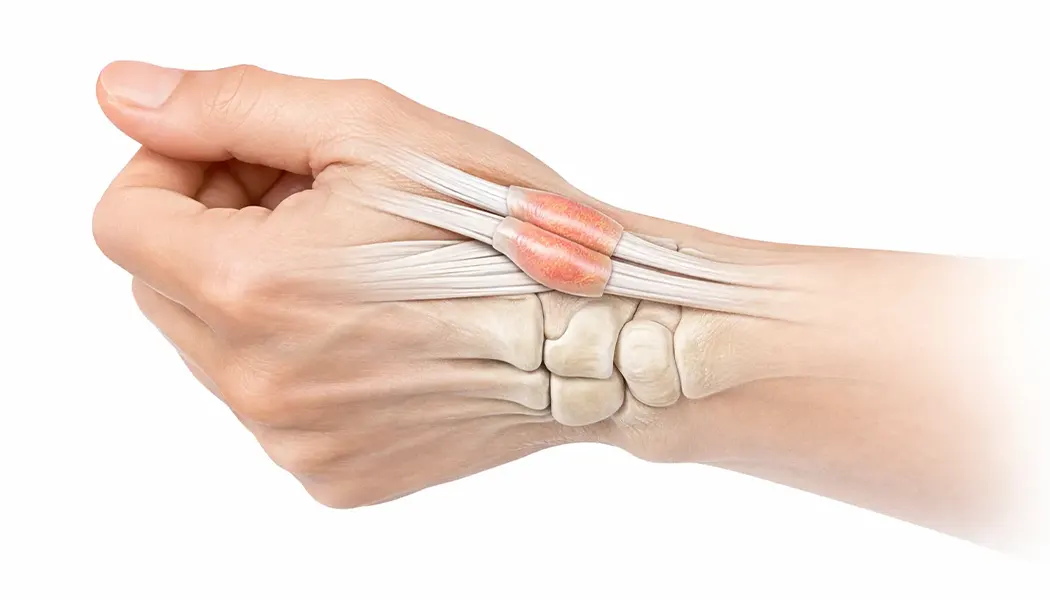
What is De Quervain’s Tenosynovitis?
De Quervain’s Tenosynovitis is a painful condition affecting the tendons on the thumb side of the wrist. It occurs when the tendons and their surrounding sheath become irritated, making thumb and wrist movements painful. Symptoms commonly include pain, tenderness, swelling, and difficulty gripping or lifting objects, especially during repetitive thumb movements. At Pure Physio, physiotherapy focuses on reducing pain, improving movement, addressing contributing factors, rebuilding strength, and helping you return to comfortable hand and wrist function.
De Quervain’s Tenosynovitis, also known as De Quervain’s Tendinopathy, affects two important tendons that help move the thumb:
Abductor Pollicis Longus (APL): Helps move the thumb away from the hand.
Extensor Pollicis Brevis (EPB): Helps straighten and move the thumb.
These tendons travel through a narrow tunnel called the first dorsal compartment on the thumb side of the wrist. When the tendons or their surrounding sheath become irritated and thickened, the tendons may not glide smoothly through this space.
This can cause pain and tenderness around the base of the thumb and the side of the wrist. Symptoms often become worse during activities involving gripping, lifting, twisting, or repetitive thumb movement.
De Quervain’s Tenosynovitis can affect one or both wrists and may make everyday tasks such as opening jars, lifting a child, typing, using a phone, or carrying objects uncomfortable.
What Are The Symptoms Of De Quervain’s Tenosynovitis?
Common Symptoms
Pain on the Thumb Side of the Wrist: Pain is usually felt near the base of the thumb.
Pain with Thumb Movement: Moving the thumb may increase discomfort.
Wrist Pain: Pain may be felt on the outer side of the wrist near the thumb.
Tenderness: The area around the affected tendons may be sensitive to touch.
Swelling: Mild swelling or thickening may develop near the base of the thumb.
Pain with Gripping: Holding or squeezing objects may become painful.
Other Possible Symptoms
Pain When Lifting: Lifting objects, particularly with the thumb extended, may increase symptoms.
Pain with Twisting: Activities such as opening jars, turning keys, or wringing cloth may be uncomfortable.
Difficulty Holding Objects: The hand may feel weaker or painful when gripping.
Reduced Thumb Movement: Pain may limit comfortable thumb movement.
Clicking or Catching: Some people may experience a sensation of the tendons catching during movement.
Pain Radiating into the Thumb or Forearm: Discomfort may spread from the wrist into the thumb or lower forearm.
Difficulty with Everyday Activities: Tasks such as typing, using a phone, carrying bags, lifting a child, or using tools may become difficult.
What Are The Causes Of De Quervain’s Tenosynovitis?
Repetitive Thumb Movement: Frequent thumb movements may irritate the affected tendons.
Repeated Gripping: Regular gripping and squeezing activities can increase tendon loading.
Repetitive Wrist Movements: Repeated bending or movement of the wrist may contribute to symptoms.
Lifting Activities: Frequent lifting, particularly when the wrist is in an awkward position, may aggravate the tendons.
Childcare Activities: Repeated lifting and holding of a baby can place stress on the thumb and wrist.
Work-Related Activities: Repetitive hand use, computer work, tool use, or manual tasks may contribute to tendon irritation.
Sports and Hobbies: Activities involving repetitive gripping or thumb use may increase symptoms.
Previous Wrist Injury: Injury or trauma around the wrist may contribute to irritation.
Hormonal Changes: Some people may develop the condition during periods associated with hormonal changes.
Individual Tendon Anatomy: Natural differences in the tendon compartment may influence how the tendons move through the wrist.
Diagnosis Of De Quervain’s Tenosynovitis
Medical History: A healthcare professional will ask about your symptoms, activities, work, hobbies, and when the pain occurs.
Physical Examination: The thumb and wrist are assessed for pain, tenderness, swelling, movement, and strength.
Movement Testing: Specific thumb and wrist movements may be used to identify painful patterns.
Provocation Tests: Clinical tests that place tension on the affected tendons may reproduce symptoms.
Grip Strength Assessment: Hand and thumb strength may be evaluated.
Functional Assessment: Everyday activities such as gripping, lifting, and twisting may be assessed.
Ultrasound: Ultrasound may help assess tendon thickening or changes in the tendon sheath when required.
MRI Scan: MRI may be considered when the diagnosis is uncertain or another condition is suspected.
Imaging is not always necessary when symptoms and physical examination findings are consistent with De Quervain’s Tenosynovitis.
Treatment Of De Quervain’s Tenosynovitis
Treatment depends on symptom severity, duration, and the activities contributing to tendon irritation.
Activity Modification: Temporarily reducing or changing activities that repeatedly aggravate symptoms can help reduce tendon stress.
Rest from Aggravating Activities: Short-term relative rest may be recommended while avoiding complete unnecessary inactivity.
Thumb and Wrist Support: A thumb spica splint or brace may help reduce painful movement and support the affected tendons.
Pain Management: Appropriate medication may be recommended by a healthcare professional when required.
Physiotherapy: Rehabilitation can help manage pain, improve movement, gradually rebuild tendon capacity, and restore function.
Ergonomic Adjustments: Changes to work setup, hand position, equipment, or activity technique may help reduce unnecessary stress.
Progressive Strengthening: Carefully progressed exercises can improve the ability of the thumb and wrist to tolerate everyday activities.
Corticosteroid Injection: In some cases, a healthcare professional may recommend an injection to reduce symptoms.
Surgery: Surgical release may be considered when symptoms remain severe or persistent despite appropriate conservative treatment.
What Is The Physiotherapy Treatment Of De Quervain’s Tenosynovitis
Detailed Assessment: At Pure Physio, we assess pain, thumb and wrist movement, grip strength, tendon loading tolerance, posture, and the activities contributing to symptoms.
Individualised Treatment Programme: Your rehabilitation is tailored according to symptom severity, duration, work demands, lifestyle, hobbies, and personal goals.
Pain Management Strategies: Appropriate physiotherapy techniques may help manage pain and support comfortable movement.
Activity Modification Guidance: We identify movements and activities that may overload the affected tendons and provide practical ways to modify them.
Thumb Mobility Exercises: Gentle exercises help maintain or improve comfortable thumb movement.
Wrist Mobility Exercises: Controlled exercises address stiffness and support normal wrist movement.
Tendon Loading Exercises: Carefully progressed exercises help gradually improve the tendons’ ability to tolerate load.
Thumb Strengthening: Targeted exercises help strengthen the muscles responsible for thumb movement and control.
Wrist Strengthening: Progressive exercises improve strength and support around the wrist.
Grip Strength Training: Functional exercises help improve comfortable gripping and holding ability.
Forearm Strengthening: Exercises can help improve overall control and load tolerance of the upper limb.
Gentle Stretching: Appropriate stretching may address tightness in surrounding muscles when suitable.
Ergonomic and Technique Advice: Practical guidance may be provided for computer work, phone use, lifting, childcare, work tasks, sports, and repetitive activities.
Functional Rehabilitation: Therapy focuses on tasks such as gripping, lifting, twisting, typing, carrying, opening containers, and using tools.
Post-Injection Rehabilitation: If an injection is part of your medical treatment, rehabilitation can support a gradual return to movement and strengthening.
Post-Operative Rehabilitation: If surgery is required, physiotherapy follows the surgeon’s recommendations and appropriate healing timelines.
Home Exercise Programme: A personalised programme supports continued recovery and strengthening between appointments.
Progress Monitoring: Your treatment is regularly reviewed and progressed according to pain, movement, strength, and functional improvement.
Why Choose Pure Physio?
Comprehensive Assessment: We assess thumb and wrist movement, pain, tendon loading tolerance, grip strength, and functional limitations.
Personalised Rehabilitation Plans: Your programme is tailored according to your symptoms, lifestyle, work demands, activities, and recovery goals.
Focus on Pain Reduction: Treatment aims to reduce discomfort while supporting safe and comfortable movement.
Tendon Rehabilitation: Carefully progressed exercises help improve the affected tendons’ capacity to tolerate everyday loading.
Restore Thumb and Wrist Movement: We help address stiffness and improve comfortable movement.
Rebuild Strength and Grip: Progressive exercises support stronger thumb, wrist, and hand function.
Activity Modification Guidance: We provide practical strategies to reduce unnecessary stress during work and daily activities.
Ergonomic Support: Guidance can help improve hand positioning, workstation setup, lifting techniques, and repetitive movement habits.
Functional Recovery Focus: Rehabilitation targets activities such as lifting, gripping, typing, using tools, childcare, and hobbies.
Safe Exercise Progression: Your programme is adjusted according to symptoms and functional improvement.
Post-Injection Rehabilitation: We support recovery and progressive rehabilitation following appropriate medical treatment.
Post-Surgical Rehabilitation: Structured physiotherapy is provided when rehabilitation is required after surgery.
Home Exercise Guidance: You receive a personalised programme to support consistent progress outside your appointments.
Regular Progress Monitoring: Your rehabilitation is reviewed and adapted according to changes in pain, movement, strength, and function.
Integrated Care Approach: We work alongside doctors, orthopaedic specialists, hand specialists, and other healthcare professionals when required.
Focused on Long-Term Hand and Wrist Function: Our goal is to reduce pain, restore comfortable movement, rebuild strength and tendon capacity, and help you return to the activities that matter most.
Start Your Recovery Journey Today
Don’t let pain, stiffness, or reduced mobility affect your daily life. Get personalised physiotherapy care designed around your condition and recovery goals.