
Cervicogenic Headache
Get a personalised assessment and physiotherapy plan to help improve neck movement and manage headache-related symptoms.
Contents
Take the First Step Towards Better Movement
Our experienced physiotherapists are here to help you improve mobility, regain strength, and move with greater comfort and confidence.
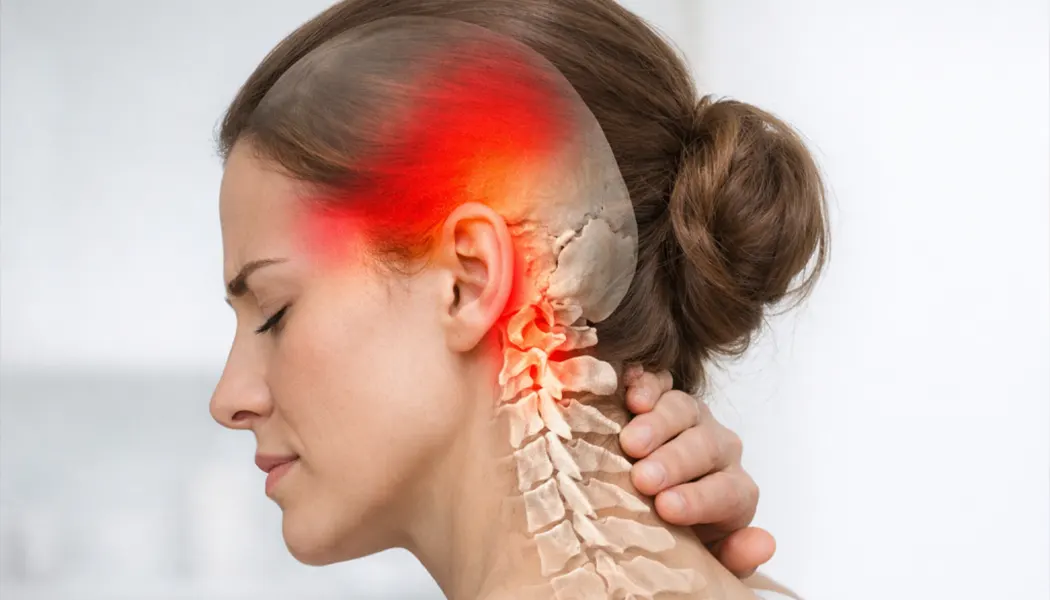
What is Cervicogenic Headache?
A Cervicogenic Headache (CGH) is a secondary headache, meaning the headache is caused by another underlying problem rather than being a primary headache disorder itself.
In this condition, pain originates from structures in the cervical spine (neck) and is felt in the head.
The upper part of the neck has complex connections between the:
Cervical Joints
Muscles
Ligaments
Nerves
Upper Cervical Spine
Head and Jaw Region
Pain signals from certain upper cervical structures can overlap with pathways involved in head and facial sensation. This can cause pain originating from the neck to be perceived as a headache.
The pain commonly:
Starts in the Neck or Back of the Head
Spreads Toward One Side of the Head
May Reach the Temple
May Spread Behind or Around the Eye
Can Be Triggered by Neck Movement or Posture
Cervicogenic headaches are often, but not always, one-sided. The same side may remain more affected, although symptoms can vary.
A proper assessment is important because other conditions, including migraine, tension-type headache, nerve-related headaches, and more serious medical causes, can produce similar symptoms.
What Are The Symptoms Of Cervicogenic Headache?
Headache Starting from the Neck: Pain may begin in the upper neck or back of the head and spread upward.
One-Sided Head Pain: Pain is often felt predominantly on one side of the head.
Pain at the Back of the Head: Discomfort may occur in the occipital region.
Pain Around the Temple: Headache pain may spread toward the side of the head.
Pain Behind the Eye: Some individuals experience pain around or behind one eye.
Neck Pain: Headache symptoms are often associated with neck discomfort.
Neck Stiffness: The neck may feel tight or difficult to move.
Reduced Neck Movement: Turning, bending, or extending the neck may be restricted.
Headache Triggered by Neck Movement: Certain movements may reproduce or worsen symptoms.
Headache Triggered by Sustained Posture: Prolonged sitting, computer work, driving, or looking down may aggravate symptoms.
Tenderness in the Neck: Muscles or joints in the upper neck may feel tender.
Pain During Pressure on Certain Neck Structures: A healthcare professional may identify neck structures where pressure reproduces familiar symptoms.
Shoulder or Upper Back Discomfort: Symptoms may occur alongside tightness or discomfort around the shoulders and upper back.
Difficulty Concentrating: Persistent headache pain may affect concentration and daily performance.
Pain with Repetitive Activities: Repeated neck movements or prolonged positioning may increase symptoms.
The pattern and severity of symptoms can vary from person to person.
What Are The Causes Of Cervicogenic Headache?
Cervicogenic headaches are associated with pain-sensitive structures in the neck. The exact contributing factor varies between individuals.
Cervical Joint Dysfunction: Problems involving the joints of the neck, particularly the upper cervical region, may contribute to headache symptoms.
Neck Muscle Dysfunction: Muscle tightness, weakness, reduced endurance, or altered muscle control may contribute to neck-related pain and headaches.
Poor Neck Movement Control: Difficulty controlling neck movement during daily activities may place repeated stress on cervical structures.
Prolonged Postures: Long periods spent in positions such as computer work, driving, or looking down may aggravate symptoms in some individuals.
Previous Neck Injury: A history of neck trauma, including whiplash injuries, may contribute to cervicogenic headaches.
Repetitive Neck Strain: Repeated movements or sustained positions may irritate cervical structures.
Degenerative Changes: Age-related changes affecting cervical joints or discs may contribute to symptoms in some individuals.
Upper Cervical Dysfunction: Problems involving the upper neck joints and surrounding tissues may refer pain into the head.
Muscle Trigger Points: Sensitive areas within certain neck and shoulder muscles may contribute to referred pain patterns.
Workstation Ergonomics: Poorly arranged workspaces may contribute to prolonged or uncomfortable neck positioning.
In many cases, several physical and lifestyle factors may contribute rather than one single cause.
Diagnosis Of Cervicogenic Headache
Medical History: A healthcare professional will ask about the location of headache pain, onset, frequency, duration, triggers, neck symptoms, previous injuries, medical history, and other associated symptoms.
Headache Pattern Assessment: The pattern of pain and relationship between headache symptoms and neck movement are assessed.
Cervical Spine Examination: Neck posture, joint movement, muscle function, and range of motion may be assessed.
Movement Testing: Specific neck movements may be used to identify whether they reproduce or aggravate familiar symptoms.
Muscle Assessment: The muscles of the neck, shoulders, and upper back may be assessed for tenderness, strength, endurance, and movement control.
Neurological Examination: A doctor may assess nerve function when symptoms suggest possible neurological involvement.
Specialised Headache Assessment: Healthcare professionals may use recognised clinical criteria when evaluating suspected cervicogenic headache.
Imaging: X-rays, MRI, or CT scans are not required for every person but may be recommended when there is concern about another structural or medical cause.
Diagnostic Blocks: In selected specialist cases, an injection or nerve block may be used to help identify a specific pain source.
A diagnosis should also involve considering and ruling out other types of headache or serious causes where appropriate.
Treatment Of Cervicogenic Headache
Treatment depends on the underlying cause, symptoms, and individual assessment findings.
Physiotherapy: A personalised rehabilitation programme may help address neck movement, muscle function, posture, and activity-related factors.
Manual Therapy: Appropriate hands-on techniques may be used by a qualified healthcare professional to address selected joint or soft tissue impairments.
Exercise Therapy: Targeted exercises may help improve neck strength, endurance, movement control, and overall function.
Postural and Ergonomic Advice: Adjustments to workstations, screen height, sitting habits, and daily positioning may help reduce unnecessary neck strain.
Activity Modification: Temporary changes to activities that repeatedly trigger symptoms may be recommended.
Pain Management: A doctor may recommend appropriate medication or other pain-management strategies when required.
Heat or Cold Therapy: Some individuals may find carefully applied heat or cold helpful for symptom management.
Interventional Procedures: In selected cases, a pain specialist may consider injections, nerve blocks, or other procedures.
Treatment of Contributing Conditions: Other neck, shoulder, neurological, or headache-related conditions may require separate treatment.
Lifestyle Strategies: Sleep, stress, hydration, activity levels, and daily routines may influence headaches and can be considered as part of a broader management plan.
What Is The Physiotherapy Treatment Of Cervicogenic Headache
Detailed Assessment: At Pure Physio, treatment begins by assessing your headache pattern, neck symptoms, posture, cervical movement, muscle strength, movement control, work demands, and daily activities.
Cervical Mobility Exercises: Gentle and appropriate exercises may help improve restricted neck movement.
Neck Strengthening: Targeted exercises may help improve the strength and endurance of muscles that support the cervical spine.
Deep Neck Muscle Training: Specific exercises may help improve the control and endurance of the deep muscles involved in cervical stability.
Movement Control Training: Rehabilitation may focus on improving how the neck and surrounding muscles coordinate during everyday movements.
Manual Therapy: Where clinically appropriate, qualified physiotherapists may use hands-on techniques to address selected joint and soft tissue impairments.
Soft Tissue Techniques: Appropriate techniques may help address muscle tension and sensitivity in the neck, shoulders, and upper back.
Postural Rehabilitation: Guidance may help improve awareness of prolonged positions and develop more comfortable movement and positioning strategies.
Ergonomic Advice: Recommendations may be provided for desk setup, screen position, chair height, driving posture, and other repetitive daily activities.
Shoulder and Upper Back Exercises: Strengthening and mobility exercises may be included where shoulder or upper back dysfunction contributes to overall neck loading.
Stretching Exercises: Individualised stretching may help address relevant muscle tightness and maintain comfortable movement.
Functional Activity Training: Therapy may focus on improving tolerance for computer work, driving, reading, work tasks, exercise, and other activities that trigger symptoms.
Home Exercise Programme: A personalised programme may be provided to support consistent rehabilitation and long-term self-management.
Why Choose Pure Physio?
Detailed Individual Assessment: We assess the relationship between your headache symptoms, neck movement, posture, muscle function, and daily activities.
Personalised Treatment Plans: Your rehabilitation programme is tailored to your specific symptoms, physical findings, activity demands, and goals.
Focus on the Neck-Head Connection: We address relevant cervical movement and muscle control issues that may contribute to cervicogenic headache symptoms.
Evidence-Based Exercise Rehabilitation: Treatment may include appropriate mobility, strengthening, endurance, and movement-control exercises.
Hands-On Care When Appropriate: Manual and soft tissue techniques may be included when clinically suitable as part of a broader rehabilitation programme.
Posture and Ergonomic Guidance: We provide practical strategies for managing prolonged computer work, driving, mobile use, and other activities.
Focus on Long-Term Self-Management: Home exercises and practical activity strategies can help support ongoing symptom management.
Integrated Care Approach: If your symptoms require medical investigation, medication, neurological assessment, or specialist pain management, physiotherapy can form part of a coordinated care plan.
Focused on Restoring Daily Function: Our goal is to help you improve neck comfort, movement, activity tolerance, and confidence in daily life.
Start Your Recovery Journey Today
Don’t let pain, stiffness, or reduced mobility affect your daily life. Get personalised physiotherapy care designed around your condition and recovery goals.