Cauda Equina Syndrome
Cauda Equina Syndrome is a medical emergency—sudden bladder or bowel changes, saddle numbness, or worsening leg weakness require immediate emergency medical attention.
Contents
Take the First Step Towards Better Movement
Our experienced physiotherapists are here to help you improve mobility, regain strength, and move with greater comfort and confidence.
What is Cauda Equina Syndrome?
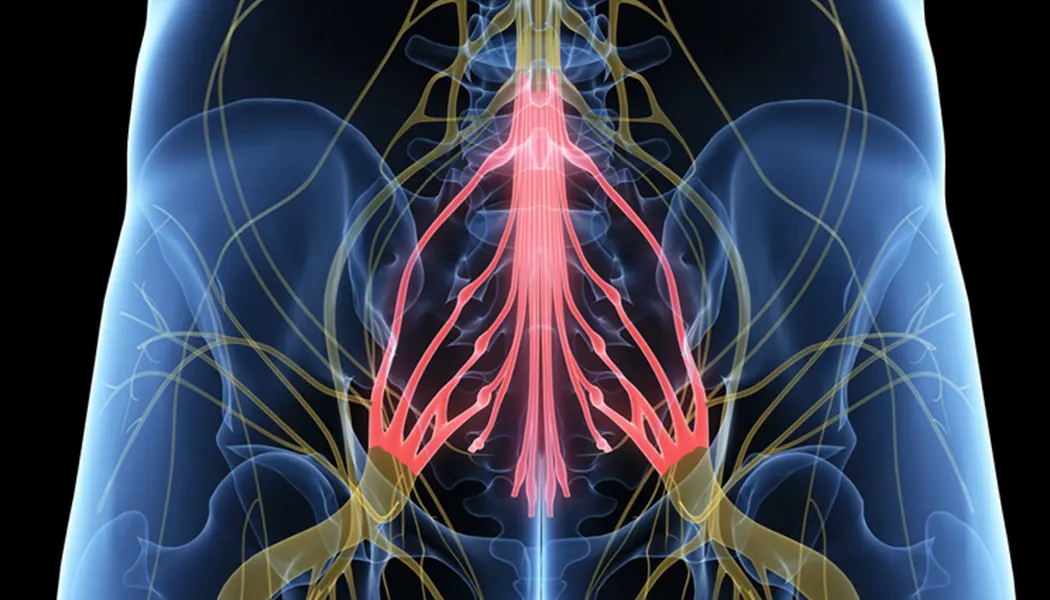
At the lower end of the spinal cord, there is a bundle of nerve roots called the cauda equina, meaning “horse’s tail” because of its appearance.
These nerves travel through the lower part of the spinal canal and provide important functions to the:
Lower Back
Buttocks
Legs and Feet
Bladder
Bowel
Pelvic and Sexual Function
Cauda Equina Syndrome occurs when these nerve roots become significantly compressed or damaged.
One of the more common causes is a large lumbar disc herniation, where disc material significantly compresses the nerves in the lower spinal canal. However, CES can also result from other conditions, including spinal stenosis, trauma, tumours, infections, bleeding, or complications affecting the spine.
Because the cauda equina controls important neurological functions, significant compression can lead to serious and potentially permanent problems. This is why suspected Cauda Equina Syndrome requires urgent emergency assessment.
Cauda Equina Syndrome should not be managed as ordinary lower back pain. Anyone experiencing possible warning signs should seek emergency medical care immediately.
What Are The Symptoms Of Cauda Equina Syndrome?
Symptoms can develop suddenly or progressively. Not everyone experiences every symptom, but possible warning signs include:
Severe Lower Back Pain: Significant pain may occur in the lower back.
Pain Travelling into One or Both Legs: Sciatica-like pain may travel through the buttocks and into one or both legs.
Saddle Numbness: Reduced or altered sensation around the groin, genitals, buttocks, anus, or inner thighs. This is a major warning sign.
Difficulty Starting Urination: Difficulty beginning to pass urine despite feeling the need to urinate.
Loss of Bladder Sensation: Reduced ability to feel when the bladder is full.
Urinary Retention: Inability to empty the bladder normally.
Urinary Incontinence: Loss of control over urine.
Loss of Bowel Control: Difficulty controlling bowel movements or new bowel incontinence.
Reduced Sensation During Bowel Movements: Reduced awareness of passing stool or changes in sensation around the anus.
Leg Weakness: Weakness in one or both legs.
Difficulty Walking: Reduced leg strength, altered sensation, or loss of coordination may affect walking.
Numbness or Tingling in the Legs: Altered sensations may occur in one or both legs or feet.
Reduced Sexual Sensation or Function: Changes in genital sensation or sexual function can occur.
Loss of Anal Sensation or Tone: This may be identified during emergency medical examination.
What Are The Causes Of Cauda Equina Syndrome?
Large Lumbar Disc Herniation: A large herniated disc in the lower back can significantly compress multiple nerve roots within the spinal canal.
Spinal Stenosis: Severe narrowing of the spinal canal may place pressure on the cauda equina nerves.
Spinal Trauma: Fractures, dislocations, or significant injuries to the spine can compress or damage the nerves.
Spinal Tumours: A tumour within or near the spinal canal can place pressure on the nerve roots.
Spinal Infection: Conditions such as an epidural abscess may cause swelling or a collection that compresses spinal nerves.
Spinal Bleeding: Bleeding within the spinal canal can form a collection that places pressure on the cauda equina.
Post-Surgical Complications: Rare complications after spinal procedures may cause nerve compression.
Inflammatory Conditions: Certain conditions causing inflammation or swelling around the spinal nerves may contribute to compression.
Congenital or Structural Spinal Conditions: Rare structural abnormalities may increase the risk of significant nerve compression.
The exact cause must be identified urgently because treatment depends on what is compressing or damaging the nerves.
Diagnosis Of Cauda Equina Syndrome
Emergency Medical History: Healthcare professionals will urgently ask about bladder changes, bowel changes, saddle sensation, leg weakness, pain, and when symptoms began.
Neurological Examination: Muscle strength, sensation, reflexes, walking ability, and other neurological functions are assessed.
Saddle Sensation Assessment: Sensation around the groin, buttocks, and inner thigh region may be assessed as part of the emergency neurological examination.
Bladder Assessment: The ability to pass urine and empty the bladder may be evaluated. In some cases, bladder scanning may be used to assess urinary retention.
Rectal Examination: A qualified healthcare professional may assess relevant sensation or muscle function when clinically necessary.
Emergency MRI Scan: MRI is commonly used urgently to assess the spinal canal and identify possible compression of the cauda equina nerves.
CT Scan: A CT scan may be considered when MRI is unavailable or unsuitable, or to provide additional information about spinal structures.
Blood Tests: Blood tests may be required when infection, inflammation, bleeding, or another underlying medical condition is suspected.
Diagnosis requires urgent specialist medical evaluation. Symptoms alone should never be ignored or self-diagnosed.
Treatment Of Cauda Equina Syndrome
Emergency Medical Care: Suspected Cauda Equina Syndrome requires immediate assessment in an emergency medical setting.
Urgent Specialist Referral: Patients may require urgent evaluation by a spinal surgeon, neurosurgeon, orthopaedic spine specialist, or other appropriate emergency specialist.
Urgent Surgical Decompression: When CES is caused by significant nerve compression, emergency surgery may be required to relieve pressure on the nerves.
Treatment of the Underlying Cause: Further treatment depends on the cause and may involve managing a disc herniation, tumour, infection, bleeding, fracture, or another condition.
Bladder Management: Some patients may require temporary or ongoing bladder support and management.
Bowel Management: A specialist healthcare team may provide strategies and treatment to manage bowel dysfunction.
Pain Management: Appropriate pain management may be provided under medical supervision.
Neurological Monitoring: Recovery of leg strength, sensation, bladder, bowel, and other neurological functions may need ongoing monitoring.
Rehabilitation: Following emergency treatment and once medically stable, rehabilitation may help address mobility, muscle weakness, balance, functional limitations, and independence.
The speed and extent of recovery can vary depending on the cause, severity of nerve damage, symptoms before treatment, and other individual factors.
What Is The Physiotherapy Treatment Of Cauda Equina Syndrome
Physiotherapy is not a treatment for the acute emergency phase of Cauda Equina Syndrome. Urgent medical assessment and treatment come first.
After emergency treatment and once medically cleared, physiotherapy may play an important role in rehabilitation.
Detailed Rehabilitation Assessment: At Pure Physio, rehabilitation begins with assessing muscle strength, joint movement, sensation, balance, walking ability, pain, functional limitations, and individual goals.
Early Mobility Training: Where medically appropriate, rehabilitation may help patients gradually return to sitting, standing, transferring, and walking.
Lower-Limb Strengthening: Progressive exercises may help improve strength in affected leg muscles.
Balance and Coordination Training: Carefully selected activities may help improve stability and confidence during standing and walking.
Gait Training: Physiotherapy may help improve walking ability and support the safe use of walking aids where required.
Functional Movement Training: Rehabilitation may include practising everyday movements such as getting in and out of bed, standing from a chair, climbing stairs, and other important activities.
Core and Trunk Rehabilitation: Appropriate exercises may help improve trunk strength and control following spinal injury or surgery.
Range of Motion Exercises: Guided exercises may help maintain or improve movement and reduce secondary stiffness.
Progressive Conditioning: Physical activity and exercise tolerance can be gradually increased according to medical advice and individual recovery.
Home Exercise Programme: A personalised programme may help continue appropriate strengthening, mobility, and functional practice between sessions.
Multidisciplinary Rehabilitation: Depending on individual needs, recovery may involve coordination with medical specialists, occupational therapists, urologists, rehabilitation specialists, and other healthcare professionals.
Physiotherapy programmes are always adapted according to the patient’s neurological status, medical treatment, surgical recovery, and individual rehabilitation goals.
Why Choose Pure Physio?
Safety-Focused Approach: We recognise that Cauda Equina Syndrome is a medical emergency. Acute warning signs require immediate emergency medical assessment rather than routine physiotherapy.
Post-Treatment Rehabilitation Support: Once medically stable and appropriately cleared, we can support suitable patients through individualised rehabilitation.
Detailed Functional Assessment: We assess strength, mobility, balance, walking ability, functional limitations, and individual recovery goals.
Personalised Rehabilitation Plans: Every patient’s recovery is different. Treatment is adapted according to neurological recovery, medical or surgical treatment, current physical ability, and functional needs.
Focus on Independence: Rehabilitation focuses on meaningful goals such as walking, transfers, stair climbing, returning to daily activities, and improving overall mobility.
Progressive Exercise-Based Care: Exercises are progressed carefully according to individual capacity, symptoms, and medical guidance.
Multidisciplinary Care Approach: Where required, physiotherapy can form part of a coordinated rehabilitation programme alongside relevant medical and rehabilitation specialists.
Long-Term Recovery Support: Some people may require ongoing rehabilitation to address persistent weakness, mobility limitations, balance difficulties, or functional challenges and work towards the highest possible level of independence.
Start Your Recovery Journey Today
Don’t let pain, stiffness, or reduced mobility affect your daily life. Get personalised physiotherapy care designed around your condition and recovery goals.