
Carpal Tunnel Syndrome
Reduce hand discomfort, improve wrist movement, and regain confidence in everyday tasks with personalised physiotherapy for carpal tunnel syndrome.
Contents
Take the First Step Towards Better Movement
Our experienced physiotherapists are here to help you improve mobility, regain strength, and move with greater comfort and confidence.
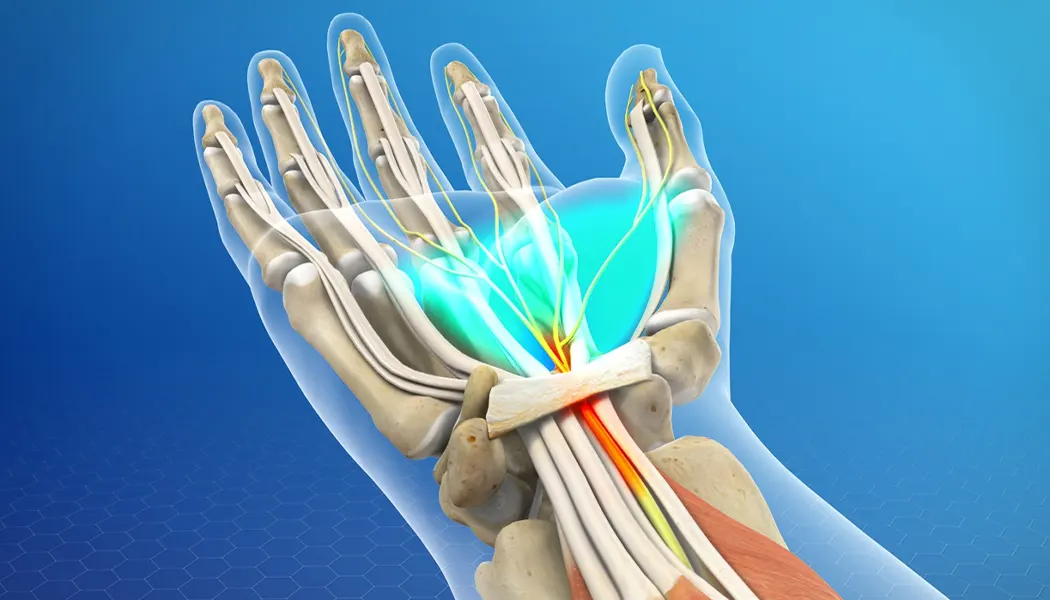
What is Carpal Tunnel Syndrome?
Carpal Tunnel Syndrome (CTS) is a condition caused by compression or irritation of the median nerve as it passes through a narrow space in the wrist called the carpal tunnel. It can cause numbness, tingling, pain, burning sensations, or weakness in the thumb, index finger, middle finger, and part of the ring finger. Symptoms may be worse at night or during activities involving repeated hand and wrist movements. At Pure Physio, physiotherapy focuses on reducing strain on the wrist, improving movement, supporting nerve mobility, strengthening the hand when appropriate, and helping you return comfortably to work and daily activities.
Carpal Tunnel Syndrome, commonly known as CTS, affects the:
Median Nerve
The median nerve travels from the arm into the hand through a narrow passage at the wrist called the:
Carpal Tunnel
The carpal tunnel is surrounded by:
Wrist Bones
and
The Transverse Carpal Ligament
Along with the median nerve, several tendons also pass through this space.
When pressure inside the tunnel increases, the median nerve can become:
Compressed
Irritated
or
Affected by Reduced Nerve Function
This can lead to symptoms in the parts of the hand supplied by the median nerve.
These commonly include the:
Thumb
Index Finger
Middle Finger
Part of the Ring Finger
The little finger is usually not affected because it is supplied by a different nerve.
Symptoms can range from mild and occasional to persistent and severe.
Without appropriate management, prolonged or significant nerve compression may lead to:
Reduced Hand Strength
Loss of Thumb Muscle Bulk
Difficulty Performing Fine Hand Tasks
What Are The Symptoms Of Carpal Tunnel Syndrome?
Tingling: Pins-and-needles sensations commonly occur in the thumb, index finger, middle finger, and part of the ring finger.
Numbness: Reduced sensation may affect the same fingers.
Burning Sensation: Some people experience burning discomfort in the hand or fingers.
Wrist Pain: Pain or discomfort may be felt around the wrist.
Hand Pain: Symptoms may extend into the palm and fingers.
Night-Time Symptoms: Tingling, numbness, or pain may be worse at night.
Waking from Sleep: Hand symptoms may wake a person during the night.
Symptoms When Holding Objects: Activities such as holding a phone, book, steering wheel, or tools may trigger symptoms.
Reduced Grip Strength: It may become harder to hold or grip objects.
Dropping Objects: Weakness or altered sensation may cause objects to slip from the hand.
Thumb Weakness: The muscles controlling the thumb may become weak.
Difficulty with Fine Tasks: Buttoning clothes, writing, typing, opening jars, or picking up small objects may become difficult.
Symptoms During Repetitive Work: Repeated gripping or hand and wrist movements may aggravate symptoms.
Pain Travelling into the Forearm: Some people experience discomfort that extends into the forearm.
Muscle Wasting: Long-standing severe median nerve compression may cause loss of muscle bulk around the base of the thumb.
Progressive weakness, persistent numbness, or visible muscle wasting should be assessed by a qualified healthcare professional.
What Are The Causes Of Carpal Tunnel Syndrome?
Carpal tunnel syndrome develops when there is increased pressure on or irritation of the median nerve within the carpal tunnel.
Possible contributing factors include:
Repetitive Hand and Wrist Activities: Repeated gripping, forceful hand use, or frequent wrist movements may aggravate symptoms.
Prolonged Wrist Positions: Keeping the wrist in a bent position for long periods can increase pressure within the carpal tunnel.
Wrist Injury: Fractures, sprains, or swelling around the wrist can reduce available space.
Tendon Swelling: Inflammation or swelling of structures passing through the tunnel may increase pressure.
Pregnancy: Hormonal and fluid changes during pregnancy can contribute to temporary carpal tunnel symptoms.
Diabetes: Diabetes can increase the risk of nerve problems.
Thyroid Disorders: Certain thyroid conditions are associated with a higher risk.
Inflammatory Arthritis: Conditions such as rheumatoid arthritis can affect the wrist and surrounding tissues.
Obesity: Higher body weight is associated with an increased risk of CTS.
Fluid Retention: Increased fluid in the tissues can contribute to pressure around the nerve.
Anatomical Factors: Some people may naturally have less space within the carpal tunnel.
Previous Wrist Surgery or Injury: Changes around the wrist may affect the carpal tunnel.
In some people, there may be no single identifiable cause.
Diagnosis Of Carpal Tunnel Syndrome
Medical History: A healthcare professional will ask about numbness, tingling, pain, weakness, night-time symptoms, work activities, and medical conditions.
Physical Examination: The wrist, hand, fingers, and forearm are assessed.
Sensation Testing: Feeling in the fingers supplied by the median nerve may be tested.
Strength Assessment: Grip strength and thumb muscle function may be evaluated.
Phalen’s Test: The wrist is held in a flexed position to assess whether it reproduces symptoms.
Tinel’s Sign: Gentle tapping over the median nerve at the wrist may reproduce tingling sensations.
Carpal Compression Test: Pressure is applied over the carpal tunnel to assess symptom reproduction.
Nerve Conduction Studies: These tests assess how effectively electrical signals travel through the median nerve.
Electromyography (EMG): EMG may be used to assess nerve and muscle function.
Ultrasound: Ultrasound can assess the median nerve and structures around the carpal tunnel.
Blood Tests: Tests may be considered when conditions such as diabetes, thyroid disorders, or inflammatory disease are suspected.
Diagnosis is based on the person’s symptoms, clinical examination, and additional tests when required.
Treatment Of Carpal Tunnel Syndrome
Treatment depends on the severity of symptoms and the degree of median nerve involvement.
Activity Modification: Temporarily reducing or modifying activities that aggravate symptoms may help.
Wrist Splinting: A neutral-position wrist splint, particularly at night, may help reduce symptoms for some individuals.
Ergonomic Modifications: Adjusting workstation setup, keyboard position, tools, and hand posture can help reduce unnecessary wrist strain.
Physiotherapy: Physiotherapy can support wrist movement, nerve mobility, hand function, and symptom management.
Nerve and Tendon Exercises: Specific exercises may be recommended when clinically appropriate.
Pain Management: A doctor may recommend medication for pain or associated inflammation.
Corticosteroid Injection: A specialist may consider an injection to reduce inflammation and symptoms in selected cases.
Management of Underlying Conditions: Conditions such as diabetes, thyroid disorders, or inflammatory arthritis may require appropriate medical treatment.
Surgery: Carpal tunnel release surgery may be recommended when symptoms are severe, persistent, or associated with significant nerve damage or muscle weakness.
Post-Surgical Rehabilitation: Physiotherapy may support recovery of movement, strength, and hand function after surgery.
Early assessment is important when symptoms are persistent or weakness is developing.
What Is The Physiotherapy Treatment Of Carpal Tunnel Syndrome
Detailed Assessment: At Pure Physio, we assess your symptoms, wrist movement, hand strength, sensation, posture, work demands, repetitive activities, and functional difficulties.
Wrist Mobility Exercises: Controlled exercises may help maintain comfortable wrist and hand movement.
Median Nerve Gliding Exercises: Specific movements may help support normal mobility of the median nerve when clinically appropriate.
Tendon Gliding Exercises: Carefully selected exercises may help maintain movement of the tendons passing through the wrist.
Hand and Finger Mobility: Exercises may address stiffness and maintain comfortable finger movement.
Gradual Strengthening: Grip and hand strengthening may be introduced when appropriate and according to symptoms.
Thumb Strengthening: Exercises may help support thumb muscle function when clinically suitable.
Forearm Strengthening: Appropriate strengthening can support the muscles involved in wrist and hand movement.
Soft-Tissue Techniques: Selected hands-on techniques may be used when appropriate to address contributing muscle tightness.
Postural Training: Neck, shoulder, and upper-limb posture may be assessed when relevant to overall upper-limb function.
Ergonomic Guidance: We provide practical advice for computer use, typing, mobile phone use, gripping tools, and repetitive work.
Activity Modification: We help identify ways to reduce unnecessary strain while maintaining participation in daily activities.
Home Exercise Programme: A personalised programme supports continued rehabilitation between sessions.
Progress Monitoring: Your treatment plan is reviewed and adjusted according to changes in symptoms, strength, sensation, and function.
Physiotherapy may help manage mild to moderate symptoms, but severe or progressive nerve compression may require medical or surgical treatment.
Why Choose Pure Physio?
Detailed Hand and Wrist Assessment: We assess your symptoms, movement, strength, sensation, nerve-related signs, and functional limitations.
Personalised Rehabilitation Plans: Your treatment is adapted to your symptoms, work demands, daily activities, and recovery goals.
Focus on Nerve and Hand Function: Rehabilitation aims to support comfortable movement, grip, thumb function, and everyday hand use.
Ergonomic and Workplace Guidance: We provide practical strategies to reduce unnecessary wrist strain during typing, computer work, gripping, and repetitive tasks.
Individualised Exercise Progression: Exercises are selected and progressed according to your symptoms and physical response.
Support for Daily Activities: Treatment addresses difficulties with writing, typing, dressing, cooking, lifting, and other important tasks.
Post-Surgical Rehabilitation: When surgery is required, we can support recovery of wrist and hand movement, strength, and function.
Education and Self-Management: We provide guidance on splint use, exercise, activity modification, and recognising symptoms that require further medical assessment.
Regular Progress Monitoring: Your programme is reviewed and adjusted as your symptoms and hand function improve.
Integrated Care Approach: We can work alongside orthopaedic specialists, neurologists, hand surgeons, and other healthcare professionals when required.
Focused on Long-Term Hand Health: Our goal is to help you reduce the impact of symptoms, restore confidence in hand use, and return comfortably to the activities that matter to you.
Start Your Recovery Journey Today
Don’t let pain, stiffness, or reduced mobility affect your daily life. Get personalised physiotherapy care designed around your condition and recovery goals.