
Boutonniere Deformity
Improve finger movement, protect joint function, and restore everyday hand use with personalised rehabilitation for Boutonniere Deformity.
Contents
Take the First Step Towards Better Movement
Our experienced physiotherapists are here to help you improve mobility, regain strength, and move with greater comfort and confidence.
What is Boutonniere Deformity?
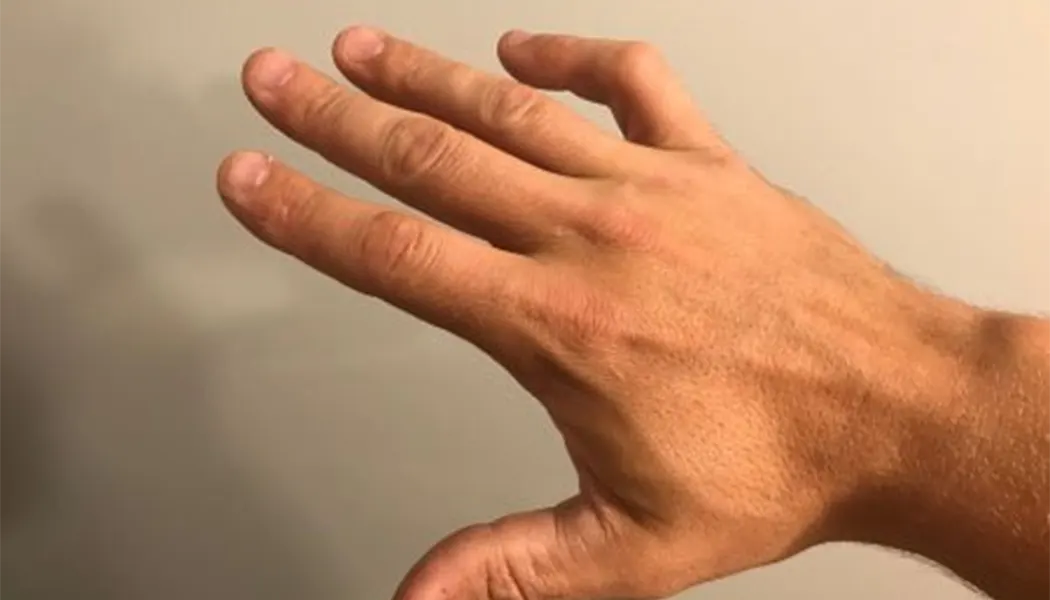
Boutonniere Deformity is a finger deformity in which the middle joint of the finger bends downward while the end joint bends backward. It usually develops due to an injury or damage to the central slip of the extensor tendon, which helps straighten the middle finger joint. It may also occur because of conditions such as rheumatoid arthritis. Symptoms can include pain, swelling, stiffness, difficulty straightening the finger, and reduced hand function. Early assessment and appropriate treatment are important to prevent the deformity from becoming fixed. At Pure Physio, rehabilitation focuses on protecting the injured structures, improving movement as medically appropriate, reducing stiffness, and supporting the recovery of functional hand use.
Boutonniere Deformity is an abnormal finger position involving the proximal interphalangeal (PIP) joint, which is the middle joint of the finger, and the distal interphalangeal (DIP) joint, which is the joint closest to the fingertip.
In a typical Boutonniere Deformity:
The PIP Joint Bends: The middle finger joint remains flexed or bent downward.
The DIP Joint Hyperextends: The fingertip joint bends backward beyond its normal straight position.
The condition commonly develops when the central slip, part of the extensor tendon mechanism on the back of the finger, is injured or disrupted. Without proper function of this tendon, the balance of forces around the finger joints changes over time, resulting in the characteristic deformity.
Boutonniere Deformity may occur suddenly after a finger injury or develop gradually due to inflammatory joint conditions. In the early stages, the deformity may still be flexible and easier to manage. If left untreated, the joints and surrounding tissues can become stiff, making the deformity more difficult to correct.
What Are The Symptoms Of Boutonniere Deformity?
Common Symptoms
Bent Middle Finger Joint: The PIP joint remains bent and may be difficult to straighten.
Backward-Bent Fingertip Joint: The DIP joint may become hyperextended.
Pain: The injured finger may be painful, particularly in the early stages.
Swelling: Swelling may occur around the middle finger joint.
Tenderness: The back of the PIP joint may be painful when touched.
Stiffness: The finger may feel tight and difficult to move.
Difficulty Straightening the Finger: Active straightening of the PIP joint may be reduced.
Other Possible Symptoms
Reduced Grip: The deformity may affect the ability to grip objects comfortably.
Reduced Hand Dexterity: Fine movements such as writing, typing, buttoning clothes, or picking up small objects may become difficult.
Finger Weakness: The affected finger may feel weak during gripping or functional tasks.
Difficulty Making a Full Fist: Altered joint movement can affect the ability to close the hand normally.
Chronic Joint Changes: Long-standing deformity may lead to persistent stiffness and reduced joint mobility.
What Are The Causes Of Boutonniere Deformity?
Central Slip Injury: Damage to the central slip extensor tendon is a common cause.
Direct Trauma: A forceful blow to the middle finger joint can injure the tendon.
Jammed Finger: A sudden force to the fingertip can cause injury to the extensor mechanism.
Finger Dislocation: Damage to the tendon may occur with certain finger joint dislocations.
Cuts or Lacerations: A deep cut across the back of the finger can damage the extensor tendon.
Sports Injuries: Ball sports and contact sports can cause sudden finger injuries.
Rheumatoid Arthritis: Long-term inflammation can damage the tendons and supporting structures of the finger.
Other Inflammatory Joint Conditions: Chronic inflammation can affect the stability and alignment of finger joints.
Diagnosis Of Boutonniere Deformity
Medical History: A healthcare professional will ask about the injury, symptoms, and any history of arthritis or inflammatory joint disease.
Physical Examination: The position of the finger, swelling, tenderness, and joint movement are assessed.
Extensor Tendon Assessment: Specific clinical tests may be used to assess the function of the central slip.
Active and Passive Movement Testing: The ability to actively and passively bend and straighten the finger is examined.
Joint Stability Assessment: The supporting structures of the finger may be assessed.
X-Rays: X-rays may be used to identify fractures, joint dislocation, or bony changes.
Ultrasound: Ultrasound may help assess tendon injury in selected cases.
MRI Scan: MRI may provide detailed images of tendons and other soft tissues when required.
Early diagnosis is important because prompt treatment may help prevent a flexible deformity from becoming fixed.
Treatment Of Boutonniere Deformity
Treatment depends on the cause, severity, duration of the deformity, and whether the injury is acute or long-standing.
Splinting: A splint may be used to hold the PIP joint in an appropriate position and protect the healing central slip.
Medical Assessment: Early assessment is important following a suspected tendon injury.
Activity Modification: Activities that place stress on the injured finger may need to be temporarily avoided.
Pain Management: Appropriate medication may be recommended by a healthcare professional when required.
Hand Therapy: Specialised rehabilitation may help restore movement while protecting healing structures.
Gentle Exercises: Specific exercises may be introduced at the appropriate stage of healing.
Management of Underlying Arthritis: Inflammatory conditions require appropriate medical treatment.
Surgery: Surgical treatment may be considered for certain severe, chronic, or complex cases.
Post-Operative Rehabilitation: Structured hand therapy may be required following surgery.
The exact splinting position and rehabilitation timeline depend on the type and severity of injury. It is important to follow the treatment plan closely because inappropriate movement or premature removal of a splint can affect tendon healing.
What Is The Physiotherapy Treatment Of Boutonniere Deformity
Detailed Assessment: At Pure Physio, we assess finger posture, joint movement, tendon function, pain, swelling, hand strength, grip, and functional limitations.
Individualised Rehabilitation Programme: Your treatment is planned according to the cause of the deformity, injury severity, healing stage, treatment received, and personal goals.
Splint Support and Guidance: Where appropriate and within the treatment plan prescribed by the relevant clinician, rehabilitation supports correct splint use and adherence.
Protection of Healing Structures: Early rehabilitation focuses on protecting the injured tendon and avoiding movements that may place excessive stress on healing tissues.
Controlled Finger Movement: Specific exercises may be introduced at the appropriate stage to maintain movement and reduce stiffness.
PIP Joint Rehabilitation: Exercises are carefully progressed to improve movement while protecting the extensor mechanism.
DIP Joint Exercises: Controlled movement may help maintain flexibility and support balanced finger function.
Tendon Gliding Exercises: Appropriately prescribed exercises can help maintain smooth tendon movement and reduce stiffness.
Joint Mobility Rehabilitation: Once medically appropriate, treatment may address stiffness and restricted movement.
Gentle Stretching: Stretching is introduced carefully according to tissue healing and the flexibility of the deformity.
Hand Strengthening: Progressive strengthening is introduced when the tendon and joint are ready for increased loading.
Grip Strength Training: Functional exercises help restore the ability to grip and hold objects.
Dexterity Training: Activities can improve practical skills such as writing, typing, buttoning clothing, and handling small objects.
Functional Hand Rehabilitation: Therapy focuses on returning to everyday activities, work, hobbies, and sport.
Post-Operative Rehabilitation: Following surgery, your rehabilitation follows the surgeon’s protocol and appropriate tissue-healing timelines.
Home Exercise Programme: A personalised programme supports continued rehabilitation between appointments.
Progress Monitoring: Treatment is regularly reviewed and adjusted according to healing, finger position, movement, strength, and functional improvement.
Why Choose Pure Physio?
Comprehensive Finger Assessment: We assess finger posture, tendon function, joint movement, pain, swelling, grip, and hand function.
Personalised Rehabilitation Plans: Your programme is tailored to the cause, severity, stage of injury, treatment method, and individual goals.
Focus on Early Protection: We support appropriate protection of healing tendons and finger joints.
Restore Safe Finger Movement: Rehabilitation is carefully progressed to improve movement without unnecessarily stressing healing structures.
Stiffness Management: Treatment addresses joint and soft-tissue stiffness as medically appropriate.
Improve Hand Strength: Progressive exercises help rebuild grip and functional hand strength.
Support Fine Motor Recovery: Rehabilitation focuses on the precise finger movements needed for everyday tasks.
Functional Recovery Focus: Therapy targets activities such as writing, typing, dressing, gripping, and handling objects.
Splinting and Exercise Guidance: We provide practical support regarding prescribed splint use and your rehabilitation programme.
Post-Surgical Rehabilitation: Structured rehabilitation is provided following surgical treatment when required.
Home Exercise Guidance: You receive a personalised programme to support consistent progress outside your appointments.
Regular Progress Monitoring: Your treatment is reviewed and adapted according to healing, movement, finger alignment, strength, and function.
Integrated Care Approach: We work alongside hand specialists, orthopaedic surgeons, rheumatologists, and other healthcare professionals when required.
Focused on Long-Term Hand Function: Our goal is to protect healing structures, reduce stiffness, improve finger movement and strength, and help you regain confident use of your hand in the activities that matter most.
Start Your Recovery Journey Today
Don’t let pain, stiffness, or reduced mobility affect your daily life. Get personalised physiotherapy care designed around your condition and recovery goals.