
Baastrup Syndrome
Manage lower back pain, improve spinal movement, and return to comfortable daily activities with personalised physiotherapy for Baastrup Syndrome.
Contents
Take the First Step Towards Better Movement
Our experienced physiotherapists are here to help you improve mobility, regain strength, and move with greater comfort and confidence.
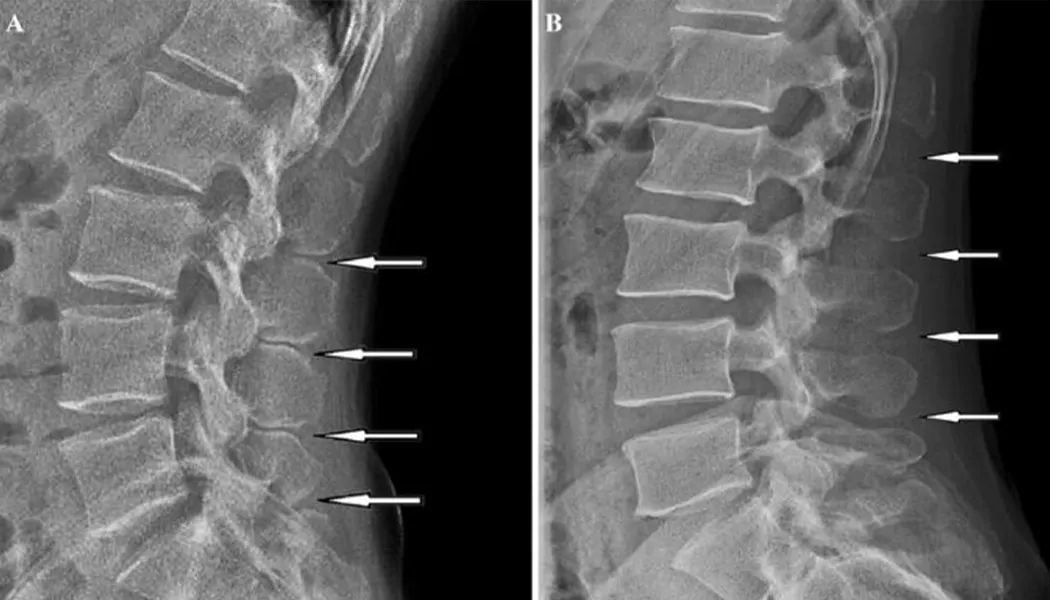
What is Baastrup Syndrome?
Baastrup Syndrome, commonly known as Kissing Spine Syndrome, is a condition affecting the spine in which the spinous processes of two neighbouring vertebrae come abnormally close and may touch or repeatedly rub against each other. Spinous processes are the small bony projections that can be felt along the middle of the back. When the space between these bones becomes reduced, repeated contact may irritate the surrounding tissues, including ligaments and small fluid-filled structures that can develop between the spinous processes. This may lead to localised back pain, tenderness, inflammation, and discomfort during certain spinal movements. Baastrup Syndrome most commonly affects the lumbar spine, particularly the lower back, and symptoms are often worse during spinal extension, such as leaning or bending backward. The condition can be associated with age-related spinal changes, altered posture, excessive lumbar curvature, and other degenerative changes affecting the spine.
At Pure Physio, physiotherapy focuses on improving movement control, strengthening the muscles that support the spine, addressing posture and flexibility, and helping reduce unnecessary stress on the lower back.
What Are The Symptoms Of Baastrup Syndrome?
Localised Lower Back Pain: Pain is commonly felt in the middle of the lower back.
Pain During Backward Bending: Leaning or bending the spine backward may increase pain.
Pain During Prolonged Standing: Standing for long periods may aggravate lower back discomfort.
Tenderness Over the Spine: The area between the affected spinous processes may be painful when pressed.
Pain During Certain Movements: Activities involving repeated spinal extension may trigger symptoms.
Reduced Spinal Mobility: Pain and stiffness may make normal back movement difficult.
Lower Back Stiffness: The spine may feel stiff, particularly after periods of inactivity.
Pain Relief When Bending Forward: Some individuals find that symptoms improve when bending the spine forward.
Pain During Walking: Prolonged walking, especially when it involves an extended lower-back posture, may cause discomfort.
Muscle Tightness: Muscles around the lower back and hips may become tight or guarded.
Postural Changes: Some individuals may alter their posture to avoid painful movements.
Difficulty with Daily Activities: Activities such as standing, walking, reaching overhead, or certain lifting movements may become uncomfortable.
Symptoms can vary depending on the severity of spinal changes and whether other conditions, such as spinal stenosis or degenerative disc disease, are also present.
New leg weakness, numbness around the groin or saddle area, loss of bladder or bowel control, or rapidly worsening symptoms require urgent medical assessment.
What Are The Causes Of Baastrup Syndrome?
Baastrup Syndrome can develop when the spinous processes repeatedly come into close contact, causing irritation and degenerative changes.
Age-Related Spinal Changes: Degeneration affecting the spine can alter the space and movement between vertebrae.
Reduced Space Between Spinous Processes: Adjacent spinal bones may gradually move closer together.
Repeated Spinal Extension: Frequent or excessive backward bending may increase contact between the spinous processes.
Excessive Lumbar Lordosis: An increased inward curve of the lower back may contribute to increased approximation of the spinous processes.
Poor Movement Control: Reduced control of spinal movement may place repeated stress on the lower back.
Degenerative Disc Changes: Changes in the spinal discs can alter the alignment and loading of the vertebrae.
Facet Joint Degeneration: Degenerative changes in the small joints of the spine may contribute to altered spinal mechanics.
Spinal Instability: Excessive movement between vertebrae may contribute to repeated irritation.
Spondylolisthesis: Forward movement of one vertebra relative to another may occur alongside other degenerative spinal changes.
Postural Factors: Certain postures may repeatedly increase loading through the back of the spine.
Previous Spinal Problems: Existing spinal conditions may alter movement and loading patterns.
In some individuals, Baastrup Syndrome occurs alongside other age-related or degenerative changes rather than as an isolated condition.
Diagnosis Of Baastrup Syndrome
Medical History: A healthcare professional will ask about the location of your pain, movements that aggravate symptoms, duration of symptoms, and any history of spinal problems.
Physical Examination: The lower back is assessed for tenderness, movement restrictions, posture, muscle strength, and symptom-provoking movements.
Spinal Extension Assessment: Backward bending may be assessed to determine whether it reproduces the characteristic pain.
Palpation: Gentle pressure over the spinous processes may identify localised tenderness.
Range of Motion Assessment: Forward bending, backward bending, side bending, and rotation may be evaluated.
Neurological Examination: Leg strength, sensation, reflexes, and nerve function may be assessed when appropriate.
Functional Assessment: Standing, walking, lifting, and other daily movements may be evaluated.
X-Rays: X-rays may show close approximation or contact between adjacent spinous processes and other spinal changes.
MRI: MRI can assess soft tissues, discs, ligaments, fluid or inflammatory changes between spinous processes, and associated spinal conditions.
CT Scan: A CT scan may provide detailed images of the bony structures of the spine.
Diagnosis is based on a combination of symptoms, clinical findings, and appropriate imaging, as close spinous processes on imaging alone do not always mean they are the source of pain.
Treatment Of Baastrup Syndrome
Treatment depends on the severity of symptoms, associated spinal conditions, and individual functional needs.
Activity Modification: Temporarily reducing activities involving repeated painful backward bending may help manage symptoms.
Physiotherapy: A structured rehabilitation programme can improve movement control, strength, posture, and physical function.
Exercise Therapy: Carefully selected exercises help strengthen the muscles that support the spine.
Core Strengthening: Improving trunk muscle control may help support spinal stability.
Postural Training: Learning more comfortable and efficient postures can help reduce unnecessary stress on the lower back.
Movement Re-Education: Rehabilitation can address excessive spinal extension and improve control during daily activities.
Pain Management: A doctor may recommend appropriate medication when required.
Anti-Inflammatory Medication: This may be considered by a medical professional depending on the individual’s condition and health status.
Heat Therapy: Heat may provide temporary relief from muscle stiffness or discomfort for some individuals.
Injection Therapy: A specialist may consider injections in selected cases after appropriate assessment.
Management of Associated Conditions: Other conditions affecting the discs, facet joints, spinal canal, or vertebral alignment may also require treatment.
Surgery: Surgery is generally reserved for selected individuals with severe symptoms or associated structural problems that do not respond to appropriate conservative management.
The treatment approach should be based on the individual’s symptoms and overall spinal health rather than imaging findings alone.
What Is The Physiotherapy Treatment Of Baastrup Syndrome
Detailed Assessment: At Pure Physio, we assess your pain, posture, spinal movement, muscle strength, flexibility, movement habits, daily activities, and other factors contributing to lower back stress.
Pain-Guided Rehabilitation: Exercises are selected and modified according to your symptoms and movement tolerance.
Spinal Mobility Exercises: Controlled exercises help maintain comfortable movement without repeatedly aggravating symptoms.
Core Strengthening: Progressive exercises strengthen the abdominal and trunk muscles that support spinal control.
Deep Stabilising Muscle Training: Specific exercises may focus on improving the coordinated activity of muscles that help stabilise the spine.
Hip Strengthening: Strong hip and gluteal muscles can support more efficient movement and reduce unnecessary compensation through the lower back.
Gluteal Strengthening: Exercises improve pelvic and lower-limb control during standing, walking, and other activities.
Flexibility Exercises: Selected stretches may address tightness around the hips and lower limbs that affects spinal movement.
Postural Training: We provide guidance on maintaining comfortable alignment during sitting, standing, walking, and daily tasks.
Movement Re-Education: Therapy focuses on improving how you bend, reach, lift, stand, and perform other activities.
Extension Control: Rehabilitation may help reduce excessive or repeated backward bending when it aggravates symptoms.
Functional Strength Training: Exercises prepare you for practical activities such as standing, walking, lifting, and household or work tasks.
Manual Therapy: Appropriate hands-on techniques may be used as part of an overall treatment programme when clinically suitable.
Activity Modification: We help identify movements and positions that aggravate symptoms and provide practical alternatives.
Home Exercise Programme: A personalised programme supports continued mobility and strength between physiotherapy sessions.
Progress Monitoring: Your rehabilitation plan is reviewed and adjusted according to changes in pain, movement, strength, and functional ability.
Why Choose Pure Physio?
Detailed Spinal Assessment: We assess your pain pattern, posture, spinal movement, strength, flexibility, and functional limitations.
Personalised Rehabilitation Plans: Your treatment programme is adapted to your symptoms, daily activities, physical ability, and recovery goals.
Focus on Movement Control: Rehabilitation aims to improve how the spine and surrounding muscles work during everyday movement.
Core and Hip Strengthening: We focus on building the strength and control needed to support the lower back.
Posture-Focused Rehabilitation: Practical guidance helps reduce unnecessary stress on the affected area during daily activities.
Pain-Guided Exercise Progression: Exercises are progressed according to your symptoms and physical response.
Functional Rehabilitation: Treatment focuses on activities that matter to you, including sitting, standing, walking, bending, lifting, and work-related tasks.
Education for Self-Management: We provide guidance on exercise, posture, movement habits, activity modification, and long-term back care.
Regular Progress Monitoring: Your programme is reviewed and adjusted as your movement and functional ability improve.
Integrated Care Approach: When imaging, pain management, injections, or specialist assessment is required, we can support rehabilitation as part of your wider healthcare plan.
Focused on Long-Term Spinal Health: Our goal is to help you improve movement confidence, build physical strength, manage lower back symptoms, and return comfortably to the activities that matter to you.
Start Your Recovery Journey Today
Don’t let pain, stiffness, or reduced mobility affect your daily life. Get personalised physiotherapy care designed around your condition and recovery goals.