Ankle Syndesmosis Ligament Injury
Reduce ankle pain, restore stability, and return to confident movement with personalised physiotherapy for an Ankle Syndesmosis Ligament Injury.
Contents
Take the First Step Towards Better Movement
Our experienced physiotherapists are here to help you improve mobility, regain strength, and move with greater comfort and confidence.
What is Ankle Syndesmosis Ligament Injury?
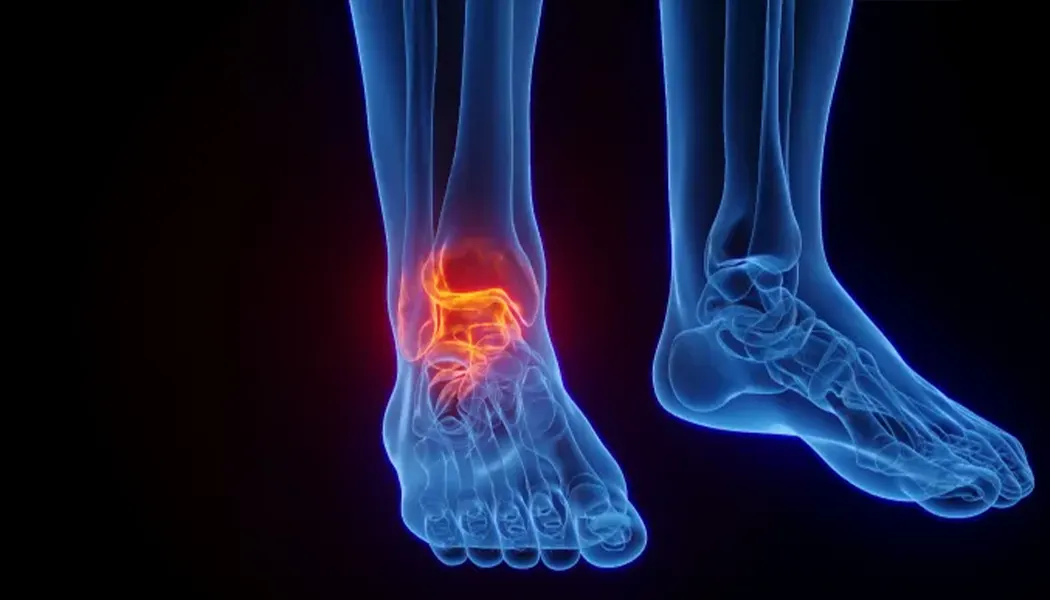
The syndesmosis is a group of strong ligaments and connective structures that join the lower ends of the tibia and fibula just above the ankle joint.
These structures help maintain the correct relationship between the two bones and provide stability to the ankle, particularly during weight-bearing and rotational movements.
An Ankle Syndesmosis Ligament Injury occurs when these ligaments are stretched or torn.
It is commonly called a High Ankle Sprain because the injury occurs above the main ankle joint, rather than affecting the ligaments on the outer side of the ankle as in a more typical ankle sprain.
Syndesmosis injuries can vary in severity:
Mild Injury: The ligaments are stretched with minimal loss of stability.
Moderate Injury: There may be a partial tear and greater pain or functional difficulty.
Severe Injury: The ligaments may be significantly torn, potentially causing widening or instability between the tibia and fibula.
Severe injuries may occur alongside fractures or other ankle injuries and may require specialist assessment or surgical stabilisation.
What Are The Symptoms Of Ankle Syndesmosis Ligament Injury?
Common Symptoms
Pain Above the Ankle: Pain is often felt just above the ankle joint, between the tibia and fibula.
Swelling: Swelling may develop around the ankle and lower leg.
Difficulty Walking: Weight-bearing may be painful or difficult.
Pain with Twisting: Rotating the foot or ankle may increase symptoms.
Pain During Push-Off: Walking or running may be painful when pushing off the foot.
Tenderness: The area over the syndesmosis may be painful when touched.
Other Possible Symptoms
Pain with Weight-Bearing: Standing and walking may aggravate the injury.
Pain During Running: High-impact activities can increase symptoms.
Difficulty Climbing Stairs: The ankle may feel painful or weak during stair use.
Reduced Ankle Movement: Pain and swelling can limit ankle mobility.
Feeling of Instability: More severe injuries may cause a feeling of reduced ankle stability.
Bruising: Discolouration may develop around the ankle or lower leg.
Difficulty Standing on One Leg: Balance and confidence may be reduced.
Pain with a Wide Step: Movements that separate or rotate the lower leg bones may increase discomfort.
Pain During Direction Changes: Pivoting and cutting movements may be particularly difficult.
Syndesmosis injuries can sometimes take longer to recover than a typical lateral ankle sprain, particularly when the injury is more severe or the ankle is unstable.
What Are The Causes Of Ankle Syndesmosis Ligament Injury?
Forceful External Rotation: A common mechanism is forceful outward rotation of the foot while the lower leg remains relatively fixed.
Twisting Injury: A sudden twist of the foot and ankle can stretch the syndesmosis ligaments.
Sports Injuries: Contact sports, football, rugby, basketball, and other activities involving collisions or rapid changes of direction can increase risk.
Foot Trapped While the Body Rotates: The syndesmosis can be stressed when the foot remains planted and the body turns.
Fall or Awkward Landing: Landing with the foot in an abnormal position can injure the ankle.
Direct Contact: A force applied to the lower leg or ankle during sport can contribute to injury.
High-Energy Trauma: Major accidents may cause severe syndesmosis injuries, often with associated fractures.
Ankle Fractures: Syndesmotic ligaments can also be injured alongside certain fractures of the ankle or lower leg.
Diagnosis Of Ankle Syndesmosis Ligament Injury
Medical History: A healthcare professional will ask how the injury occurred, where the pain is located, and which movements or activities increase symptoms.
Physical Examination: The ankle and lower leg are assessed for pain, swelling, tenderness, movement, and stability.
Syndesmosis Palpation: The area between the tibia and fibula is examined for tenderness.
Specific Clinical Tests: Controlled tests may be used to assess pain or instability involving the syndesmosis.
Range of Motion Assessment: Ankle movement is evaluated.
Strength Testing: The ankle, calf, foot, and other lower-limb muscles may be assessed.
Functional Assessment: Walking, standing, balance, stepping, and sport-related movements may be assessed when appropriate.
X-Rays: X-rays may help identify associated fractures or abnormal widening between the tibia and fibula.
Stress Imaging: In selected cases, imaging may be used to assess ankle stability under controlled conditions.
MRI Scan: MRI can provide detailed information about syndesmotic ligaments and associated soft-tissue injuries.
CT Scan: CT may be used in selected cases to assess complex injuries or bone alignment.
Accurate assessment is important because unstable syndesmosis injuries may require different treatment from a typical ankle sprain.
Treatment Of Ankle Syndesmosis Ligament Injury
Treatment depends on the severity of the injury, ankle stability, associated injuries, and individual activity demands.
Initial Protection: The ankle may need to be protected from movements that place excessive stress on the injured syndesmosis.
Activity Modification: Temporarily reducing activities that increase pain can support recovery.
Immobilisation: A walking boot or other form of immobilisation may be recommended for some injuries.
Weight-Bearing Restrictions: Some people may need to limit weight-bearing, depending on injury severity and medical advice.
Crutches or Walking Aids: Assistive devices may help protect the ankle during the early stages of recovery.
Pain Management: Appropriate medication may be recommended by a healthcare professional when required.
Physiotherapy: Once appropriate, rehabilitation helps restore movement, strength, balance, stability, and functional ability.
Progressive Exercise: Strengthening and functional activities are gradually increased according to symptoms and healing.
Bracing: An ankle brace may be recommended during the recovery process or return to activity.
Gradual Return to Activity: Walking, work, exercise, and sport are progressively increased as strength, movement, and stability improve.
Surgical Treatment: Unstable injuries or injuries with significant separation between the tibia and fibula may require surgical stabilisation.
Post-Operative Rehabilitation: Structured physiotherapy is important following surgical treatment.
What Is The Physiotherapy Treatment Of Ankle Syndesmosis Ligament Injury
Detailed Assessment: At Pure Physio, we assess pain, swelling, ankle movement, lower-leg strength, balance, walking ability, stability, and functional limitations.
Individualised Rehabilitation Programme: Your treatment is tailored according to the severity of the injury, ankle stability, associated injuries, treatment received, activity demands, and recovery goals.
Pain and Swelling Management: Appropriate strategies may help manage discomfort and swelling during the early stages of rehabilitation.
Ankle Range of Motion Exercises: Carefully selected exercises help restore ankle movement while respecting the healing ligaments and medical guidance.
Early Mobility Training: Controlled movement helps reduce stiffness and gradually restore ankle function.
Foot and Ankle Muscle Activation: Exercises help restore the function of muscles supporting the ankle.
Progressive Ankle Strengthening: Targeted exercises gradually rebuild strength around the ankle.
Calf Strengthening: Progressive exercises improve the strength needed for walking, standing, and pushing off.
Foot Strengthening: Exercises support improved foot control and lower-limb function.
Hip and Gluteal Strengthening: Targeted exercises improve overall lower-limb strength and movement control.
Core Strengthening: Exercises may support improved trunk and pelvic control during dynamic movement.
Balance and Proprioception Training: Exercises improve ankle awareness, stability, coordination, and confidence.
Progressive Weight-Bearing: Weight-bearing activities are gradually progressed according to symptoms, healing, stability, and medical advice.
Walking Rehabilitation: Therapy helps restore a safe, comfortable, and efficient walking pattern.
Movement Retraining: We help improve lower-limb control during standing, stepping, squatting, and other functional movements.
Functional Strength Training: Rehabilitation progresses towards activities that reflect the demands of your work, lifestyle, and daily activities.
Running Rehabilitation: A gradual running programme may be introduced when appropriate.
Agility Training: Exercises progress towards controlled cutting, pivoting, and direction changes for active individuals.
Jump and Landing Training: Higher-impact activities are gradually introduced when strength, stability, and movement control are appropriate.
Sport-Specific Rehabilitation: Your programme can progress towards the physical demands of your particular sport.
Post-Operative Rehabilitation: If surgery is required, your programme follows the surgeon’s recommendations and appropriate healing timelines.
Bracing Guidance: If an ankle brace is recommended, we provide guidance on its appropriate use alongside your rehabilitation programme.
Home Exercise Programme: A personalised programme supports continued mobility, strengthening, and recovery between appointments.
Progress Monitoring: Your rehabilitation is regularly reviewed and progressed according to pain, swelling, movement, strength, stability, walking ability, and functional improvement.
Why Choose Pure Physio?
Comprehensive Ankle Assessment: We assess pain, swelling, movement, muscle strength, stability, balance, walking ability, and functional limitations.
Personalised Rehabilitation Plans: Your programme is tailored according to your injury severity, ankle stability, treatment received, activity demands, and personal goals.
Focus on Ankle Stability: Rehabilitation aims to restore strength, control, and confidence around the ankle.
Restore Ankle Mobility: Carefully selected exercises help reduce stiffness and restore comfortable movement.
Rebuild Ankle and Lower-Limb Strength: Progressive strengthening targets the ankle, foot, calf, hips, gluteals, and other muscles involved in movement.
Improve Balance and Proprioception: Targeted exercises help improve ankle awareness, stability, and confidence during movement.
Safe Weight-Bearing Progression: Your rehabilitation is progressed according to symptoms, healing, stability, and medical guidance.
Restore Walking Confidence: Structured rehabilitation helps you return to safe and comfortable walking.
Movement Retraining: We address movement patterns that may place unnecessary stress on the recovering ankle.
Functional Recovery Focus: Therapy targets meaningful activities such as standing, walking, climbing stairs, exercising, and returning to daily routines.
Safe Return to Running and Sport: Rehabilitation progresses towards the specific demands of running, jumping, landing, pivoting, and changing direction.
Gradual Activity Progression: Your programme is adjusted according to symptoms, healing, strength, stability, and functional progress.
Bracing Support: We provide rehabilitation guidance alongside prescribed ankle bracing when required.
Post-Surgical Rehabilitation: Structured physiotherapy supports recovery following surgical stabilisation when required.
Home Exercise Guidance: You receive a personalised programme to support consistent progress outside your appointments.
Regular Progress Monitoring: Your rehabilitation is reviewed and adapted according to changes in pain, swelling, movement, strength, balance, stability, and function.
Integrated Care Approach: We work alongside orthopaedic surgeons, sports medicine professionals, doctors, and other healthcare providers when required.
Focused on Long-Term Ankle Function: Our goal is to reduce pain, restore movement, rebuild strength, improve stability and confidence, and help you safely return to the activities that matter most.
Start Your Recovery Journey Today
Don’t let pain, stiffness, or reduced mobility affect your daily life. Get personalised physiotherapy care designed around your condition and recovery goals.